Calathea Best Varieties for Beginners: Your Start-Here Guide
The trick to keeping calatheas alive isn't a green thumb — it's picking the right variety.
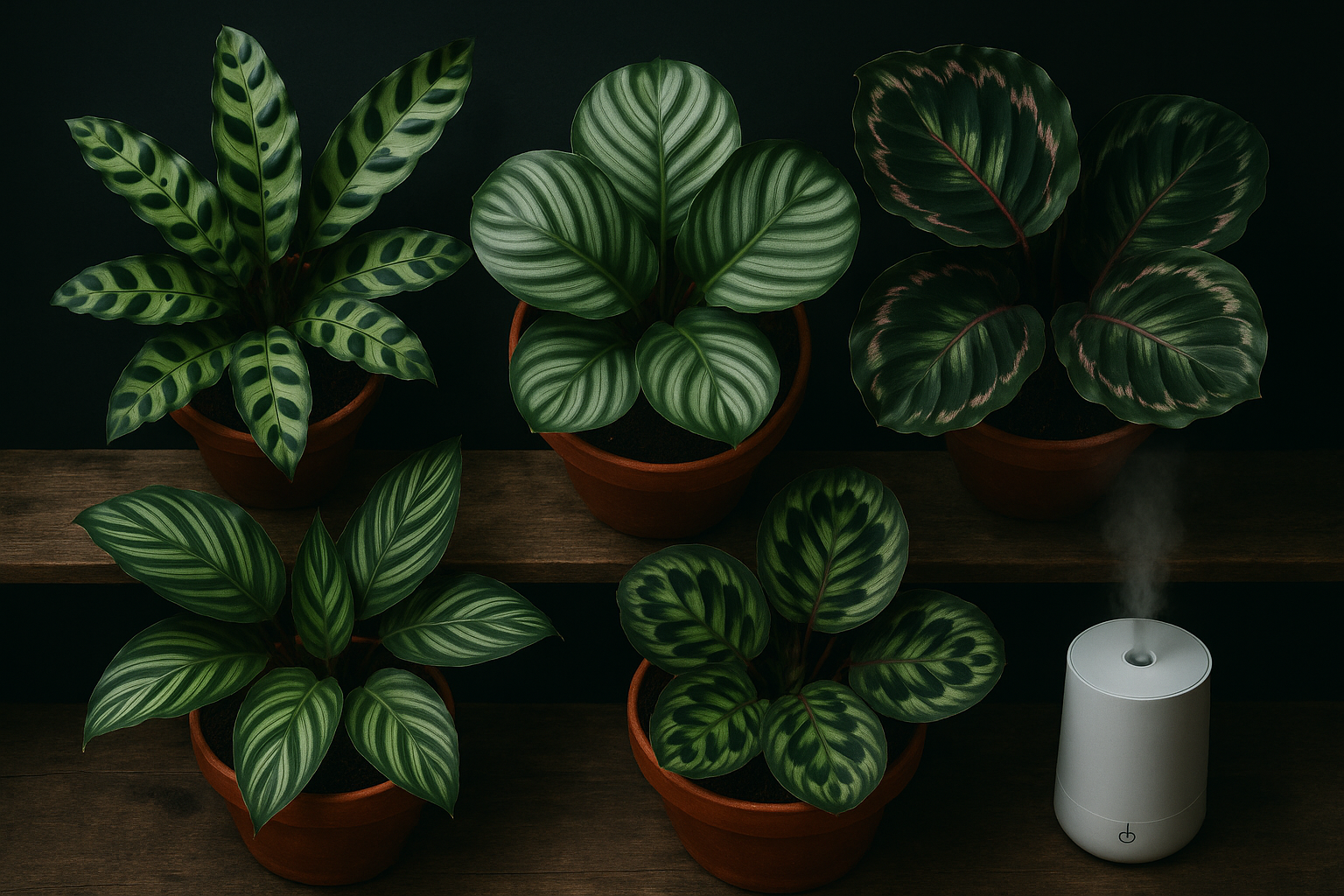
Why Calathea Varieties Matter for Beginners
Calatheas have a reputation. They're the plant equivalent of that friend who needs everything just right — the perfect temperature, the exact amount of water, humidity at 60% or else.
But here's the thing not everyone tells you: some calathea varieties are way more forgiving than others.
Most articles list 40+ varieties and call it helpful. That's not helpful — that's overwhelming. The difference between a calathea that thrives on neglect and one that collapses at the slightest change comes down to the specific variety you pick.
We're going to cut through the noise and rank the actual easiest calatheas for beginners, with real difficulty ratings, specific care tips, and the ones you should skip until you've learned from your mistakes.
What Makes a Calathea Beginner-Friendly?
Before we get into the list, here's what separates a "beginner" calathea from a "diva" calathea:
Humidity tolerance — Easy varieties handle 40-50% humidity (standard apartment levels). Hard ones need 60%+ consistently, or the edges go brown immediately.
Light flexibility — Forgiving calatheas don't throw a tantrum if your window isn't perfectly north-facing. They'll tolerate bright indirect light without crisping.
Watering forgiveness — Some varieties will tell you they're thirsty (drooping leaves). Others just... die. The forgiving ones recover from a missed watering; the hard ones hold grudges.
Root rot resistance — Some calatheas sit in wet soil and don't care. Others rot at the slightest overwatering.
The varieties below score well on all four. The ones to avoid? They fail on at least one.
Top 5 Best Calathea Varieties for Beginners
1. Calathea Medallion — Best Overall
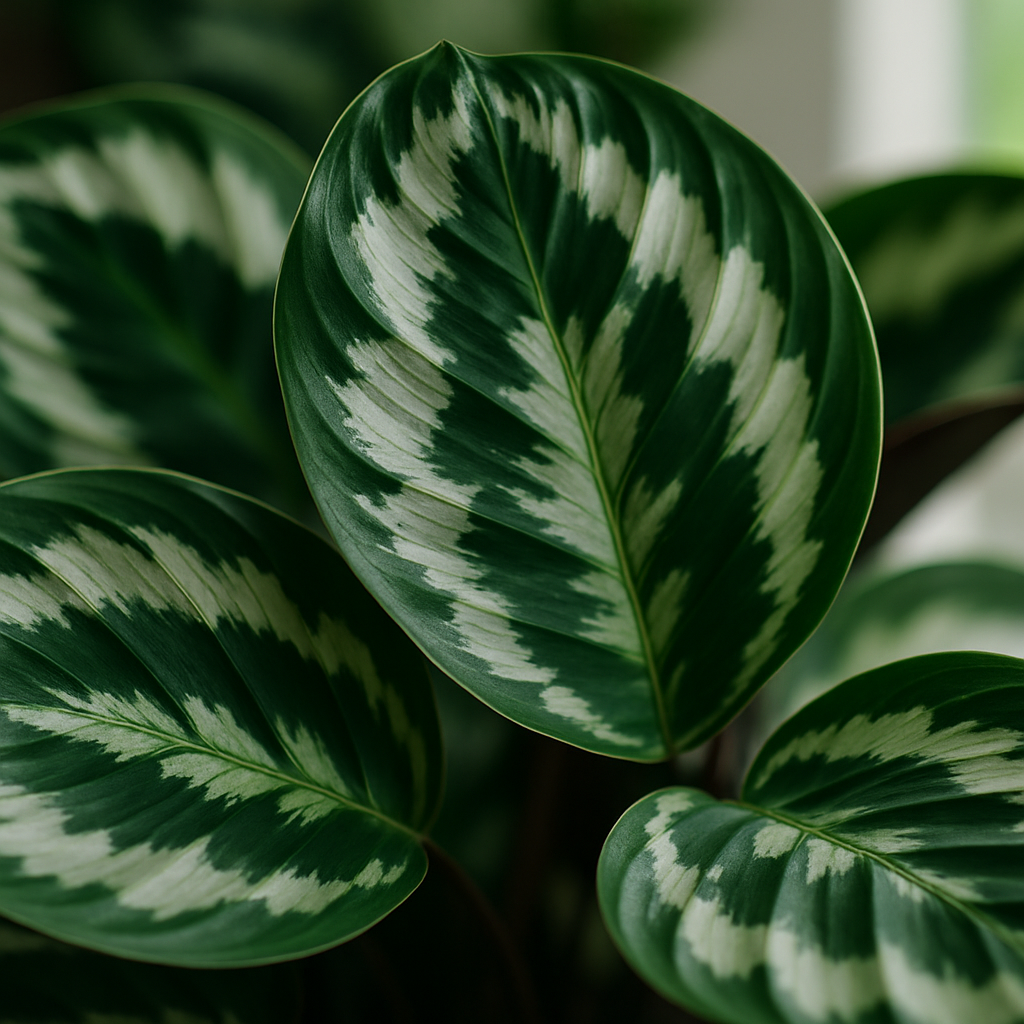
Difficulty: Easy | Light: Medium indirect | Humidity: 40-50%
Calathea Medallion consistently tops the "easiest calathea" lists across the internet — and for good reason. It's the one most likely to survive your first winter with the heat on.
The leaves have that signature calathea drama: dark green tops with silver-white medallion patterns underneath. It's not as flashy as some varieties, but it's the plant equivalent of a reliable friend who shows up when you need it.
Why it's beginner-friendly: Handles lower humidity better than almost any other calathea. Won't instantly die if you miss a watering. Tolerates a range of light conditions.
Care tip: Let the top inch of soil dry out before watering. If the leaves curl, it's thirsty — it'll bounce back within hours.
Check Prices on Moisture Meter
2. Calathea Freddie — Most Forgiving
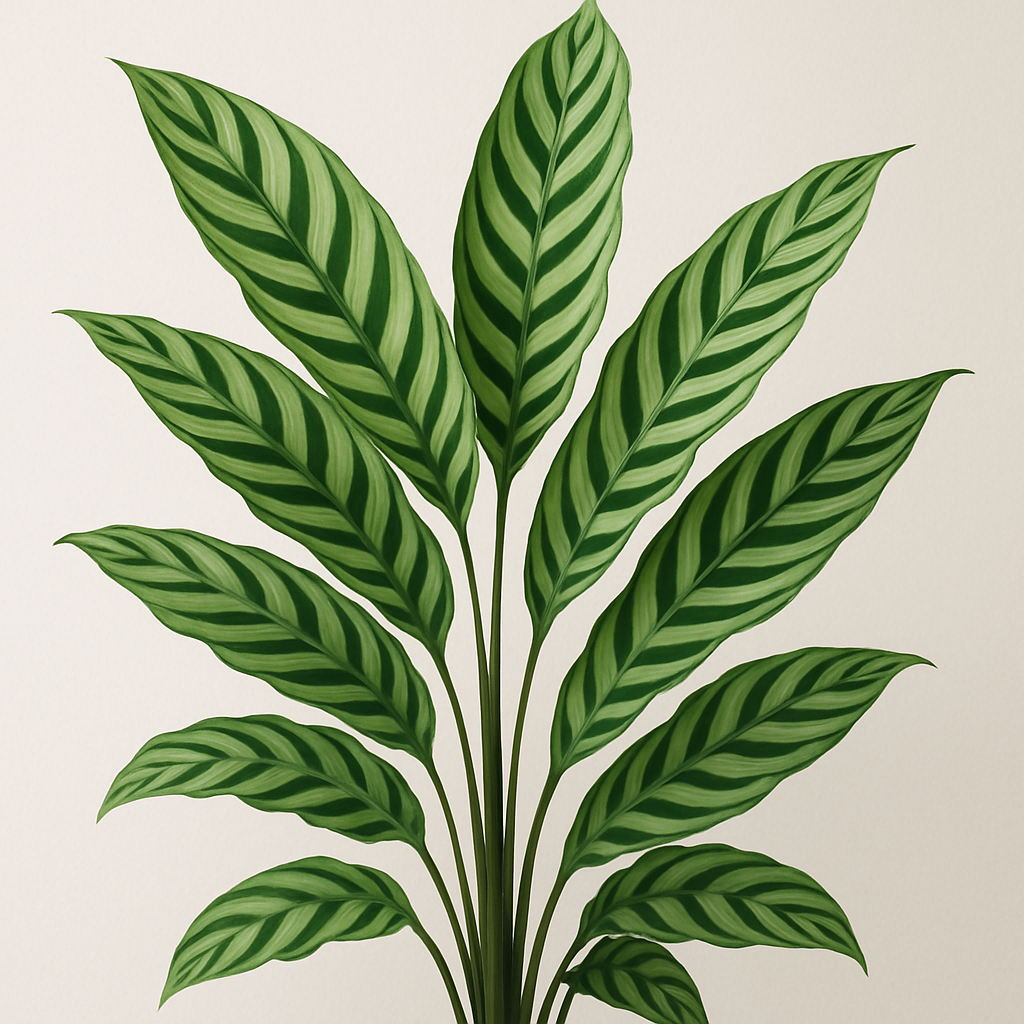
Difficulty: Easy | Light: Low to medium indirect | Humidity: 45-55%
Freddie is the calathea you'd recommend to someone who murders every plant they touch. It has long, slender leaves with distinct dark green stripes, and it's remarkably tolerant of imperfect conditions.
This is the one that will actually survive in your bathroom (yes, that dark corner by the shower) or that spot by the window that doesn't get much light.
Why it's beginner-friendly: One of the lowest humidity requirements. Recovers quickly from neglect. Handles low light better than most calatheas.
Care tip: Don't overwater — Freddie's narrow leaves mean less transpiration, so it needs less water than broader-leaved varieties. When in doubt, wait another day.
3. Calathea Rattlesnake (Lancifolia) — Best for Color
Difficulty: Easy-Medium | Light: Medium indirect | Humidity: 50-60%
If you want color without the headache, Rattlesnake is your play. The long, wavy leaves have dark green topside patterns that look like — you guessed it — a rattlesnake, with purple undersides that peek through when the leaves move.
It's striking without being finicky, and it handles average home humidity better than the divas on the avoid list.
Why it's beginner-friendly: More visually interesting than Medallion or Freddie but nearly as forgiving. The purple undersides add color even without direct sunlight.
Care tip: Watch for brown edges — if they appear, your humidity is too low. A quick mist or humidifier nearby fixes this fast.
4. Calathea Orbifolia — Most Dramatic
Difficulty: Easy-Medium | Light: Medium indirect | Humidity: 50-60%
Orbifolia is the statement piece that makes your other plants look basic. Large, round leaves with bold silver-green stripes can reach a foot wide on mature plants. It's the big dramatic calathea that actually behaves.
Yes, it needs slightly more humidity than Medallion, but it also recovers beautifully from mistakes — unlike the varieties we'll talk about in a moment.
Why it's beginner-friendly: Big impact, reasonable requirements. It's the "impressive but not impossible" calathea that makes you feel like you know what you're doing.
Care tip: Give it space — Orbifolia gets big. If you're cramped for room, this might not be your pick, but if you have the space, it rewards you handsomely.
5. Calathea Rufibarba — Best Texture
Difficulty: Easy-Medium | Light: Low to medium indirect | Humidity: 50-60%
Also known as "Furry Feather" calathea (yes, really), rufibarba has a unique texture — the leaves feel slightly fuzzy underneath, which is unusual for the calathea family. The long, wavy leaves have a deep green color without the dramatic patterns of other varieties, making it a subtler but still striking choice.
Why it's beginner-friendly: Less fussy about light than many calatheas. It's the "stealth easy" calathea — it doesn't look like a beginner plant, but it acts like one.
Care tip: The fuzzy leaves can trap dust — wipe them gently every few weeks to keep them healthy and looking their best.
Varieties to Avoid as a Beginner
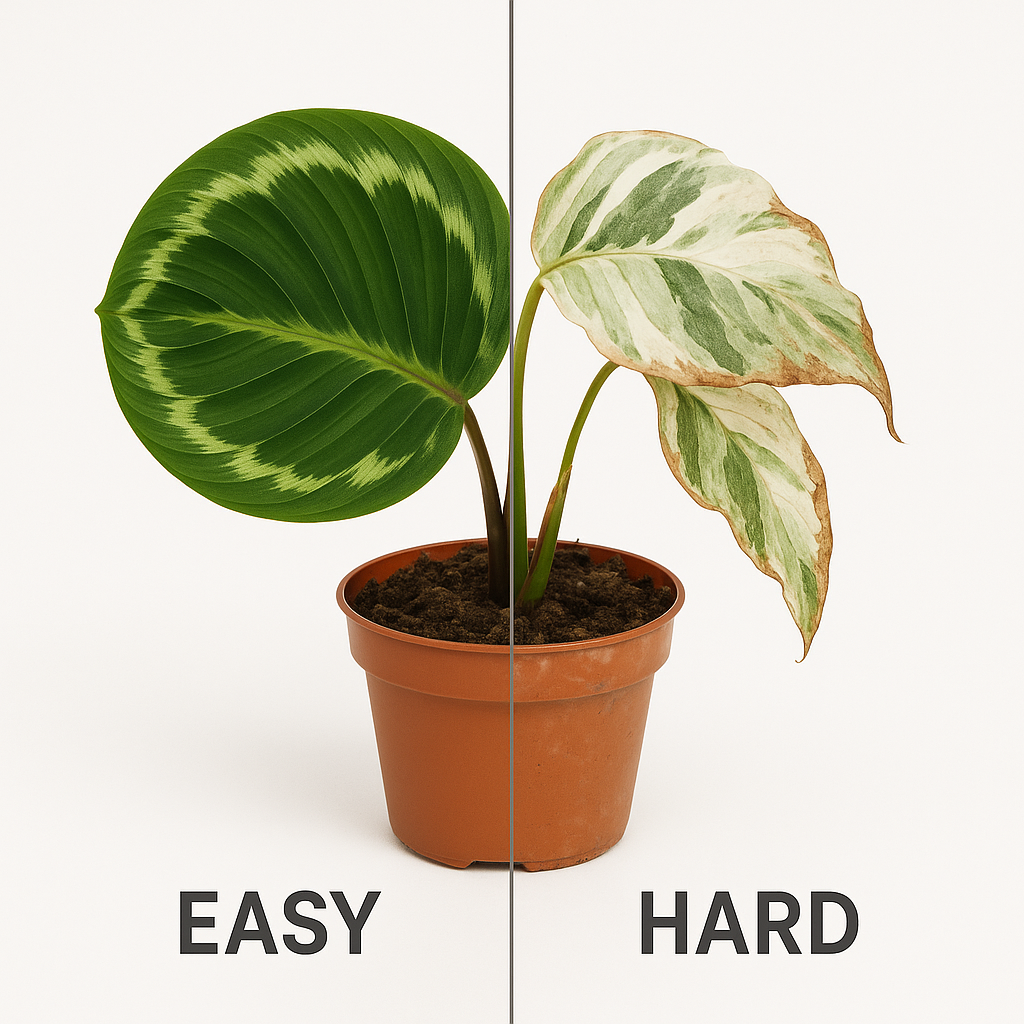
Let's be real: some calatheas are just brutal for beginners. These aren't impossible to keep alive, but they'll test you in ways that aren't worth it when you're just starting out.
Calathea White Fusion — The "Diva"
White Fusion is the plant equivalent of a high-maintenance influencer. The variegated white and green leaves are gorgeous (we can't deny that), but this variety will let you know exactly what you did wrong. Every. Single. Time.
It needs humidity above 60% consistently, won't tolerate any drying out, and will develop brown edges at the slightest provocation. If this is your first calathea, you'll probably kill it, and you'll blame yourself — but it's not you, it's the plant.
Skip this one until you've successfully kept 2-3 easier calatheas alive for a year.
Ornata and Roseopicta Varieties
These include the "Calathea Ornata" (pin stripe calathea) and the entire Roseopicta group (like Rosy, Dottie, and Silvester). They have beautiful pink and white variegation, but they're significantly less forgiving than the easy list above.
They need higher humidity, more consistent watering, and will punish inconsistencies with brown crispy edges.
The honest truth: If you want pink variegation, wait. Get your confidence up with Medallion first.
How to Choose the Right Calathea for Your Space
Still not sure which one to pick? Here's the quick decision framework:
If you have low light: Go with Freddie or Rufibarba — they'll handle it.
If your apartment is dry (winter, AC, central heat): Start with Medallion — it's the most humidity-forgiving.
If you want the biggest visual impact: Orbifolia gives you the "I know what I'm doing" look without the difficulty.
If you travel often or forget to water: Medallion or Freddie. Both recover from neglect better than the others.
If you have a bright bathroom: Freddie or Rattlesnake — they'll love the humidity and moderate light.
Beginner Care Tips That Actually Matter
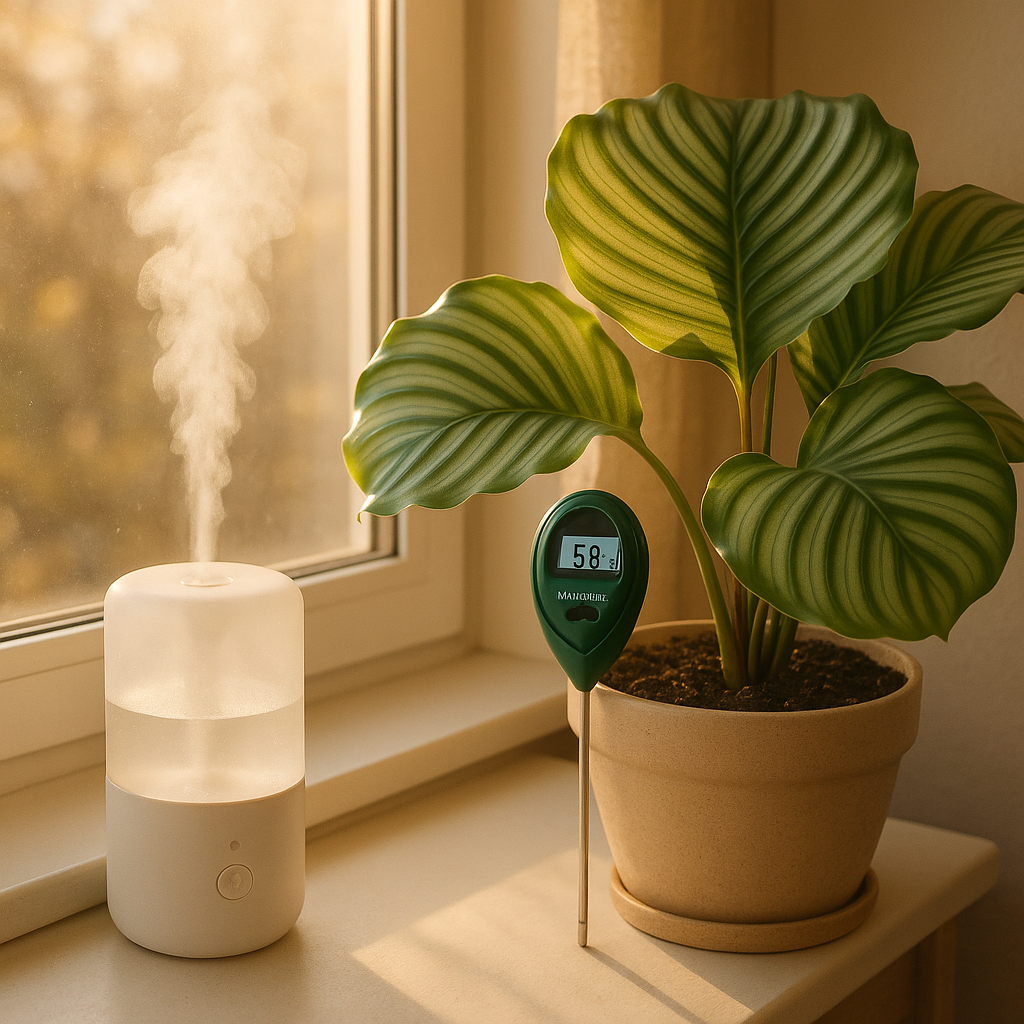
Here's what actually matters when you're starting out with calatheas:
1. Humidity first, everything else second. If you can only do one thing, get a humidifier. Calatheas will survive imperfect watering but they'll die fast in dry air. The LEVOIT Classic 6L is a solid entry point — quiet, effective, and you can actually fit it on your shelf.
2. Use a moisture meter. Stop guessing when to water. Stick a digital meter in the soil and water when it reads "moist" — not wet, not dry. This alone will save you more calatheas than anything else.
3. Don't repot immediately. When you bring a new calathea home, let it acclimate for 2-3 weeks before repotting. It just went through shipping stress — adding root disturbance on top of that is a recipe for disaster.
4. Watch the leaves. Calatheas communicate. Leaves curling = thirsty. Leaves drooping = thirsty. Leaves with brown edges = humidity too low. Leaves staying closed at night = could be humidity, could be nothing. Pay attention and you'll learn its language.
5. Skip the terra cotta. Terracotta dries out too fast for calatheas. Plastic or ceramic pots retain moisture better. If you want something that breathes, go with a clear nursery pot inside a decorative cache pot.
The Bottom Line
Calatheas aren't "hard" — they're specific. And the difference between a frustrated beginner and a successful calathea owner often comes down to picking the right variety from the start.
Start with Medallion or Freddie. They're forgiving, beautiful, and they'll actually survive your learning curve. Once you've kept one alive for a year, then graduate to the prettier-but-trickier varieties.
You don't need a green thumb. You just need the right plant.
Ready to dive deeper? Check out our humidity guide for keeping calatheas happy year-round, or browse our watering guide to nail down your watering schedule.
Products We Love
We use these products ourselves and recommend them for calathea beginners:
- LEVOIT Classic 6L Humidifier — Quiet, effective, and the right size for most rooms
- Digital Moisture Meter — Takes the guesswork out of watering
- Premium Misting Bottle — Fine mist that won't drench your leaves
- Live Calathea Plants on Etsy — Great selection of verified sellers with healthy plants