Bottom Watering Plants: The Complete Guide
Also known as reverse watering, capillary watering, or "butt chugging" plants (yes, that's really what some people call it).
Bottom Watering Is Trendy—But Is It Worth It?
Bottom watering has gotten hype lately. Social media shows plants happily "drinking from the bottom" while influencers swear it's the only way to water.
Here's the truth: bottom watering is a useful technique with specific use cases. It's not a magic solution. And for many common houseplants, it's completely unnecessary.
Let's break down when it actually helps, when it's a waste of time, and how to do it right if you decide it's worth the effort.
What Is Bottom Watering, Actually?
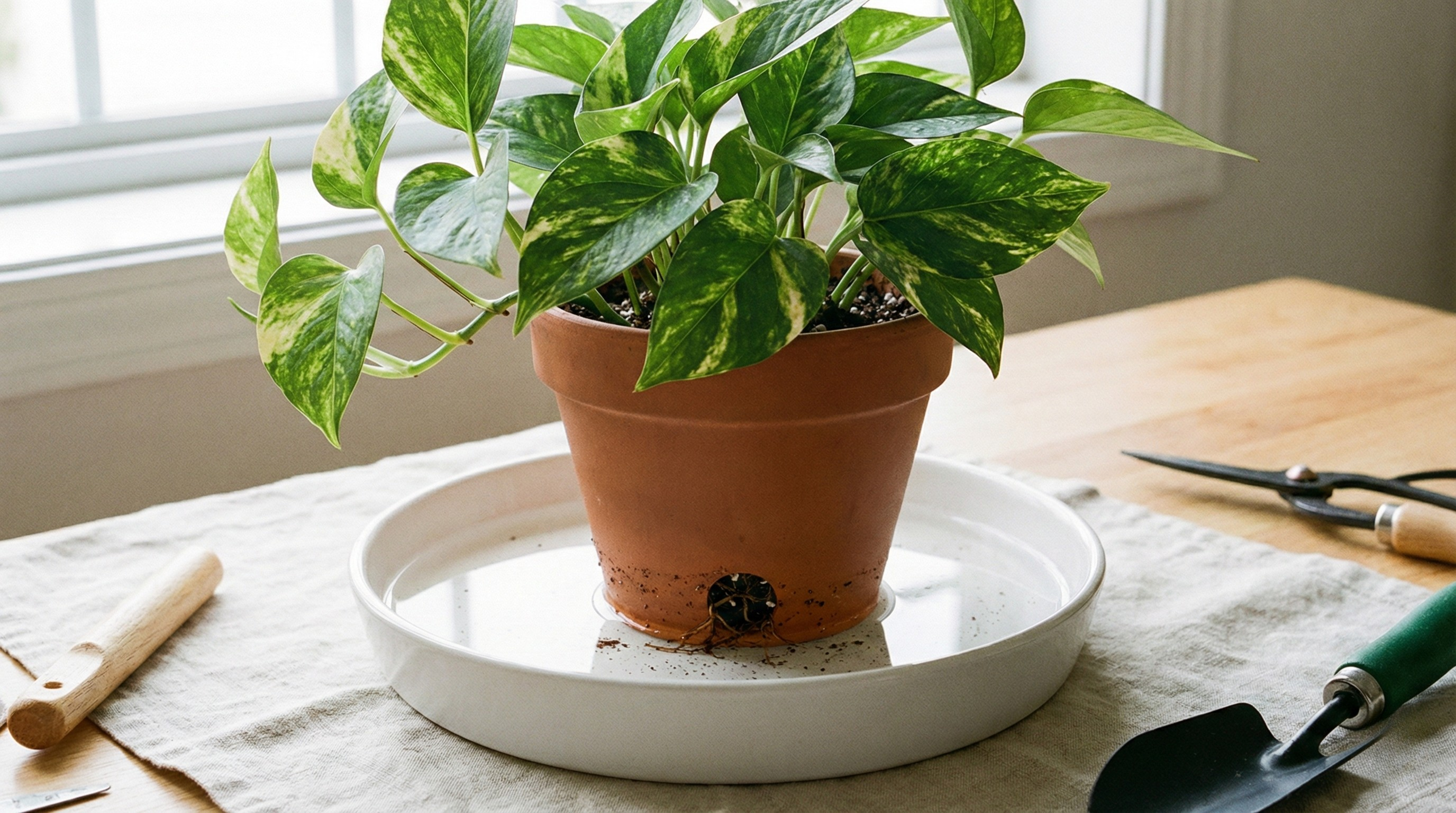
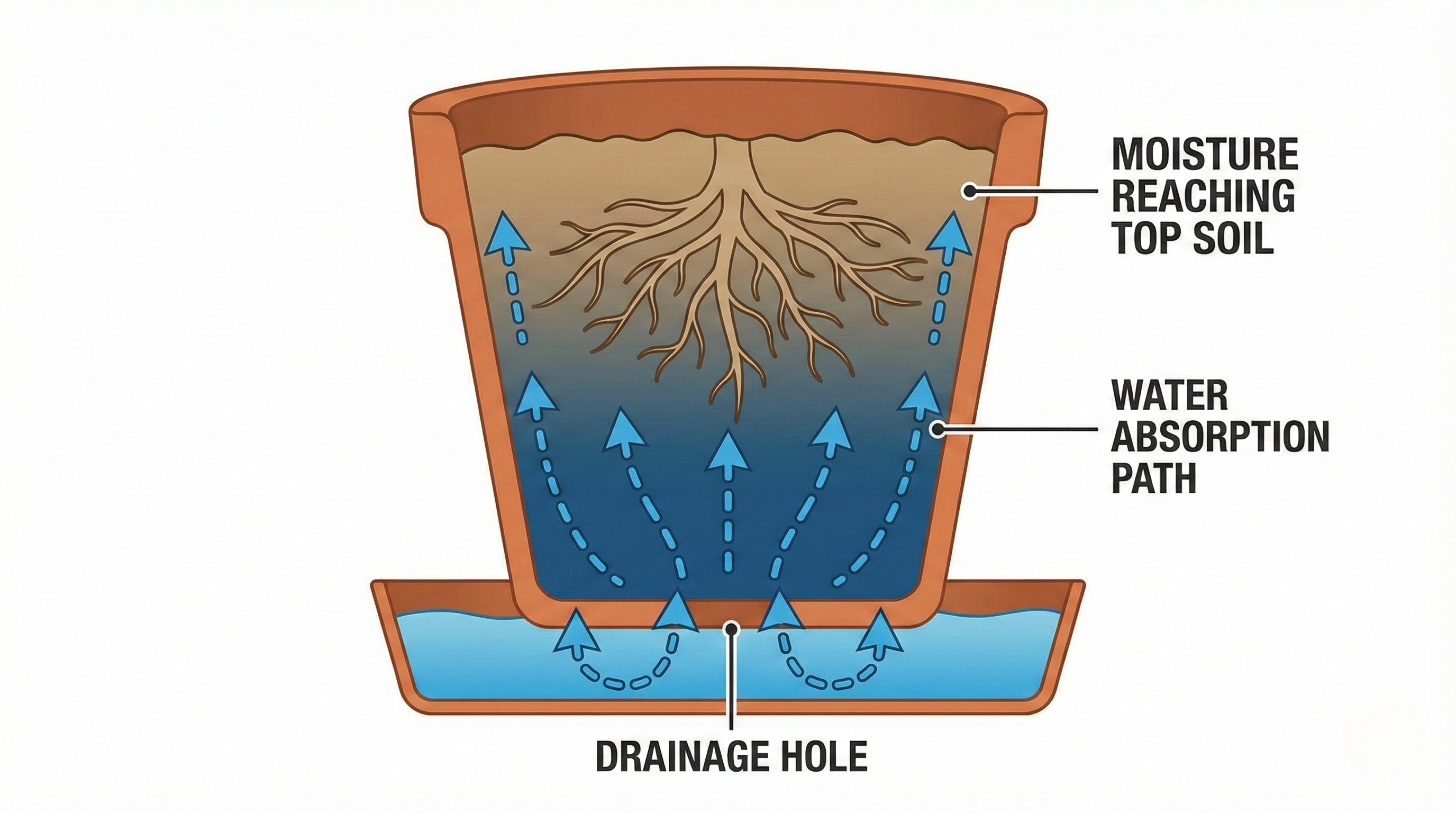
Bottom watering is exactly what it sounds like: you add water to a tray or container, then set your pot in it. The water is absorbed upward through the soil via capillary action—the same physics that lets paper towels soak up spills or water travel up a sponge.
The soil doesn't just passively sit there. When the bottom of the pot sits in water, the water molecules climb through the tiny spaces between soil particles, pulling moisture up to the top of the pot. The top inch or two of soil gets moist, and roots throughout the pot get access to water.
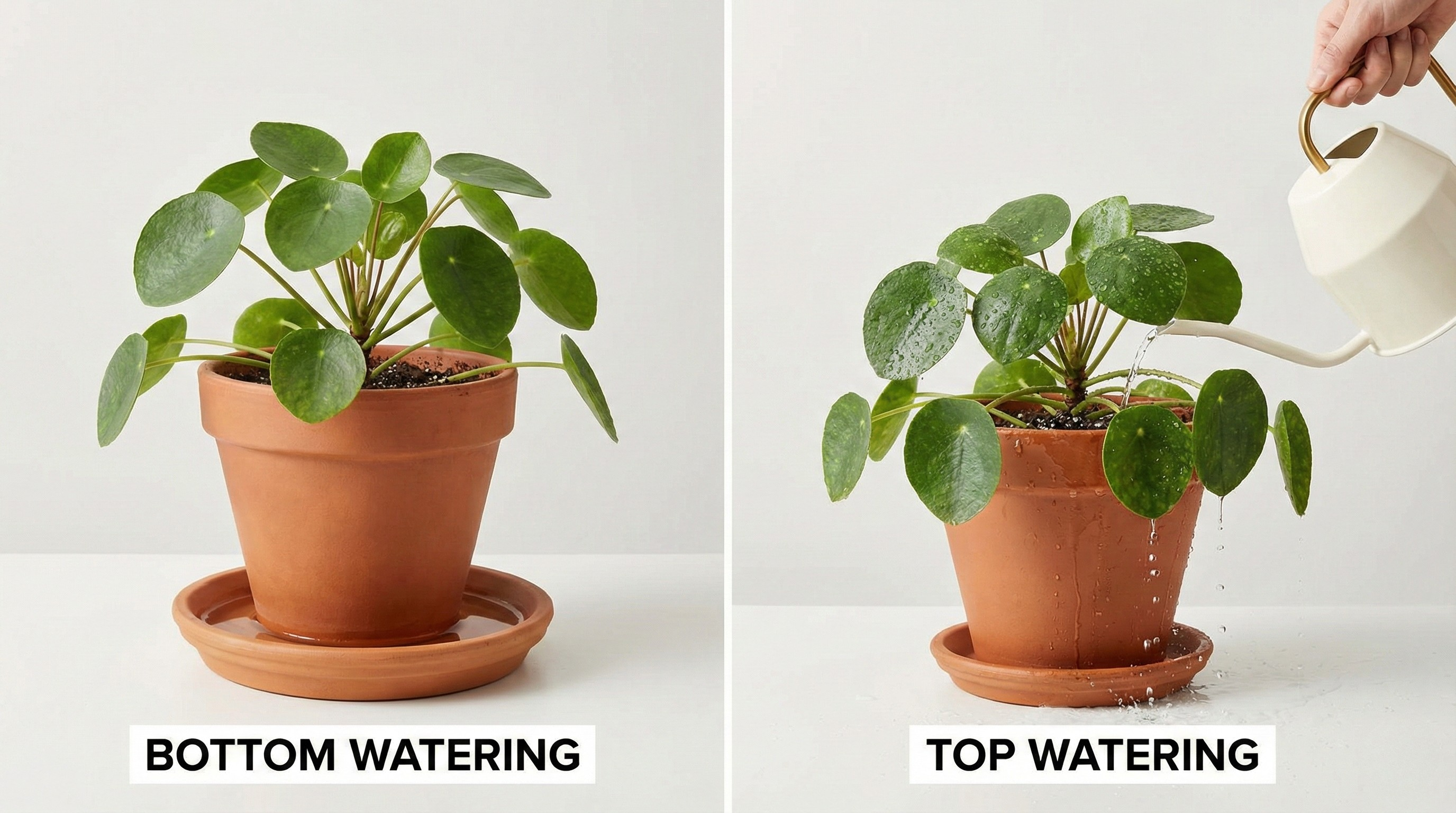
Two things bottom watering does differently from top watering:
-
Leaves stay dry. Water sits in the tray, not on foliage. This matters for plants prone to leaf rot or fungal issues.
-
Roots reach for water. Plants that get consistent bottom-watering can develop deeper, more downward-reaching root systems as they chase moisture.
The Science Behind Capillary Action
Capillary action works because water molecules are attracted to each other (cohesion) and also to the surfaces of soil particles (adhesion). This creates a "wicking" effect that pulls water upward against gravity.
It works best in soil with fine to medium particles and good pore space. Heavy, compacted soil struggles with capillary action. Extremely coarse, chunky aroid mixes can also be slow to absorb water from below.
When Bottom Watering Actually Helps
Bottom watering isn't useless—it's just overhyped. Here are legitimate situations where it's genuinely the better choice.
Fuzzy-Leaved Plants (African Violets, Streptocarpus)
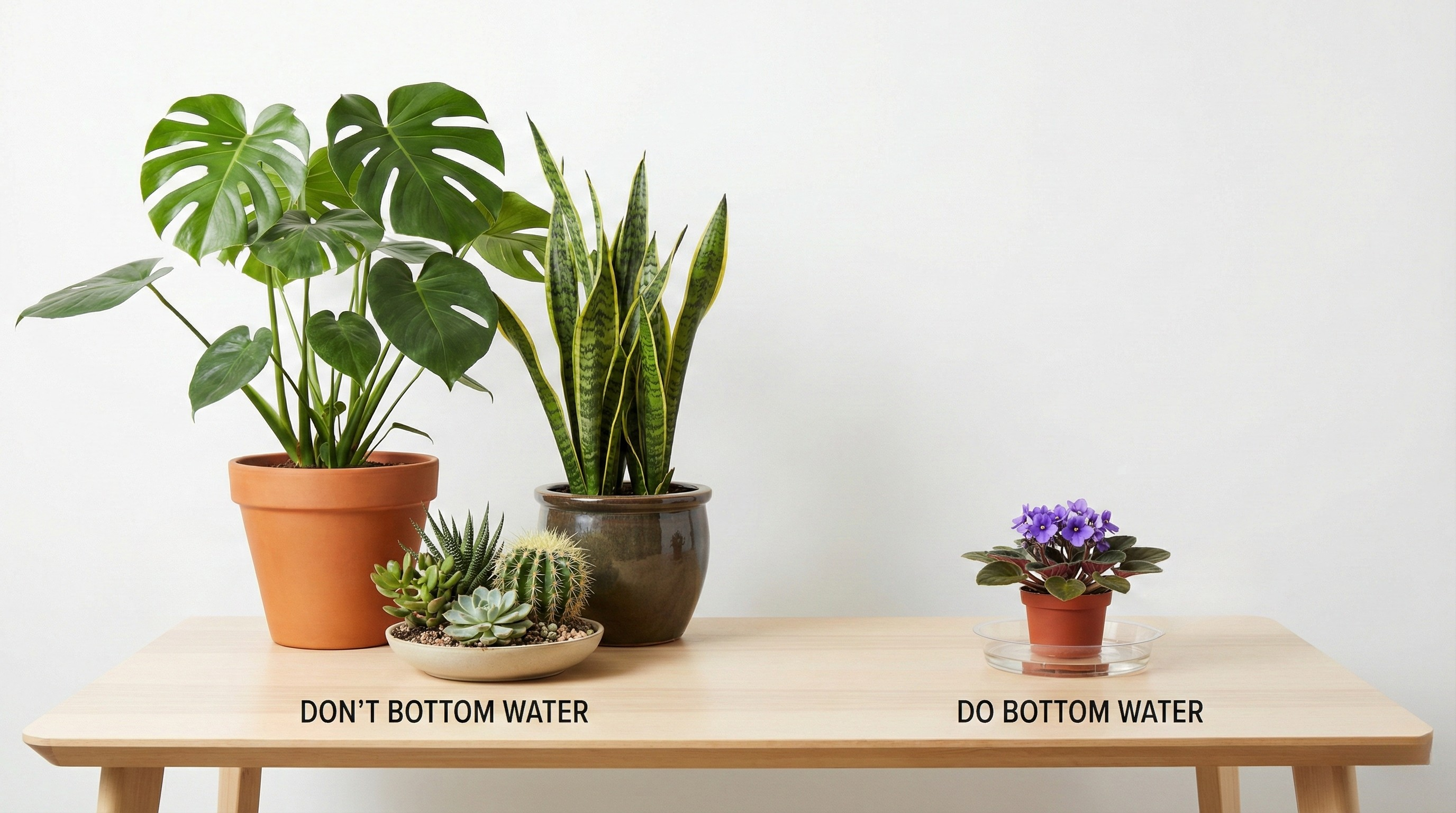
This is the number-one use case. African violets and other fuzzy-leaved gesneriads hate having water on their leaves. The trichomes (those tiny hairs) trap moisture, creating perfect conditions for crown rot and powdery mildew.
Top watering an African violet is a gamble. Bottom watering eliminates that risk entirely. The leaves never get wet, the roots get water, and everyone wins.
Hydrophobic Soil Situations
If your soil has dried out completely, it often becomes hydrophobic—meaning water runs right through it instead of absorbing. Top watering just floods the top while the rest of the root ball stays bone dry.
Bottom watering can help because the water enters from below, where the soil is most compact and most likely to be in contact with moisture sources. It rehydrates from the roots outward.
Pro tip: If your soil is severely hydrophobic, bottom watering alone won't fix it. You might need to soak the whole pot for 10-15 minutes or actually fix hydrophobic soil by breaking it up and mixing in fresh components.
Fungus Gnat Prevention
Fungus gnats lay eggs in moist soil surface. Bottom watering keeps the top layer drier, making it less attractive for egg-laying. The larvae still exist if the soil was already infested, but you're not creating ideal conditions for a new infestation.
This isn't a cure—fungus gnat identification and treatment requires addressing the actual problem. But bottom watering is a solid preventive measure.
Heavy or Dense Soil Mixes
Some plants come in heavy, water-retentive potting mixes. Top watering can lead to soggy surfaces while the bottom stays waterlogged. Bottom watering gives more uniform moisture distribution and lets you see exactly how much water the plant actually absorbed.
Preventing Overwatering on Top
For plants that like consistent moisture (ferns, some begonias), bottom watering prevents the top layer from staying perpetually wet while the roots below are just right. You get more even hydration throughout the root zone.
When Bottom Watering Is Useless (Be Honest)
Bottom watering isn't always better. Here are situations where it's just extra work with no benefit.
Large Pots Over 10 Inches
The bigger the pot, the longer it takes for capillary action to work. A 4-inch African violet might bottom-water in 10-15 minutes. A 10-inch monstera could take an hour or more—and still might not get evenly moist.
For large pots, top watering with proper drainage is actually more effective. You're not getting the "benefits" of bottom watering anyway because the water simply can't travel far enough upward in a reasonable time.
Plants with Very Deep Roots
If your plant has roots hitting the bottom of the pot and then stopping, capillary action struggles. The water has to climb an extremely long path. A deep, narrow pot is bottom watering's worst nightmare.
Quick Watering When You're in a Hurry
Bottom watering takes time. You set the pot in water, wait 15-30 minutes, then check if it's done. That's not a quick task.
If you're watering on your way out the door, top watering is faster. Bottom watering is for when you have time to let the process work.
When You Need to Flush Salts (Do Top Water Occasionally)
All water contains dissolved minerals. Fertilizer adds more. Over time, these salts accumulate in the soil and can burn roots if they concentrate too much.
Top watering flushes salts out through the bottom drainage holes. Bottom watering doesn't flush anything—it just moves water around inside the closed system of the pot.
If you only bottom water, you'll eventually get salt buildup. Even if you love bottom watering, do a monthly top water with thorough flushing to keep salts from accumulating.
How to Bottom Water Plants: Step-by-Step
Ready to give it a try? Here's the process.
Step 1: Prepare Your Water Container
Grab a tray, tub, bowl, or sink. Anything that can hold water and fit your pot. Room-temperature water is best—cold water can shock roots, and hot water is just weird.
Step 2: Check Your Drainage Holes
Bottom watering only works if your pot has drainage holes. If your pot is sealed at the bottom, you're not bottom watering—you're just making a swamp. Make sure holes exist and aren't clogged.
Step 3: Add Water to the Tray
Pour in 1-2 inches of water. You don't need to fill the whole tray. You're not submerging the pot—you're letting capillary action do the work from below.
Step 4: Wait for Capillary Action
Set the pot in the water and wait. Most plants need 15-30 minutes. Check at 15 minutes to see how it's progressing.
Step 5: Test the Soil Moisture
Stick your finger into the top inch of soil. When it feels moist (not soaking, just evenly damp), the plant has absorbed what it needs. If the top is still dry, wait another 10-15 minutes.
Step 6: Remove and Drain Excess
Take the pot out of the water tray. Let it sit for 5-10 minutes so excess water drains from the holes. Then return it to its decorative pot or saucer.
Pro tip: If you have a humidity tray (pebbles + water), the pot should sit on pebbles, not directly in water. Direct water contact can lead to root rot if the holes stay constantly submerged.
Troubleshooting: When Bottom Watering Doesn't Work
Hydrophobic Soil Won't Absorb Water
If water sits in the tray but the soil stays dry, your soil is hydrophobic. Bottom watering alone won't fix this.
Fix: Soak the whole pot in a bucket of water for 10-15 minutes until the root ball is fully saturated. Then repot with fresh, well-moistened soil mixed with perlite or orchid bark to improve structure.
Soil Wet on Bottom but Dry on Top
This usually means your soil mix is too coarse, or the pot is too large for the root ball. The water is moving up but not far enough.
Fix: Wait longer (it might eventually reach the top), or top water lightly to finish the job. Consider repotting into a more appropriately sized container.
Water Absorption Too Slow
Extremely chunky aroid mixes, pure coco husk, or heavily mulched surfaces can slow capillary action to a crawl.
Fix: Add a thin layer of fine potting mix on top, or bottom water larger plants for longer periods. Accept that some mixes just aren't ideal for bottom watering.
Root-Bound Plants Won't Soak Properly
If roots have circled the bottom of the pot, they can create a barrier that water struggles to penetrate. The center of the root ball stays dry.
Fix: You're overdue to repot. Untangle the roots, trim if necessary, and give the plant fresh soil in a slightly larger pot.
Bottom Watering vs Top Watering: Comparison
| Aspect | Bottom Watering | Top Watering |
|---|---|---|
| Time investment | 15-30 min per plant | 2-5 min per plant |
| Leaf wetness | Stays dry | Can get wet |
| Salt flushing | None | Yes, with proper drainage |
| Best for | Fuzzy plants, gnat prevention | Large pots, quick watering |
| Skill level | Easy once learned | Easiest method |
When to alternate: Most plants do fine with mostly top watering and occasional bottom watering sessions. Bottom water monthly for fuzzy plants or as a preventive against fungus gnats.
Common Mistakes to Avoid
Leaving Plants in Water Too Long
Don't set a plant in water and forget it for hours. Overwatered roots rot. The top inch should be moist—test it and remove the pot when it reaches that point.
Never Top Watering (Salt Buildup Warning)
We've said it before but it bears repeating: salts accumulate without occasional top watering and flushing. Do a monthly top water with thorough drainage.
Using Wrong Water Level
1-2 inches is plenty. Filling the tray too high means the bottom holes stay submerged, creating a constant wet environment perfect for root rot.
Assuming All Plants Benefit Equally
African violets? Yes. A 12-inch monstera in a chunky aroid mix? Probably not. Match your method to the plant and pot size.
FAQ
Does bottom watering cause root rot?
Only if you leave the plant sitting in water too long. Properly executed bottom watering gives the plant what it needs and then stops. The risk comes from neglect, not the technique itself.
How do I know if my plant absorbed enough water?
Test the top inch of soil with your finger. When it's evenly moist (damp but not soggy), the plant has absorbed enough. For most plants, this takes 15-30 minutes.
Can I bottom water all my plants?
No. Large pots, very deep-rooted plants, and those in extremely coarse soil mixes won't benefit. Save bottom watering for plants under 8-10 inches in diameter.
How often should I bottom water?
Whatever your normal watering frequency is, bottom watering replaces a top watering session. If you water weekly, you can bottom water instead of top watering any week you choose.
Will bottom watering kill my plant?
Not if you do it right. Poor technique (leaving plants in water too long, never flushing salts) can cause problems, but bottom watering itself is a safe, effective method when used appropriately.
The Verdict
Bottom watering is a legitimate technique with specific strengths: it keeps fuzzy leaves dry, helps with fungus gnat prevention, and rehydrates hydrophobic soil better than top watering alone.
But it's not superior to top watering in all situations. Large pots, deep-rooted plants, and quick watering tasks are better served by traditional methods.
Use bottom watering where it makes sense. Don't use it everywhere just because someone on Instagram said it's better. Match your technique to the plant, the pot, and the situation.
Want a complete breakdown of watering fundamentals? Check out our complete watering guide for everything else you need to know.
Bottom watering your African violets and still seeing problems? Our troubleshooting guide helps you figure out if you're overdoing it—or if something else is wrong.