Bird of Paradise Care Guide — How to Get Those Epic Orange Flowers
The dream: dramatic orange flowers that look like birds in flight. The reality: most advice says it won't happen indoors. Here's what actually works.
Why Your Bird of Paradise Can Bloom Indoors (And Why Most Advice Says Otherwise)
Here's the thing: most plant care sites will tell you bird of paradise won't bloom indoors. Bloomscape says it straight up. The Sill gives it a passing mention. And honestly? They're not wrong — it's hard.
But "won't bloom" is different from "can't bloom." The difference is in the details.
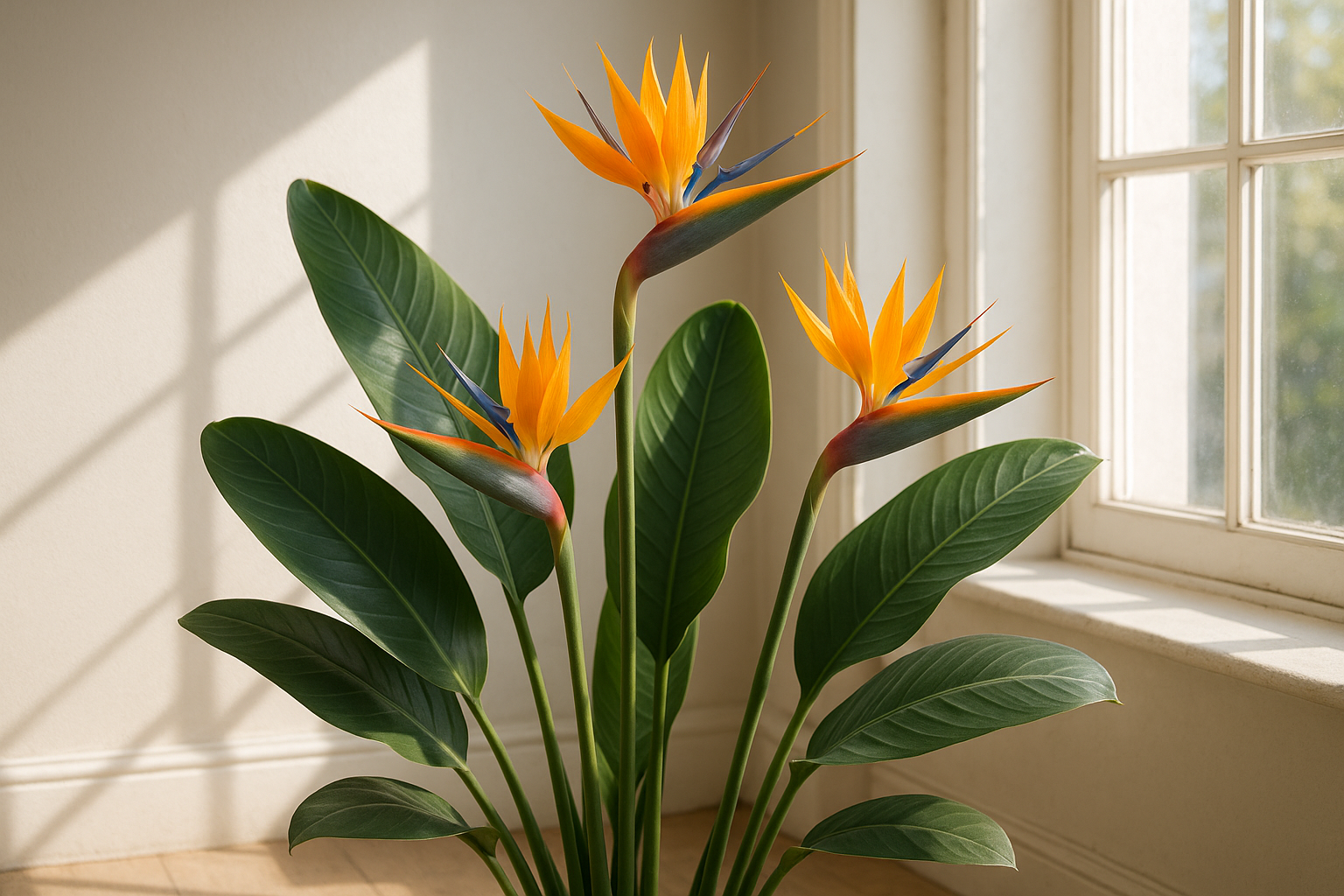
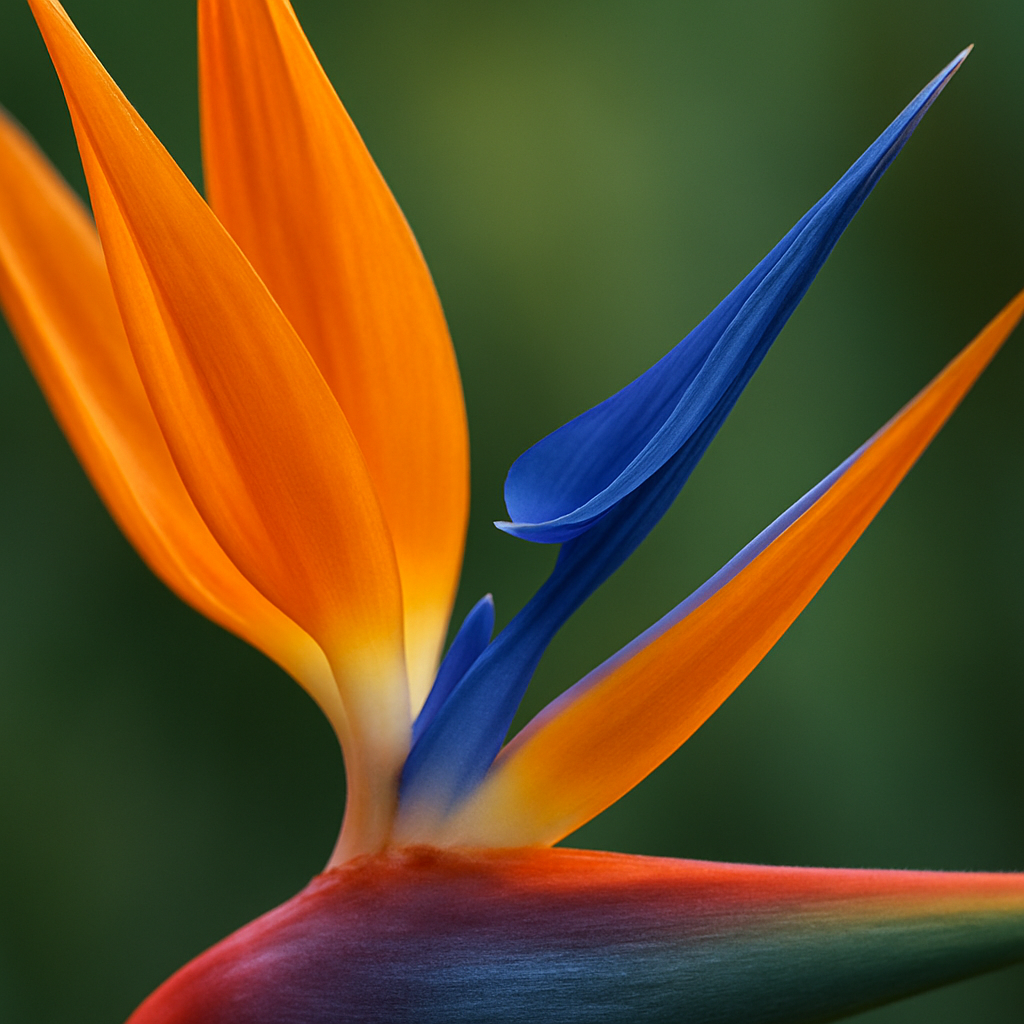
In the wild (South Africa, specifically), bird of paradise plants hit their flower-producing stride around 3-5 years old, when they get enough light, heat, and yes — root restriction — to trigger blooming. Those iconic orange flowers (actually modified leaves called spathes) emerge when the plant decides it has enough energy stored and enough stress to reproduce.
Indoors, we're trying to replicate conditions that took this tropical plant millions of years to evolve. That's the challenge. But it's not impossible.
Light: The #1 Factor for Triggering Blooms
Your bird of paradise needs bright, direct light — 4 to 6 hours minimum every day. This isn't negotiable. No amount of fertilizer or patience will override bad lighting.
The ideal setup:
- South-facing window — This is your best bet. Direct sun for most of the day.
- West-facing window — Second best, gets good afternoon sun.
- East-facing window — Acceptable, morning sun is fine.
- North-facing window — Probably not enough. Your BOP will grow, but won't bloom.
If you're in a north-facing apartment or your windows are blocked by buildings, you need grow lights. This is the single biggest factor holding back indoor blooming.
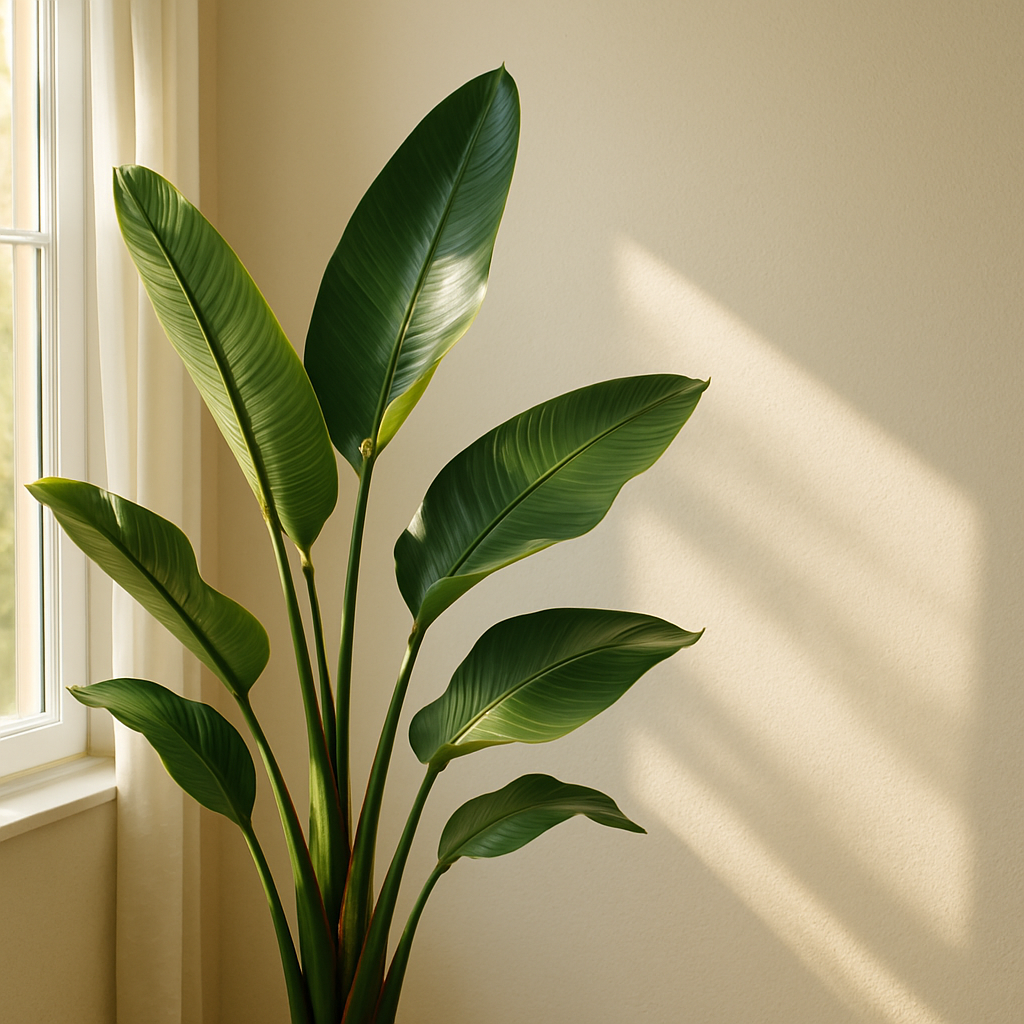
If you're supplementing with grow lights, run them 10-14 hours daily. LED grow lights are your best option — they're efficient and don't cook your plants. Position them 12-18 inches above your BOP.
Watering for Blooms: Consistent Moisture Year-Round
Bird of paradise isn't fussy about humidity, but it hates drying out completely. Consistent moisture is the goal — think "damp but not soggy."
Watering schedule:
- Spring/Summer (growing season): Water every 1-2 weeks when the top 2 inches of soil are dry
- Fall/Winter (dormant/slow season): Water every 2-3 weeks, let the soil dry out more between waterings
The key is consistency. Irregular watering stresses the plant and takes energy away from flower production. If you forget and let it wilt, it survives — but each wilt event sets back blooming.
A moisture meter takes the guesswork out of watering. Your BOP will thank you.
The Best Fertilizer for Bird of Paradise Blooming
Here's where most people mess up: they use a general-purpose fertilizer with equal NPK ratios (like 10-10-10). That's fine for foliage, but for blooming, you want different numbers.
What to look for:
- Bloom boosters — Higher phosphorus (P) is what triggers flowering. Look for ratios like 10-30-20 or similar.
- Apply during growing season — Spring through late summer, every 2-4 weeks.
- Cut back in fall/winter — Stop fertilizing or reduce significantly during dormant season.
The phosphorus tells your plant "hey, it's time to make seeds" — which is how those beautiful orange flowers actually form. It's the same logic behind forcing tomatoes to fruit.
Temperature & Dormancy: Getting the Cold Signal Right
Bird of paradise is tropical, but it does benefit from a slight cooling period — basically a winter dormancy that signals "rest time is over, let's make flowers."
Temperature needs:
- Growing season: 65-80°F (18-27°C) — normal room temperature
- Winter/rest period: 50-60°F (10-15°C) for 4-6 weeks — this mimics dry season in its native habitat
The key: don't keep your BOP at constant warm temperatures year-round. That sounds logical (it's a tropical plant!), but it actually prevents blooming. The cool period triggers hormonal changes that lead to flower production.
If you can't cool down a room in winter, that's okay — your BOP will still grow and look gorgeous, it just might not bloom as reliably.
The Pot-Bound Strategy: Root Restriction for Flower Production
This is the secret that most care guides skip over: bird of paradise blooms more reliably when it's slightly cramped in its pot.
In the wild, these plants grow in competition with other vegetation. When roots hit boundaries — rock, other plants, soil constraints — the plant shifts energy from "make more roots" to "make seeds." That's the flowers we want.
How to pot-bound for blooming:
- Go tighter than feels comfortable — If you'd normally size up to a 10" pot, stick with 8"
- Wait between repottings — Once your BOP is in its final-ish pot (12-14"), you might not need to repot for years
- Use terracotta — It breathes better than plastic and helps regulate root moisture
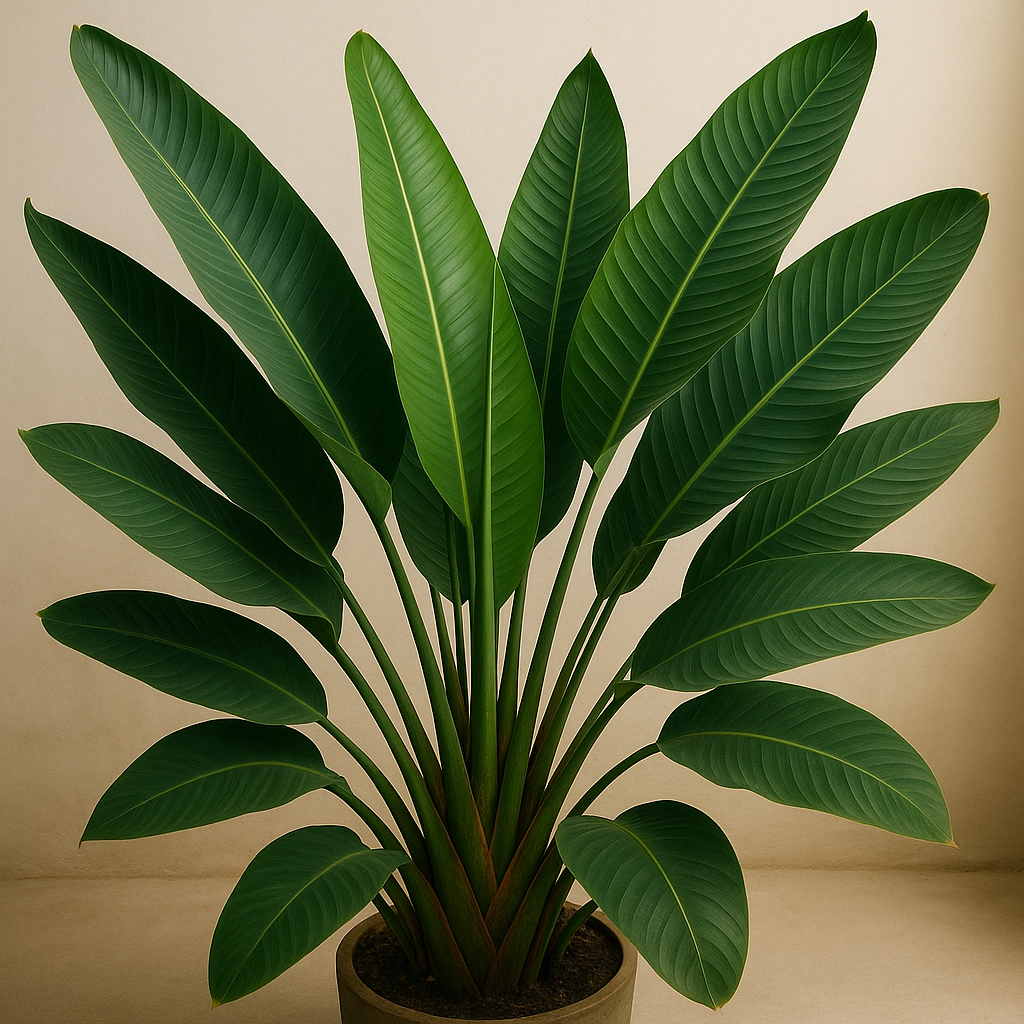
Yes, this feels counterintuitive. We're trained to give plants more space, not less. But for bird of paradise specifically, root restriction is a proven blooming trigger.
How Long Until Your Bird of Paradise Flowers?
Patience is key here. Bird of paradise is not a fast bloomer, especially indoors.
Realistic timeline:
- Juvenile plant (1-2 years): No flowers expected. Focus on foliage.
- Maturing plant (3-4 years): May start pushing flower spikes if conditions are ideal
- Mature plant (5+ years): Regular blooming if everything else is dialed in
The plant needs to reach sufficient size and energy stores before it has the resources to flower. Those giant paddle-shaped leaves are solar panels — the bigger and healthier they are, the more energy your BOP has for flower production.
If you bought a mature plant from a nursery (already flowering size), you have a head start. If you started with a pup or seed, strap in for the long haul.
Troubleshooting: Why Your Bird of Paradise Isn't Blooming
"My BOP has never flowered" Check the basics first:
- Light: 4-6 hours of direct sun? If not, add grow lights.
- Age: Is it at least 3 years old? Younger plants won't bloom.
- Pot size: Is it too big? Try the pot-bound strategy.
"It had flowers at the store but not since" Retail plants are often forced with perfect greenhouse conditions and growth hormones. Now it's in your less-than-perfect home and needs to readjust. Keep consistent care and be patient.
"The leaves are drooping" Usually underwatering or too much heat/light. Check soil moisture first. If it's dry, water; if wet and drooping, you might have root rot (check the roots).
"Brown leaf edges" Low humidity or salt buildup from tap water. Use filtered water if your tap water is hard. Mist occasionally or use a humidifier nearby.
"No new growth" Nutrients might be depleted. Apply bloom booster fertilizer during growing season. Also check that the plant isn't root-bound too tight — there's a limit.
"Leaves splitting but no flowers" Leaf splitting (fenestration) is normal for mature BOPs and just means it's healthy. It's not an indicator of blooming potential — that's all about light, age, and fertilizer.
Bird of Paradise Blooming FAQ
Can bird of paradise really bloom indoors? Yes, but it requires the right setup: 4-6 hours of direct light, bloom-boosting fertilizer, and patience (3-5 years minimum). Most advice that says "won't bloom indoors" really means "won't bloom easily indoors."
Why did my BOP stop blooming? Common causes: moved to lower light, reduced fertilizing in winter, repotting to a bigger pot, or seasonal dormancy. Check what's changed in your care routine.
Do I need to prune bird of paradise to encourage blooms? Not really — unlike some plants, BOP doesn't need pruning to bloom. Just remove dead or damaged leaves for aesthetics.
How often does a mature bird of paradise bloom? Once established, a healthy indoor BOP can bloom 2-4 times per year, typically in spring and summer. Each flower spike lasts 1-2 weeks.
My BOP has full sun but still won't bloom — what's wrong? Check: Is it mature enough (3+ years)? Are you fertilizing with bloom booster? Is it slightly pot-bound? Is there consistent watering? If all are dialed in and still nothing, patience — young plants are stubborn.
Bottom Line
Getting your bird of paradise to bloom indoors isn't about one magic trick — it's about nailing the fundamentals: light, fertilizer, root restriction, and time.
Light is the hardest part for most indoor growers. If you've got a bright south-facing window or are willing to run grow lights, you're already halfway there. Add bloom-boosting fertilizer during growing season, keep it slightly pot-bound, and give it 3-5 years to mature.
Is it harder than just growing a pothos? Absolutely. But when those first orange flowers emerge — looking like tropical birds in flight — it's worth every bit of effort.
Your BOP might never match what you'd get in a greenhouse. But indoor blooms are absolutely achievable with the right setup. The key is treating this plant like the dramatic diva it is.
Want to nail the light setup first? Check out our best budget grow lights for indoor plants guide to get started.
Products We Love
We use these products ourselves:
- Terracotta Planters with Drainage — breathable pots that help with the root-restriction strategy
- Dyna-Gro Grow Plant Food — solid all-purpose option for overall plant health