Best Water for Houseplants — Tap vs Filtered vs Distilled (What Actually Matters)
Most of what you've been told about water for plants is either overkill or missing the point entirely.
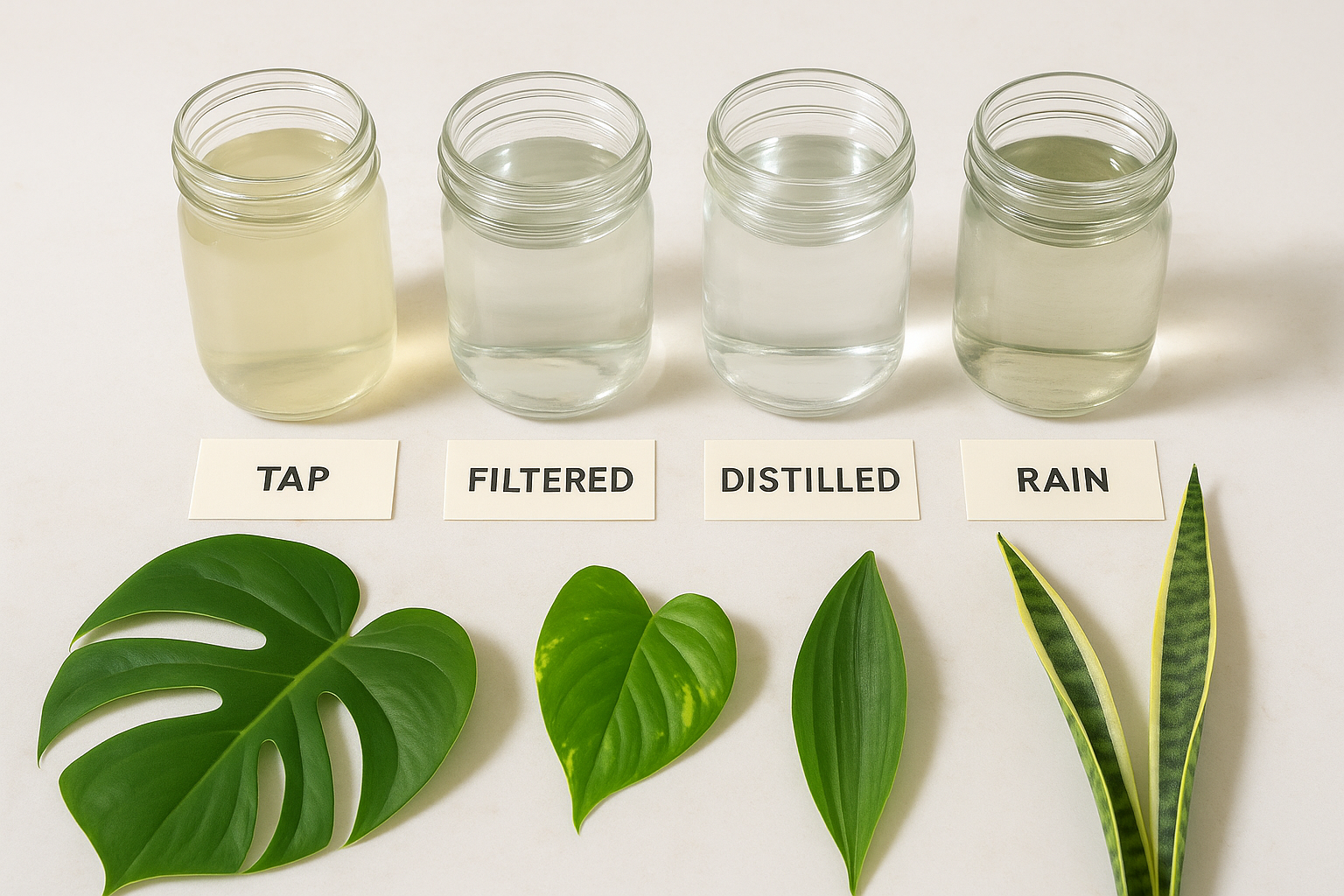
Why Water Type Gets Overblown (And When It Doesn't)
If you've spent time in plant forums, you've seen the debates: tap vs filtered vs distilled vs rainwater vs reverse osmosis. People argue about which water type is "correct" like it's a moral stance.
Here's the truth nobody wants to say clearly: water quality matters for maybe 10-15% of common houseplant problems. The other 85-90% is watering frequency, light, and soil drainage.
Before you spend money on a fancy water system, ask yourself: is the plant actually declining, or is it just growing slower than you'd like? Slow growth in a otherwise healthy plant is usually light or nutrition — not water.
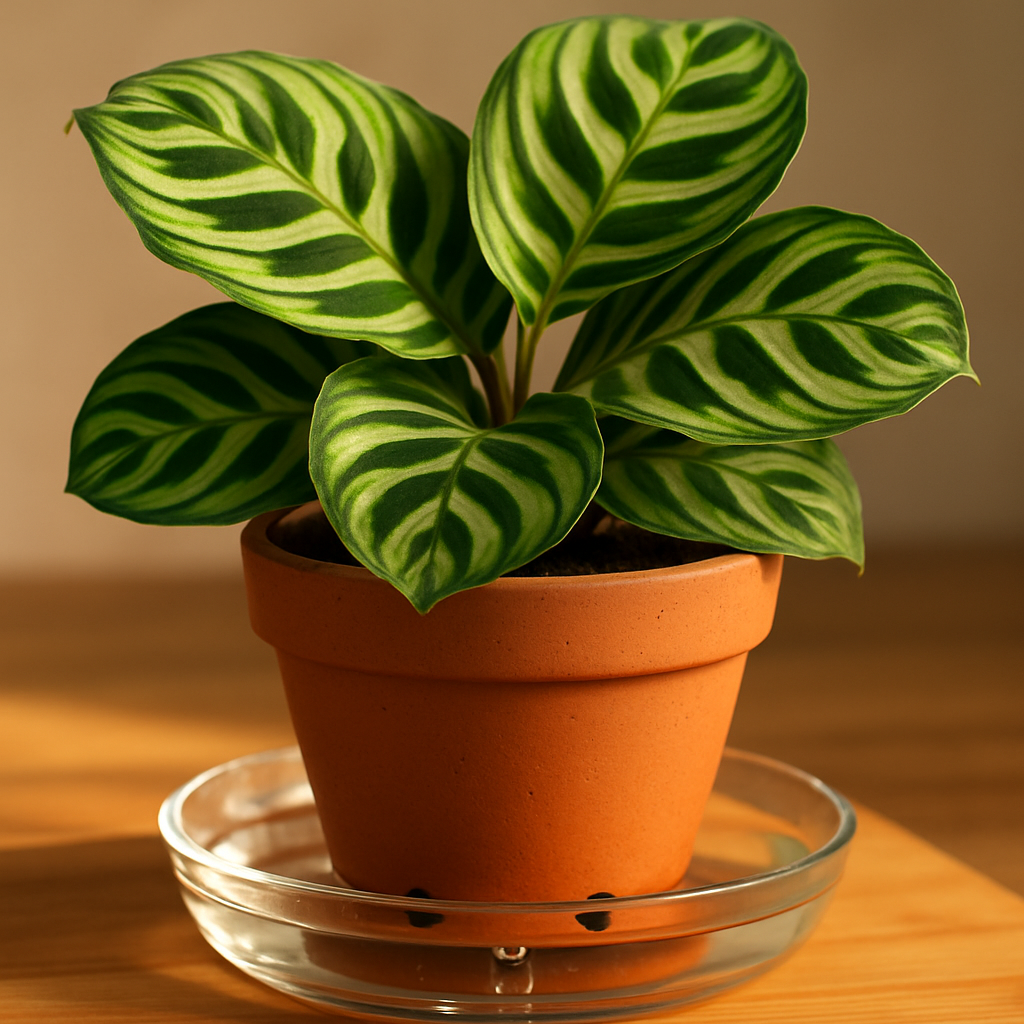
The exception: plants that are genuinely sensitive to dissolved solids, chlorine, or fluoride. Those plants will show specific symptoms — brown leaf edges, crispy tips that don't improve with better drainage, a white crust on the soil surface. If your sensitive plants (Calathea, I'm looking at you) are struggling despite good care, water quality is a real culprit.
For everyone else? Your tap water is probably fine.
What Actually Gets Into Your Tap Water
Tap water isn't just H2O. Depending on where you live, it contains varying amounts of:
Chlorine and Chloramine — Added by municipal water systems to kill bacteria. Chlorine evaporates if you let water sit 24+ hours. Chloramine does not — it persists. Both can damage beneficial soil microbes and burn sensitive plant roots over time.
Fluoride — Added to most municipal water supplies for dental health. Fine for humans, but some plants (notably Calathea and other Marantaceae) are genuinely sensitive to it. Leaves develop brown edges and tips.
Hard Water Minerals — Calcium and magnesium, common in groundwater. These aren't bad — plants need calcium — but high concentrations build up in soil over time, raising pH and causing white crusty deposits on the surface.
Sodium — If you have a water softener, it replaces calcium/magnesium with sodium. Softened water can be genuinely harmful to plants, especially in sensitive species. The sodium doesn't evaporate and accumulates in soil.
The bottom line: Most tap water is fine for tolerant plants. The issues only surface with sensitive species, very old soil, or if you live somewhere with unusually hard or heavily treated water.
The Quick Test: Figure Out What's In Your Water
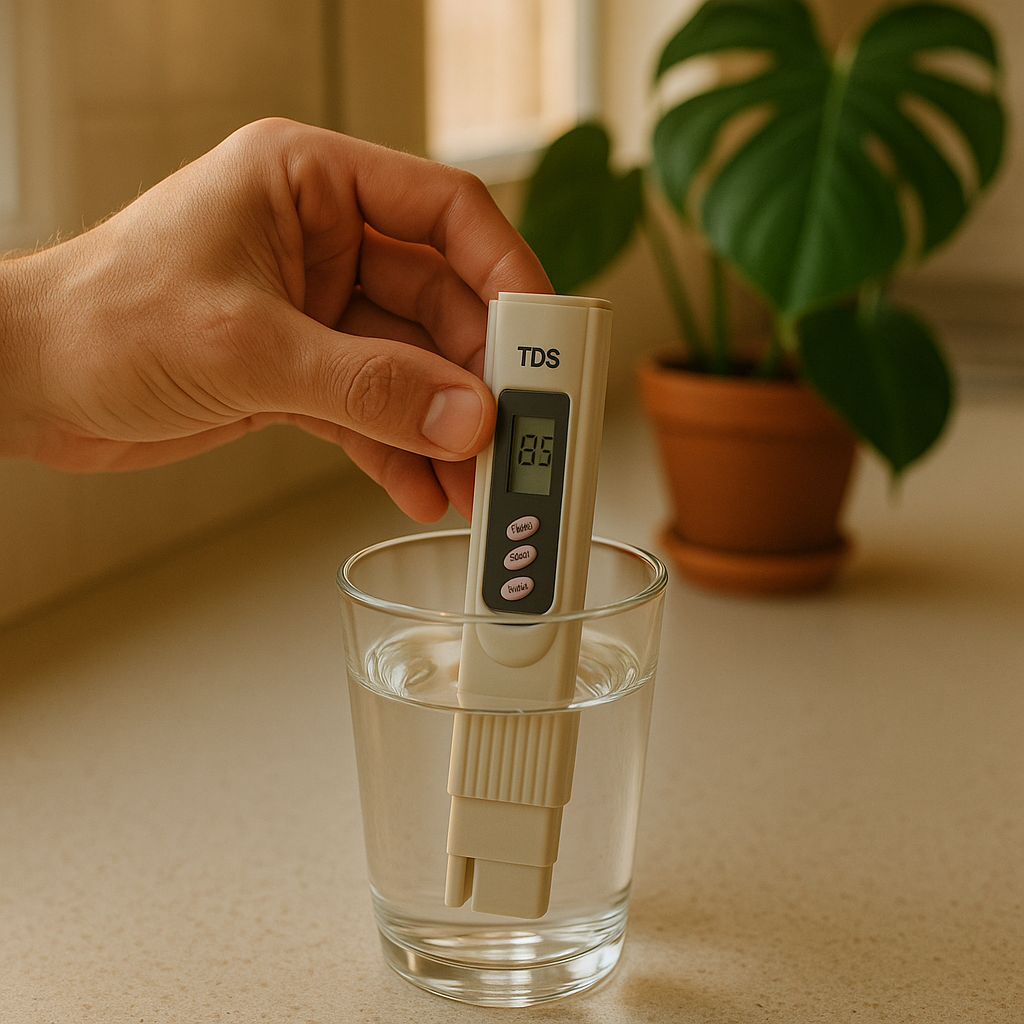
Before buying any filtration system, you need to know what you're actually dealing with. The cheapest and fastest way to do this is a TDS meter.
TDS stands for Total Dissolved Solids — the amount of minerals, salts, and other dissolved stuff in your water. It doesn't tell you exactly what's in there, but it gives you a quick reading that helps you decide what to do next.
Check TDS Before You Water — $15–$30 on Amazon
A TDS meter is a small pen-shaped device. You dip it in water, and it gives you a reading in PPM (parts per million).
What the Numbers Mean
| TDS Reading | What It Means | Water Quality |
|---|---|---|
| 0–100 PPM | Clean / Low minerals | Ideal for sensitive plants |
| 100–300 PPM | Moderate dissolved solids | Fine for most plants |
| 300+ PPM | High minerals / Hard water | May cause buildup over time |
Most municipal tap water falls between 100–300 PPM depending on your area. If you're above 300, you'll see more mineral buildup on soil surfaces and may need to flush occasionally.
Want more detailed info? The EPA requires water utilities to publish annual water quality reports. Look up yours — it lists everything from lead to chlorine to hard minerals. This is free and more detailed than any test kit.
Water Types Compared: Tap vs Filtered vs Distilled vs RO vs Rain
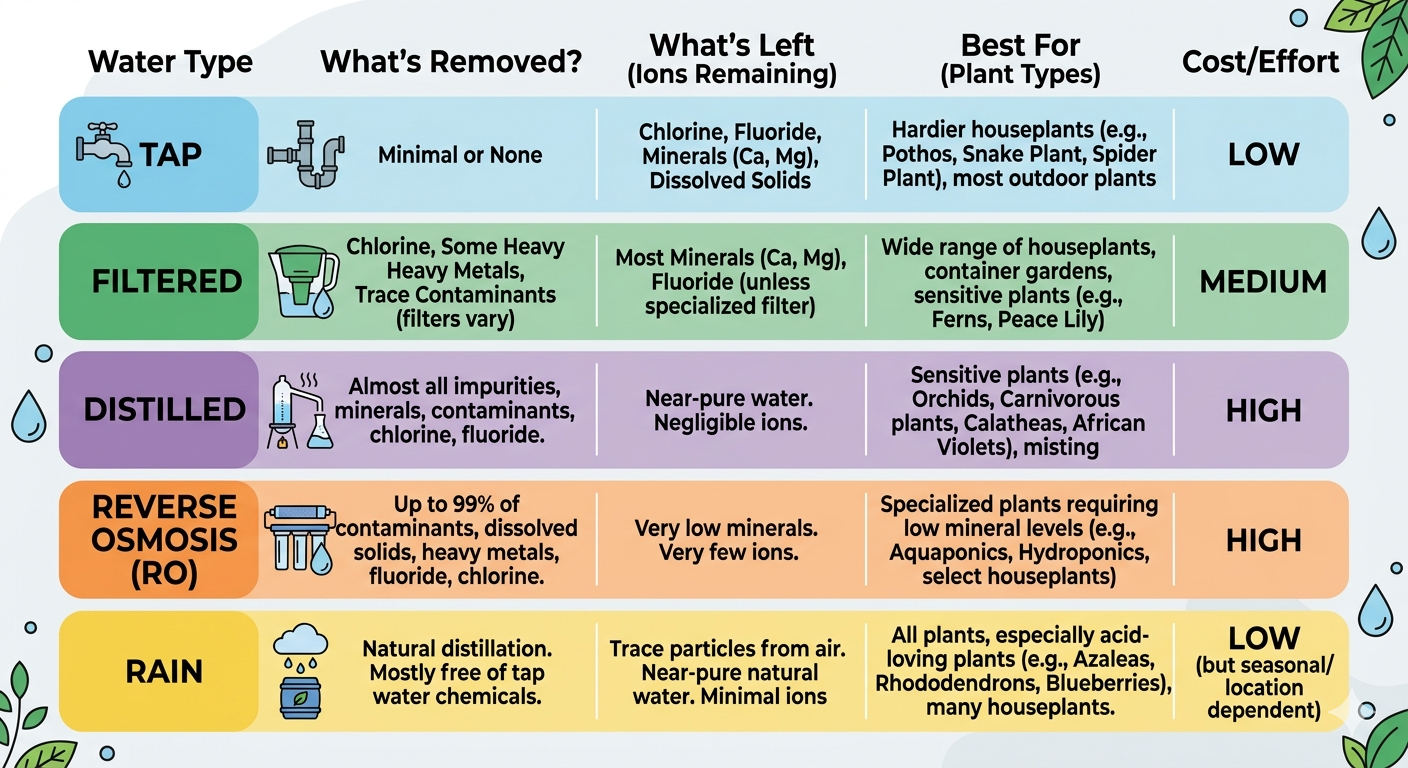
Not all water is created equal. Here's the honest breakdown:
| Water Type | What's Removed | What's Left | Best For | Cost/Effort |
|---|---|---|---|---|
| Tap | Nothing | Everything (chlorine, minerals, sodium) | Tolerant plants (pothos, snake plant) | Free, instant |
| Let Tap Sit 24h | Chlorine (not chloramine) | Minerals, fluoride, sodium | Moderate-sensitivity plants | Free, takes planning |
| Carbon Filter (Pitcher) | Chlorine, some chloramine, large particles | Minerals, fluoride, sodium | Most tropicals (Monstera, Philodendron) | ~$25–$40 + ongoing filter cost |
| Under-Sink Carbon Filter | Chlorine, chloramine, some fluoride, larger contaminants | Some minerals, fluoride | Sensitive plants (Calathea, Orchids) | $80–$150 + filter changes |
| Distilled | Everything — 0 TDS | Pure H2O | Carnivorous plants, most sensitive species | ~$1/gallon or $150–$300 for a distiller |
| Reverse Osmosis (RO) | ~95-99% of everything | Trace minerals | Carnivorous plants, very sensitive species | $150–$400 system + waste water |
| Rainwater | Municipal treatment chemicals | Some environmental contaminants, natural minerals | Plants that prefer acidic conditions | Free if you collect it, seasonal availability |
Remove Chlorine Without Plumbing Changes — Water Filter Pitchers from $25
For most people with most houseplants, a carbon filter pitcher is the sweet spot. It removes chlorine and chloramine (the two most actively harmful things for sensitive plants) without removing the beneficial trace minerals.
Plant Sensitivity Tiers: Which Plants Need Better Water?
Here is where the decision tree actually matters. Not all plants are created equal when it comes to water quality.
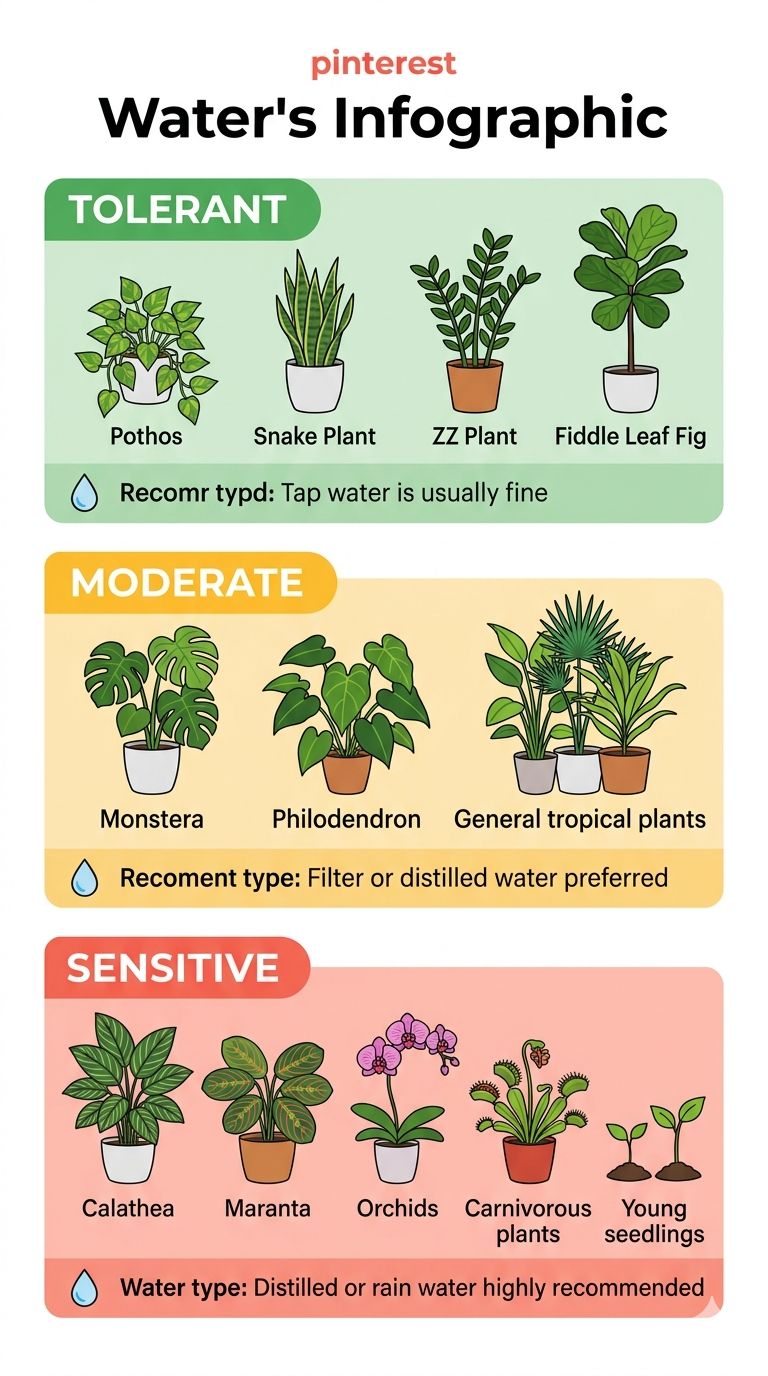
Tier 1: Tolerant Plants — Tap Water Is Fine
These plants genuinely do not care about your water type:
- Pothos (Epipremnum aureum) — will grow in tap water, filtered water, or stagnate water in a vase and still thrive
- Snake Plant (Sansevieria/Dracaena trifasciata) — built for neglect, handles anything
- ZZ Plant (Zamioculcas zamiifolia) — extremely drought tolerant, not picky about water type
- Fiddle Leaf Fig (Ficus lyrata) — not ideal in very hard water, but tap is generally fine
- Spider Plant (Chlorophytum comosum) — tolerant, though may show tip burn in very chlorinated water
If your collection is mostly these plants and you live somewhere with normal tap water, you're fine. Don't overthink it.
Tier 2: Moderate Sensitivity — Filtered or Let Tap Sit
These plants do better with some intervention but won't die from tap water:
- Monstera (Monstera deliciosa and varieties) — benefits from removing chlorine, otherwise fine
- Philodendron (most species) — similar to Monstera
- Peace Lily (Spathiphyllum) — appreciates filtered water but not required
- Rubber Plant (Ficus elastica) — slightly sensitive to chlorine
- Most tropical aroids — a simple carbon filter pitcher covers this tier
The easiest solution for this tier: let your tap water sit uncovered for 24 hours, or use a basic carbon filter pitcher. Either removes chlorine and handles most of the issue.
Tier 3: Sensitive Plants — Invest in Pure Water
These plants will show it if you get water wrong:
- Calathea — the classic water sensitivity. Brown edges, crispy tips, leaf curling. Distilled or RO water is often the only solution that works consistently.
- Maranta (Prayer Plant) — same family as Calathea, same issues
- Orchids (Phalaenopsis and others) — roots are sensitive to dissolved solids; filtered or distilled improves outcomes
- Carnivorous Plants (Sarracenia, Drosera, Nepenthes) — these evolved in nutrient-poor environments. Tap water's mineral load is genuinely toxic to them. RO or distilled only.
- Seedlings and Cutties — young plants have delicate root systems more susceptible to dissolved solid damage
For this tier, the investment in a proper water system (under-sink filter or RO) pays off. You'll see the difference in plant health.
The "Let It Sit" Myth — Does Letting Tap Water Sit Help?
You've heard this one: "Just let your tap water sit overnight before watering, and the chlorine will evaporate."
Partially true, but incomplete.
Letting water sit uncovered for 24+ hours does remove chlorine — it off-gasses into the air. This is real and helpful for sensitive plants.
What it does not remove:
- Chloramine — used by an increasing number of municipalities. Does not evaporate like chlorine does.
- Fluoride — doesn't evaporate
- Dissolved minerals (calcium, magnesium) — doesn't evaporate
- Sodium (if on softener) — definitely doesn't evaporate
So letting water sit is better than nothing, but it's not a complete solution for plants sensitive to those other elements. It's a good practice for general houseplant care (removing chlorine is genuinely helpful), but don't think it's solving everything.
The better option: A carbon filter pitcher removes chlorine AND chloramine (the two biggest actual problems) without requiring you to remember to fill a container the night before. For most people, this is the practical upgrade.
When to Actually Worry About Your Water (And When Not To)
Water quality problems leave specific clues. Learn to read them:
Signs Water Quality IS the Problem
- Brown leaf tips persisting despite correct watering and humidity — if the rest of the leaf looks fine but the edges/tips are brown and crispy, mineral or fluoride buildup is often the cause
- White or yellow crusty deposits on soil surface — hard water minerals or salt buildup from softened water
- Slow decline in Calathea, Maranta, or other sensitive species — even when everything else (light, watering schedule, humidity) is correct
- Leaf curl combined with brown edges — Calathea's classic "I'm unhappy with my water" look
- Yellowing between leaf veins on plants that prefer acidic conditions — may indicate pH imbalance from alkaline tap water
Signs Water Quality Is NOT the Problem
- Sudden collapse / wilting despite moist soil — root rot, not water quality
- Yellowing leaves with wet soil — overwatering, not water quality
- Leaves dropping rapidly — usually environmental stress, pests, or root issues
- All plants in the same spot declining — usually light, temperature, or pest issue
Before blaming your water, rule out the basics first. Check out how to treat root rot if you're seeing collapse with wet soil — that's a different problem entirely.
Water Setup for Every Budget: From Free to RO
Here's how to set up your plants for water success at whatever budget you're working with:
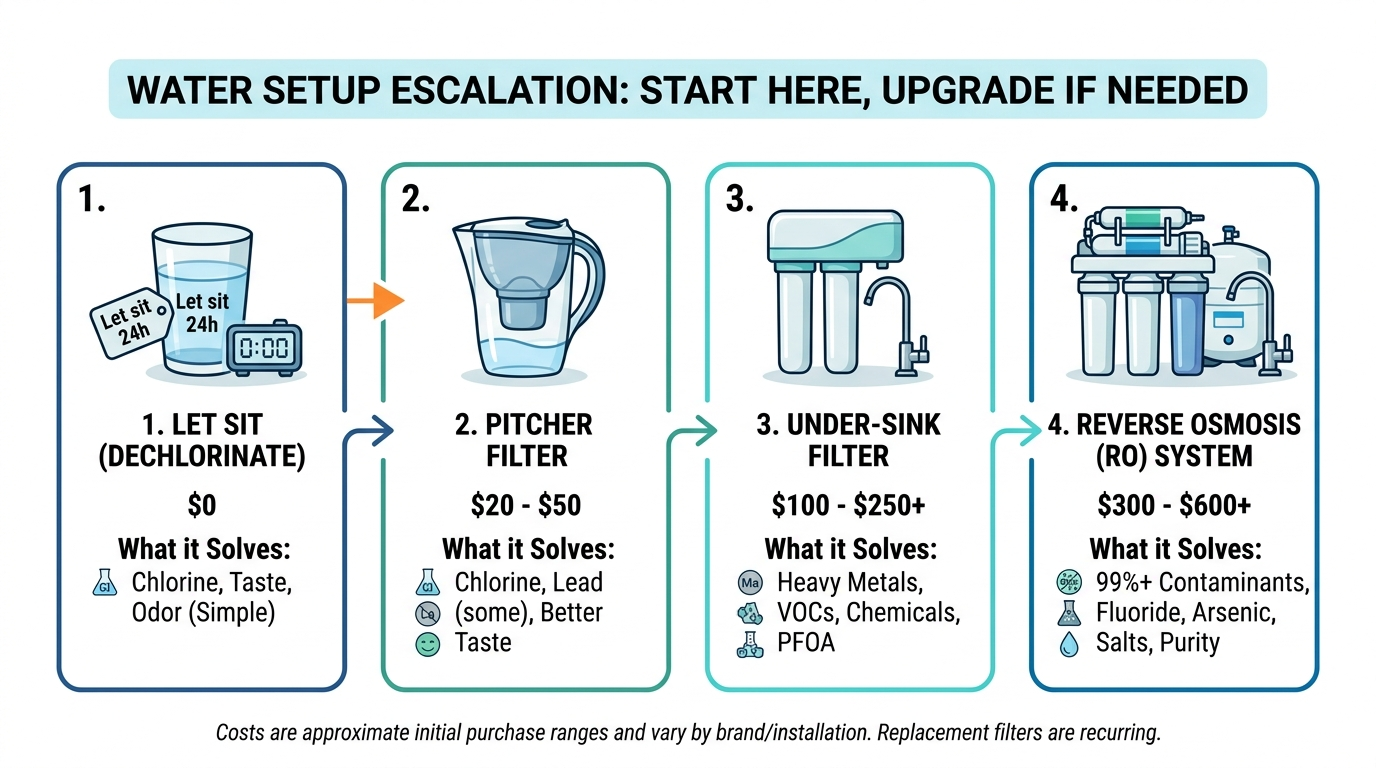
Budget Tier 1: Free (Let It Sit)
Fill a container with tap water, leave it uncovered for 24 hours, use it for watering. Chlorine dissipates. This costs nothing and covers the basic need for moderate-sensitivity plants.
Works for: Most tolerant plants, moderate-sensitivity plants with patience
Budget Tier 2: Water Filter Pitcher ($25–$40)
A simple carbon filter pitcher sits in your fridge or on your counter. Fill it, filter comes out, use it for plants. Removes chlorine and chloramine. Filter cartridges last 2–3 months depending on usage.
Works for: Most tropical aroids, moderate-sensitivity plants
Budget Tier 3: Under-Sink Carbon Filter ($80–$150)
Installed under your kitchen sink, filters all water from that tap. No refilling pitchers, no remembering to fill containers. Higher flow rate, handles more plants if you have a large collection.
Works for: Sensitive plants, large collections, anyone who wants to water from a single tap
Budget Tier 4: Reverse Osmosis (RO) ($150–$400)
RO systems remove 95–99% of all dissolved solids, giving you essentially pure water. Necessary for carnivorous plants. Overkill for most houseplants but worth it if you have a collection of genuinely sensitive species.
Works for: Carnivorous plants, Calathea, sensitive orchids, propagation stations with many seedlings/cuttings
Quick-Reference: Choosing Water for Your Plants
- Tap water is fine for: Pothos, Snake Plant, ZZ Plant, Fiddle Leaf Fig, Spider Plant
- Let it sit 24h works for: Most Philodendron, Monstera, moderate-sensitivity plants
- Carbon filter pitcher for: Monstera, most Philodendron, Peace Lily, tropical aroids
- Under-sink filter for: Calathea, Maranta, Orchids, sensitive species
- Distilled or RO for: Carnivorous plants, Calathea in hard water areas, seedlings and cuttings
The TL;DR: start with what you have, upgrade when you see problems, and don't buy an RO system for your pothos.
For more on watering basics, see our watering guide and learn how often to water your plants for the frequency side of the equation.
Know your plant's water needs? Ready to test your water? A TDS meter takes 10 seconds and tells you exactly what you're working with. Most common houseplants will never need more than a carbon filter.
Products We Love
We actually use these ourselves:
- HoneForest TDS Meter or Apera PC60-Z — Worth every penny if you're diagnosing water quality issues. Takes the guesswork out of figuring out what's in your tap.
- Frizzlife Under-Sink Filter — For serious plant parents with sensitive species. Installs in 30 minutes, no plumber needed.
- Home Master TMJRF25 or SimPure Y7P RO System — If you grow carnivorous plants or Calathea and nothing else works, RO is the final answer.