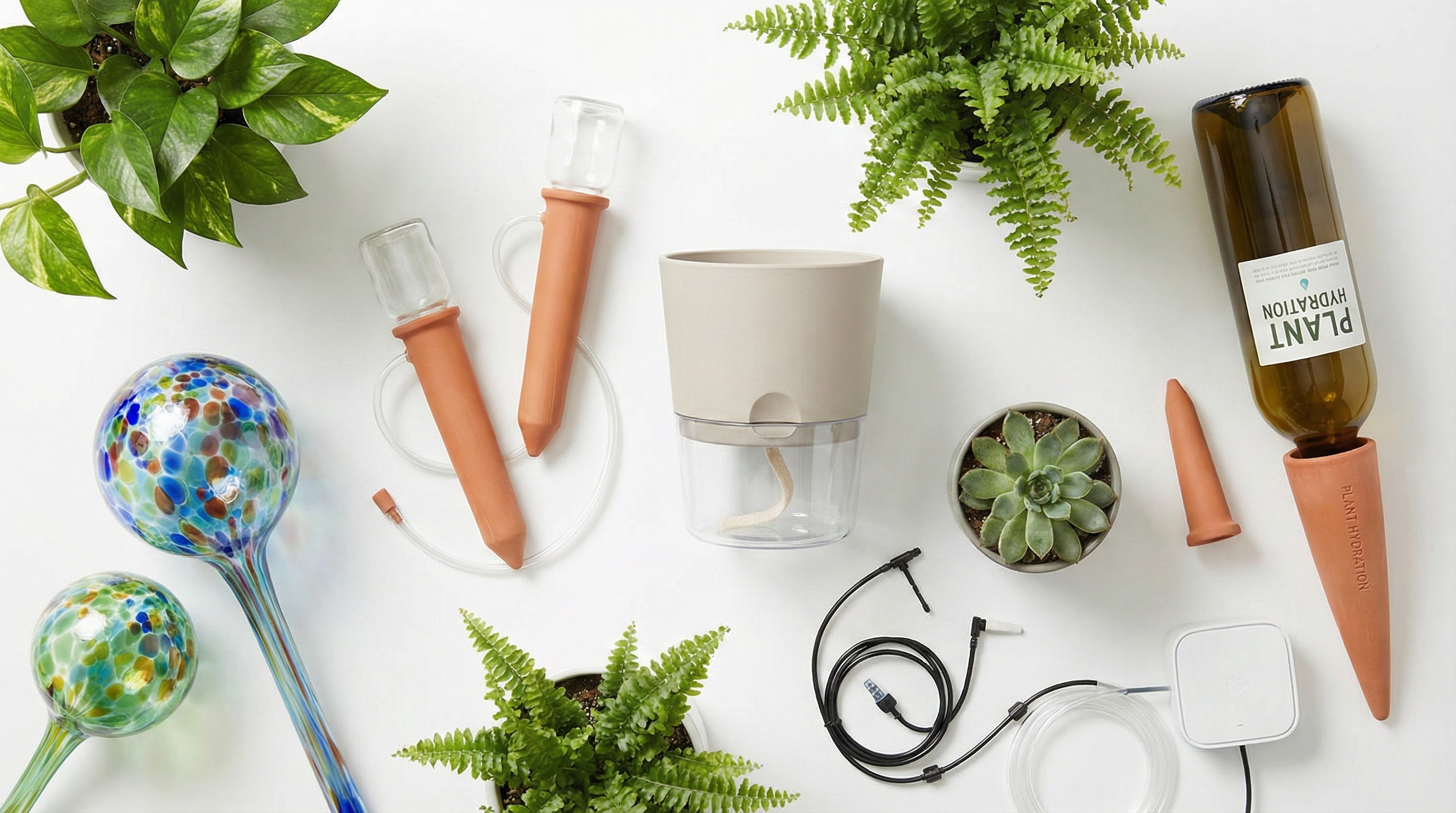
How to Water Plants While on Vacation (Quick Answer)
Here's the dirty secret about vacation plant care: most people overthink it. The key is testing your system before you leave, choosing the right method for your trip duration, and accepting that some plants are just drama queens.
For trips under a week, simple wicking systems or self-watering globes work fine. For longer vacations, you'll want actual automatic systems that connect to water sources. And if you're gone more than two weeks? You're either investing in serious automation or accepting some plant casualties.
The biggest mistake people make is setting up their system the morning they leave. Test everything 2-3 days prior. Watch it work. Adjust as needed. Your future self will thank you.
Vacation Watering Systems Compared
Not all systems are created equal, and what works for a weekend trip won't cut it for a two-week vacation. Here's the honest comparison:
| Method | Best For | Cost | Pros | Cons |
|---|---|---|---|---|
| Wine bottle stakes | Weekends, small pots | $0-5 | Free, simple | Inconsistent flow, tippy |
| Wicking systems | 3-7 days | $5-15 | Reliable, cheap | Setup time, limited range |
| Self-watering globes | Weekends, small plants | $10-20 | Attractive, easy | Glass breaks, short-term only |
| Drip irrigation kits | 7-14+ days | $25-75 | Precise, scalable | More setup, clog potential |
| Premium auto-waterers | 14+ days | $75-150 | Hands-off, programmable | Price, requires power/outlet |
Best Methods by Trip Length
Weekend Getaway (2-3 Days)
For short trips, you honestly don't need much. Most houseplants are fine unattended for 48-72 hours if they're not dramatic about water.
The wine bottle hack is free and surprisingly effective. Take an empty wine bottle, fill it with water, invert it quickly, and shove the neck into the soil. The soil draws water as it dries. Works best in 4"+ pots and helps for 2-4 days depending on your plant's thirst levels.
Self-watering globes (Aqua Globes on Amazon) do the same thing but look slightly less trashy. They're glass bulbs you fill and insert into the soil. Good for small to medium pots. The downside? They're glass, so if you have cats who knock things over, you're buying replacements.
Pro tip: Move all your weekend-trip plants to the bathroom or kitchen where humidity is higher. Group them together. They won't need as much water when they're sharing moisture in the air.
Week-Long Trip (7-10 Days)
Now we're getting into territory where your plants actually need a legitimate water source, not just a backup bottle.
Wicking systems (Blumat Classic Waterers) are the gold standard for week-long trips. You place the ceramic cone in the soil, run a tube to a water reservoir (a bucket, a large bottle, your dog's water bowl — whatever), and the plant draws water as needed. No electricity, no timers, just physics. Set one up for each major plant 48 hours before leaving to ensure the wicking action is working properly.
DIY wicking works too. Take a cotton shoelace, remove the aglet (that plastic tip), run it from the bottom of your plant's pot into a water container below. Capillary action does the rest. This is the same principle as the expensive ceramic cones but costs approximately $0.
Moisture meters (best moisture meters roundup) aren't a watering system, but they're essential for verifying your setup is working before you leave. Stick it in the soil before you leave, check it again when you get home. If it's bone dry and you have a working wicking system, something's wrong.
Extended Vacation (2+ Weeks)
Two weeks is where casual solutions fail and you need actual automation. This is also where plant ownership gets expensive if you want zero casualties.
Automatic drip irrigation systems (RAINPOINT Automatic Drip Irrigation Kit) connect to a water source (usually a large container or faucet adapter) and use programmable timers to deliver specific amounts at specific times. These are scalable — you can run lines to 20+ plants from one system. The downside: timers use electricity (outlet or batteries), pumps can clog, and setup takes 1-2 hours for a large collection.
Premium systems like the Blumat Digital add sensors that detect soil moisture and water only when needed. No timers, no programming. The system waters automatically based on what your plant actually requires. This is the closest thing to "set it and forget it" for extended trips. Pricey, but if you have expensive plants or travel frequently, it pays for itself in plant survival rates.
For serious plant parents: Consider a neighbor trade. You water their plants while they're home, they water yours while you're away. Free, reliable, and someone is actually checking on your plants daily. Just don't be that person who comes back with a dead Swiss cheese plant because you couldn't be bothered to set up proper automation.
Best Self-Watering Systems by Budget
Free DIY Solutions
- Wine bottle stakes — Empty bottle, water, soil. Done.
- Wicking with shoelaces — Cotton laces, water dish, capillary action.
- Bathtub humidity method — Line your tub with towels, soak them, place plants on top. Close the door. Plants get humidity for days. Works best for tropicals that love moisture.
- Pool noodle wicking — Cut pool noodles into sections, they're basically fancy wicks. Water flows beautifully through the holes.
The bath method is underrated. Close the drain, lay down towels, soak everything with water, set plants on top, and close the door. Your bathroom becomes a humid microclimate. This can keep plants happy for 10-14 days depending on the plant and bathroom conditions.
Budget-Friendly ($5-$25)
- Vacation Plant Watering Stakes — Plastic versions of ceramic cones, significantly cheaper, works for 5-10 days depending on reservoir size.
- Basic drip irrigation kits — Tubing, stakes, and a timer. Under $25, covers 10-15 plants. Battery-powered timer is the weak point.
- Self-watering planter inserts — Fit inside existing pots, add water to the reservoir, plant drinks from below. Simple and reusable.
Mid-Range ($25-$75)
- RAINPOINT Automatic Drip Irrigation Kit — Programmable timer, multiple tubing options, connects to tap or reservoir. Solid middle-ground option.
- Expanded wicking system setups — Ceramic cones with larger reservoirs for longer durations.
Premium ($75+)
- Blumat Digital System — Sensor-based watering, no programming needed, plants get exactly what they need. Expensive but worth it for frequent travelers.
- Automated systems with app control — WiFi-enabled, phone notifications, precise control. Overkill for most, essential for some.
Which System for Which Plants?
Not all plants have the same needs, and honestly, some plants aren't worth the effort.
Succulents and cacti: Skip the watering systems. Move them to indirect light, don't water them for 2-3 weeks. They'll be fine. The drama is whether they'll be too dry or too wet — they're built for drought.
Tropicals (monstera, pothos, philodendron): These are the ones that need actual systems. They want consistent moisture but hate wet feet. Wicking systems work well here because they deliver gradually. Drip irrigation needs careful calibration to avoid overwatering.
Ferns: They want humidity more than consistent soil moisture. Group them together, use the bathtub method, or get a small humidifier. Standard watering systems often fail ferns because they either dry out too fast or get waterlogged.
Calatheas and prayer plants: The divas of the plant world. They want consistent moisture but will throw a tantrum (crisp, curl, yellow) if it's not exactly right. Premium sensor-based systems are worth it for these. How to treat root rot is your backup plan if you come home to sad calatheas.
Pre-Vacation Plant Prep Checklist
Here's what you actually need to do before leaving, in order:
-
Test your watering system 48-72 hours before departure. This is non-negotiable. Watch it work. Adjust flow rates. Confirm water is actually reaching roots.
-
Group plants together. Microclimate effect means they retain humidity collectively.
-
Move plants away from windows. Direct sun heats pots, dries soil faster. Indirect light is fine for vacation mode.
-
Check your moisture levels with a meter. Know baseline before you leave so you can assess damage (or lack thereof) when you return.
-
Trim dead leaves. They stress the plant and can attract pests while you're gone.
-
Consider pest treatment. If you had any bug issues recently, treat before leaving. Pests love unattended plants.
-
Empty saucers. Standing water attracts fungus gnats and can cause root rot if water sits too long.
-
Tell someone where your plants are. Or at least where the watering stuff is. Just in case.
What If Your Watering System Fails?
It happens. Systems clog, timers die, water reservoirs empty faster than expected. Here's how to assess damage and recover.
Upon return, check each plant systematically:
- Feel the soil moisture level
- Look for drooping, yellowing, or crisping
- Check stems for firmness (mushy = rot, dry/brittle = underwatering)
- Inspect leaves for pest activity
Minor underwatering: Leaves are droopy but stems are fine. Water normally, maybe mist leaves. Most plants bounce back within 24-48 hours.
Severe underwatering: Soil is bone dry, leaves are crispy, stems might be flexible but papery. Soak the entire pot in water for 10-15 minutes to rehydrate evenly. Trim dead foliage. Expect some leaf drop.
Overwatering/rot: Soil is soggy, stems are mushy, there's a smell. This is worse than underwatering. Treat root rot immediately — remove from pot, trim dead roots, repot in dry soil, and hope for the best.
Pest outbreak: No one caught it while you were gone. Isolate affected plants, treat with our pest guide recommendations, and pray it didn't spread to your whole collection.
FAQ
How long can plants go without water? It depends on the plant and conditions. Succulents: 2-4 weeks. Most tropicals: 7-14 days max without help. Ferns: 3-5 days. Always have a backup plan even for "hardy" plants.
Will my plants die if I'm gone 2 weeks? Not if you set up proper automation. A working drip irrigation or Blumat system keeps plants alive indefinitely. What kills plants is overwatering "just in case" or systems that fail without detection.
Can I use my bathtub method with the drain open? No. You want standing water in the tub to create humidity. The towels should be soaked but not dripping. Close the drain, add a few inches of water, lay towels on top, place plants on towels.
Do self-watering globes actually work? For 2-3 days, yes. Beyond that, unreliable. Soil wicks water inconsistently, and the flow rate doesn't match what most plants need. They're decorative more than functional for actual vacation care.
Should I water extra before leaving? Don't drown them. Water normally 1-2 days before leaving. The goal is moist (not wet) soil that your watering system maintains at that level. Overwatering just accelerates problems if your system fails.
The Bottom Line
Vacation plant care isn't complicated, but it requires testing and matching your solution to your trip length. A weekend trip needs a wine bottle. A two-week vacation needs actual automation. Free solutions work for short trips. Premium systems pay off for frequent travelers.
Start testing 2-3 days before you leave. Have a backup plan. And maybe don't own plants that die immediately if you look at them wrong — some plants are just high-maintenance and not worth the stress.
Need help diagnosing plant problems when you get home? Use our Plant ER symptom checker to figure out what's wrong and how to fix it.
Products Mentioned: