Best Pots for Houseplants
The pot matters. Here's why your plant's home is its foundation.
The Non-Negotiable: Drainage
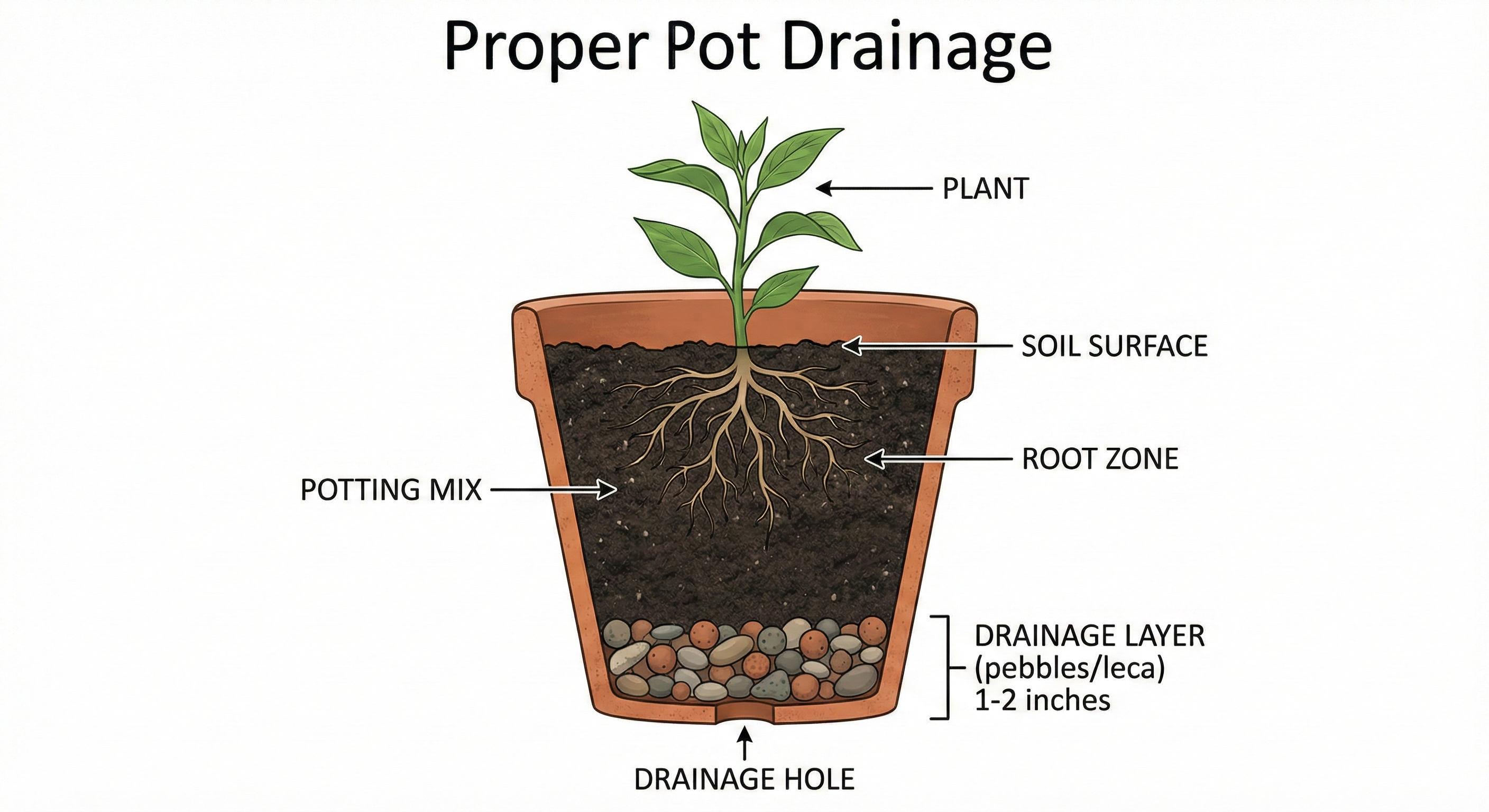
Why Drainage Holes Matter
Water flows through the soil. Without holes:
- Water pools at the bottom
- Roots sit in wet soil
- Anaerobic conditions develop
- Root rot sets in
Root rot is the number one killer of houseplants. Bad drainage is the number one cause of root rot.
Pots WITH Drainage Holes
| Type | Description | Best For |
|---|---|---|
| Nursery pots | Black plastic, built-in holes | Growing plants, practical owners |
| Terracotta | Clay, porous, rust color | Succulents, overwaterers |
| Grow pots | Flexible plastic, squeezable | Easy repotting, aroids |
| Self-watering | Reservoir at bottom | Forgetful waterers |
Pots WITHOUT Drainage Holes
| Type | Description | Verdict |
|---|---|---|
| Decorative cache pots | Pretty but no holes | USE AS COVER ONLY |
| Glass terrariums | Closed ecosystem | ONLY for plants that NEED high humidity |
| Bowls and mugs | Cute but dangerous | Avoid for living plants |
The solution: Put a nursery pot inside a decorative cache pot. Remove from cache to water.
🪴 Upgrade Their Home: Quality Pots & Planters
Drainage holes aren't optional. Give your plants the home they deserve:
*As an Amazon Associate, we earn from qualifying purchases.
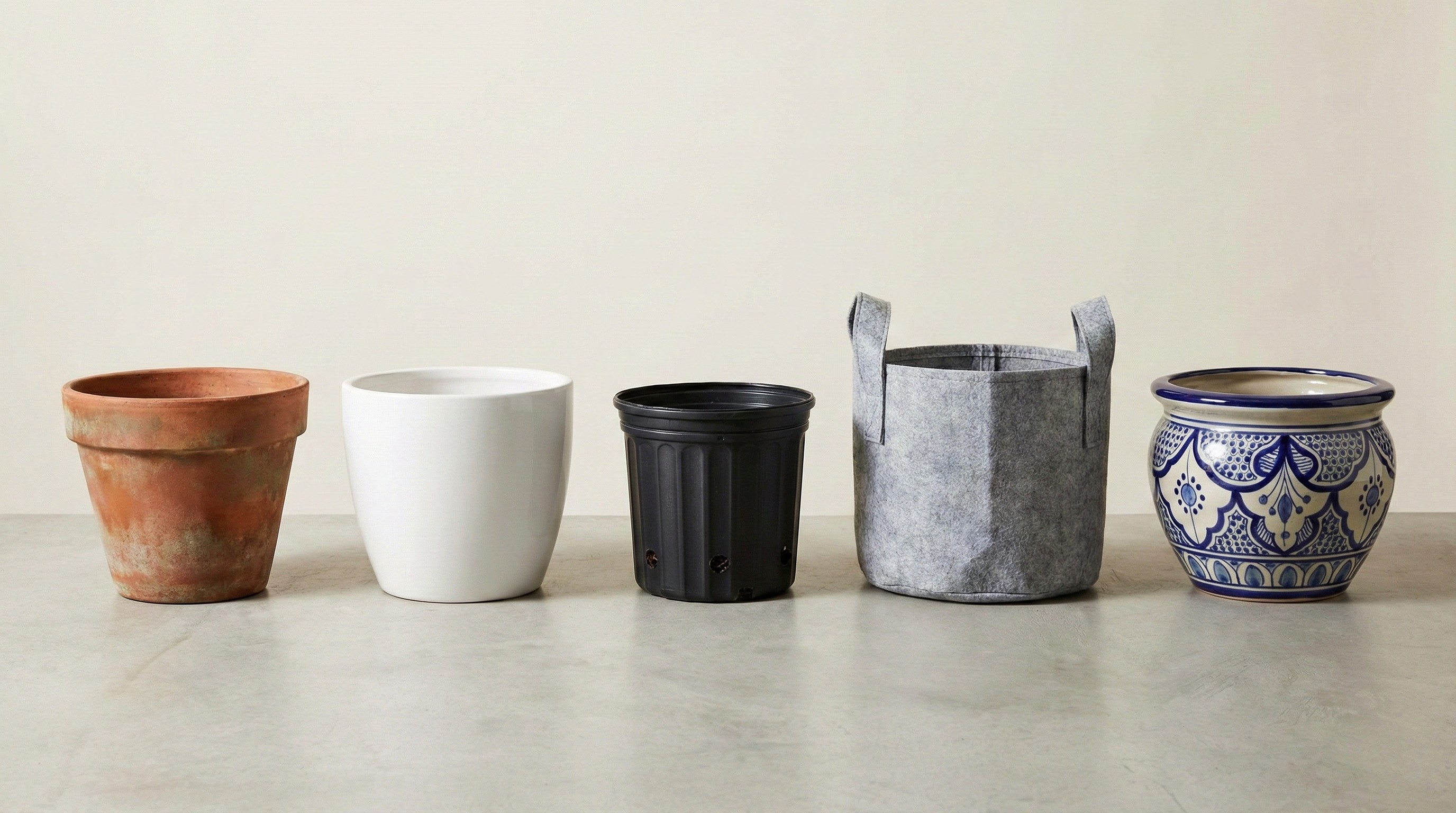
Pot Materials Compared
Plastic Pots
Pros:
- Cheap and widely available
- Retains moisture (good for high-water plants)
- Lightweight
- Easy to squeeze for repotting
Cons:
- Not breathable (soil stays wet longer)
- Can degrade in direct sun
- Looks cheap (if that matters)
Best for: Beginners, high-water plants, practical growers
Terracotta Pots
Pros:
- Porous — allows air and water flow
- Prevents overwatering naturally
- Classic look
- Heavy — won't tip over
Cons:
- Dries out faster (needs more frequent watering)
- Heavy and fragile
- Salt buildup can build up on surface
Best for: Succulents, cacti, overwaterers, humidity-tolerant plants
Ceramic Pots (Glazed)
Pros:
- Beautiful and decorative
- Glaze prevents rapid drying
- Heavy and stable
- Wide variety of styles
Cons:
- Expensive
- Heavy
- Often no drainage holes
Best for: Statement plants, decorative display, plants that like consistent moisture
Fabric Pots (Grow Bags)
Pros:
- Air pruning — roots breathe at edges
- Prevents circling roots
- Lightweight and foldable
- Great for root health
Cons:
- Dries out very quickly
- Ugly (brown fabric)
- Can't use as cache pot
Best for: Active growing, root health, temporary display
Concrete Pots
Pros:
- Modern aesthetic
- Heavy and stable
- Durable
Cons:
- Very heavy
- Alkaline soil affects pH
- Dries out unevenly
Best for: Large statement plants, outdoor use
Pot Size Guide
The 1-2 Inch Rule
When repotting, only go up 1-2 inches in diameter.
| Current Pot | Next Pot |
|---|---|
| 4" | 5-6" |
| 6" | 7-8" |
| 8" | 9-10" |
| 10" | 11-12" |
Why Not Bigger?
- Too much soil holds too much water
- Soil stays wet between waterings
- Roots can't use all the water
- Root rot risk increases significantly
Signs You Need a Bigger Pot
- Roots coming out of drainage holes
- Water runs through immediately
- Plant is unstable (top-heavy)
- Growth has stalled
- Soil dries out in 1-2 days constantly
Signs Your Pot Is Too Big
- Soil stays wet for 2+ weeks
- Plant looks small in the pot
- Roots haven't filled the pot after 6+ months
- Frequent root rot
Special Pot Types
Self-Watering Pots
How they work: Reservoir at bottom draws water up through wicking.
Pros:
- Reduces watering frequency
- Consistent moisture
- Good for forgetful owners
Cons:
- Hard to diagnose overwatering
- Not all plants like wet feet
- Cleaning can be tricky
Best for: Consistent moisture lovers, busy owners
Orchid Pots
Special features:
- Slats or holes for airflow
- Clear plastic (some)
- Designed for epiphytes
Don't use: Standard potting soil in orchid pots Do use: Orchid bark, sphagnum moss, or chunky mix
Succulent Pots
What they need:
- Very fast drainage
- Porous material (terracotta ideal)
- Shallow depth preferred
Avoid: Deep pots, soil that retains moisture
Pot Accessories
Saucers
Purpose: Catch overflow water
Types:
- Plastic saucers (cheap, functional)
- Ceramic saucers (pretty)
- Clear saucers (hide under grow pot)
Important: Empty saucer after watering. Don't let pot sit in water.
Pot Feet
Purpose: Lift pots off surfaces Benefits:
- Improves airflow under pot
- Prevents staining on furniture
- Helps drainage
The Bottom Line
- Always use pots with drainage holes — non-negotiable
- Use cache pots for decoration — remove to water
- Size up only 1-2 inches — bigger isn't better
- Match material to plant needs:
- Terracotta for succulents/overwaterers
- Plastic for high-moisture plants
- Ceramic for consistent moisture needs
- Empty saucers after watering
Ready to repot? Check our How to Repot guide for step-by-step instructions.