Best Nutrients for Hydroponic Houseplants — A Beginner's Guide
No soil = no nutrients from soil. Here's what you need to feed your hydroponic houseplants instead.
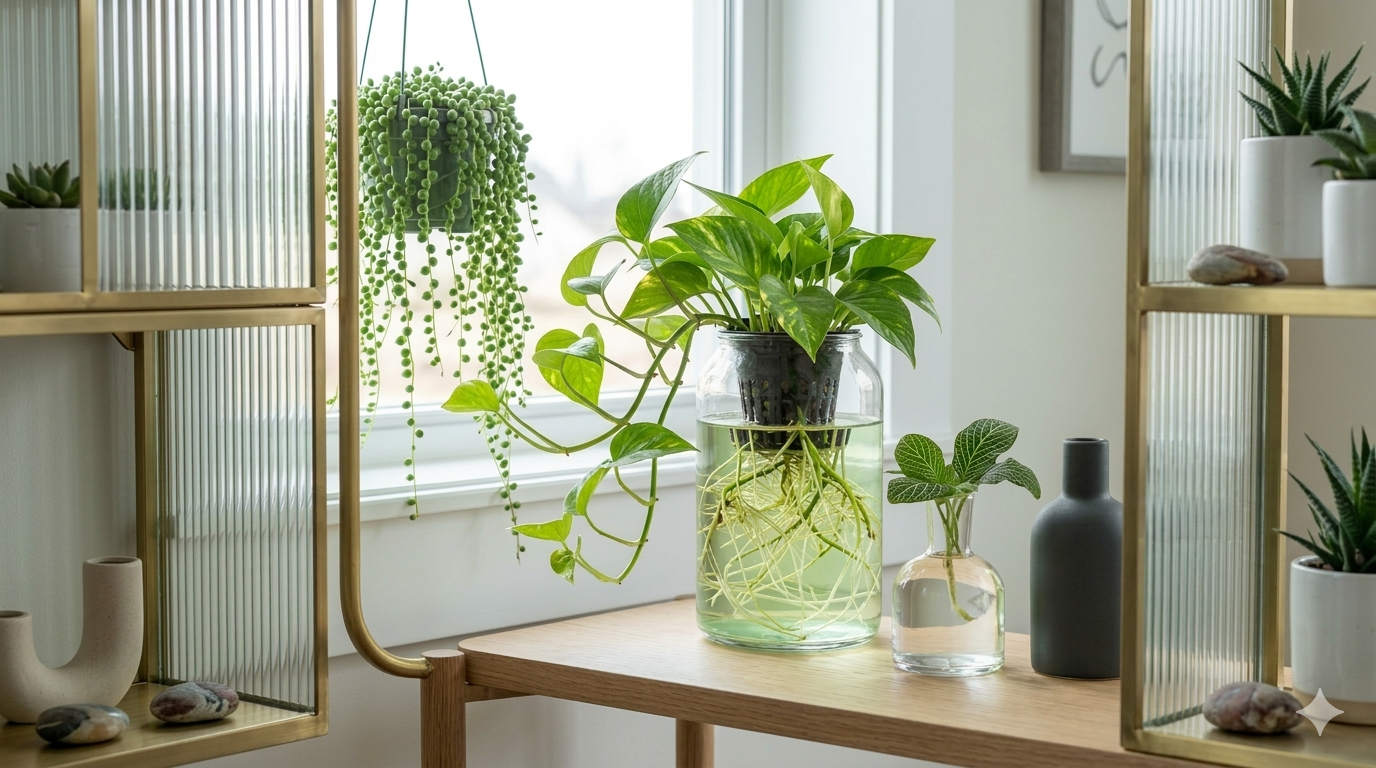
Why Hydroponic Plants Need Special Nutrients
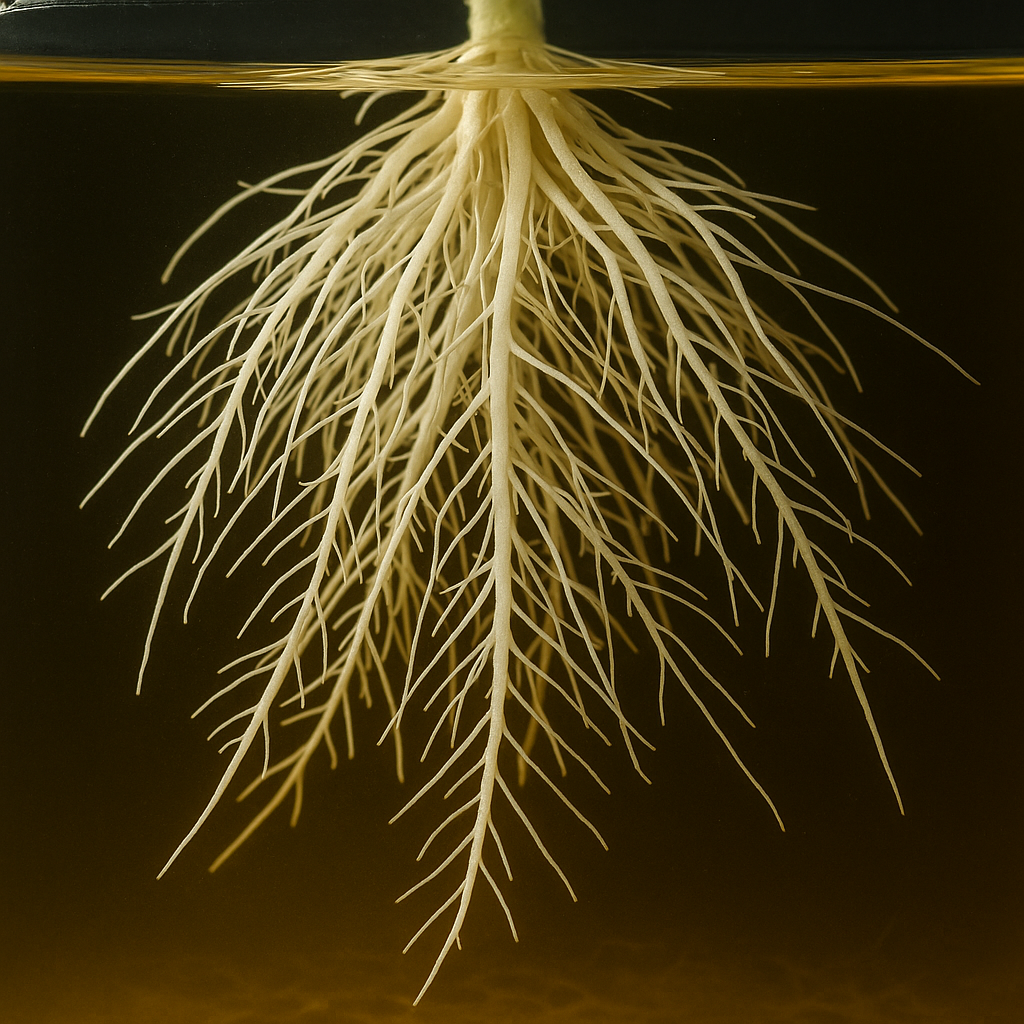
If you're growing houseplants in water, gravel, or another soil-free medium, you already know the deal: there's no dirt to provide food. In soil, plants pull nitrogen, phosphorus, potassium, and micronutrients from the earth. Hydroponic systems? You've got to provide all of it.
The good news is that hydroponic nutrients are specifically formulated to dissolve completely in water and be immediately available to plant roots. No soil microbiology required — just direct feeding.
This is actually kind of amazing because you have way more control over what your plants eat. You're not relying on whatever happened to be in your potting mix. You decide exactly what's going in.
Hydroponic vs Soil Nutrition: What's Different?
Here's where people get confused. You can't just grab a box of Miracle-Gro and dump it in your hydroponic system. Well, you could, but you'd probably kill your plants.
Soil fertilizers are designed to break down slowly, with help from microbes and the soil itself. They're also often made for the assumption that you water heavily and things drain through.
Hydroponic nutrients are:
- Fully water-soluble — no chunks, no residue, nothing to clog pumps or foul water
- Chelated — minerals are bound in ways roots can absorb immediately
- pH-buffered — formulated to keep your nutrient solution in the right range
- Available in one-part and multi-part — more flexibility for different growth stages
The biggest mental shift: in soil, you feed occasionally. In hydroponics, your plants are constantly sitting in their food. That means concentration matters a lot more.
If you're new to thinking about nutrients in water, our watering guide has more context on how hydroponic feeding differs from soil — but the short version is you're basically making "plant soup" that your roots float in.
What Makes a Good Hydroponic Nutrient
Not all hydroponic nutrients are created equal. Here's what to look for:
Complete formulation — You want nitrogen, phosphorus, potassium (the N-P-K trio), plus micronutrients like calcium, magnesium, iron, and trace elements. Most quality hydroponic brands include all of these.
One-part vs multi-part — One-part nutrients (like Dyna-Gro) come pre-mixed and you just add water. Multi-part systems (like Flora Series) have separate bottles you mix in different ratios for grow vs bloom. For houseplants, one-part is usually plenty.
pH stability — Good nutrients don't swing your pH wildly when you add them. Look for products that play nice in the 5.5-6.5 range.
No funky fillers — Avoid anything with "plant boosters" that promise miracles. The basics work. You don't need snake oil.
Best Nutrients for Hydroponic Houseplants
Let's get into the actual recommendations.
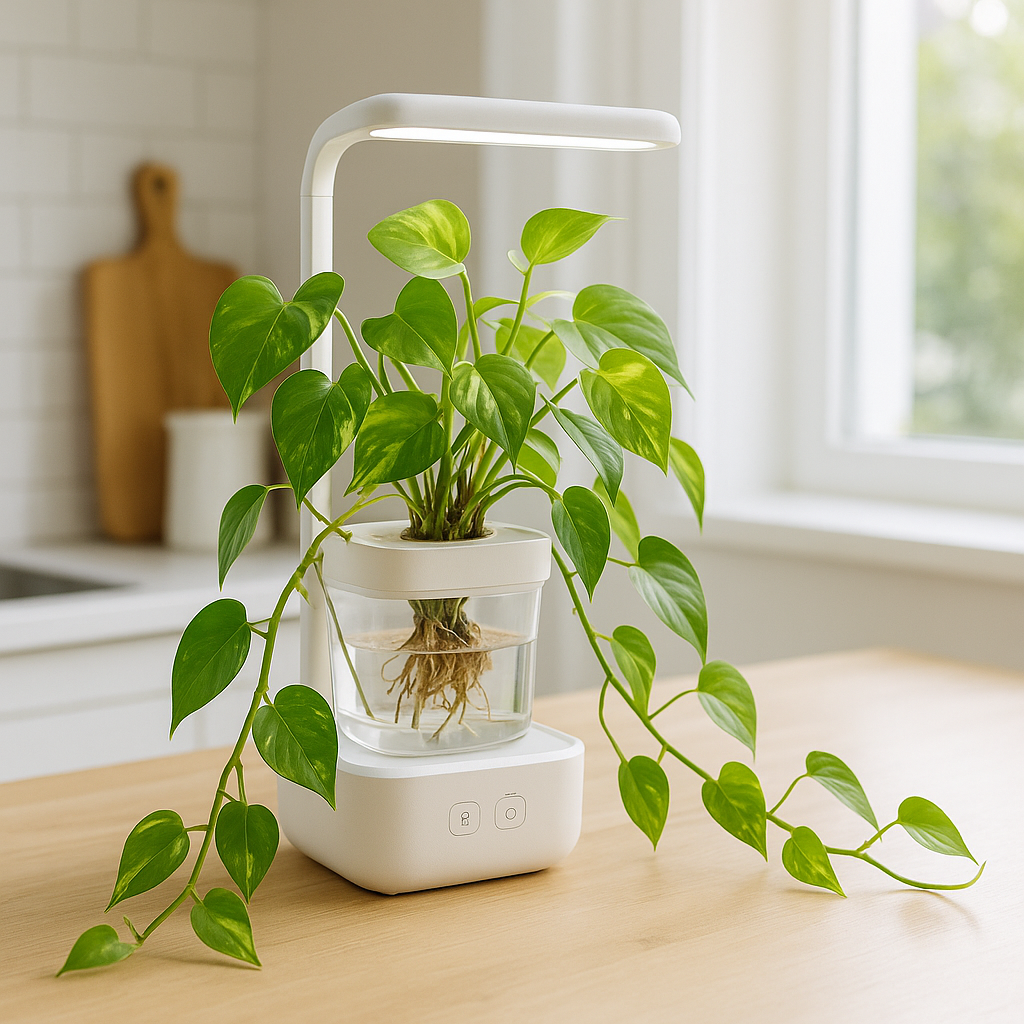
Best One-Part Nutrients for Beginners
If you're new to hydroponics, start here. One product, one step, done.
Dyna-Gro Foliage-Pro (Superthrive) → View on Amazon
This is the easiest recommendation in hydroponics. It's a 7-8-4 formula (good N-P-K ratio for foliage) that includes all the micronutrients. You mix about 1 teaspoon per gallon, and that's it. One bottle, one ratio, no math.
People also use this for soil-based feeding, which tells you it's complete and gentle. For your pothos, philodendron, or monsteras in water culture — solid choice.
Best Multi-Part Systems for Intermediate Growers
Once you've got a few hydroponic setups running and want more control, you graduate to multi-part systems. These let you adjust the ratio based on growth stage.
General Hydroponics Flora Series → View on Amazon
The Flora Series is basically the industry standard. It's a three-part system: FloraGro (nitrogen-heavy for leaves), FloraBloom (phosphorus-heavy for flowering/fruiting), and FloraMicro (the base with micronutrients).
For houseplants that are mostly about foliage, you'll lean heavily on FloraGro with just a bit of FloraMicro. When your pothos decides to flower (it happens!), you can add some FloraBloom.
The learning curve is steeper than one-part, but the control is there if you want it.
How to Mix and Apply Hydroponic Nutrients
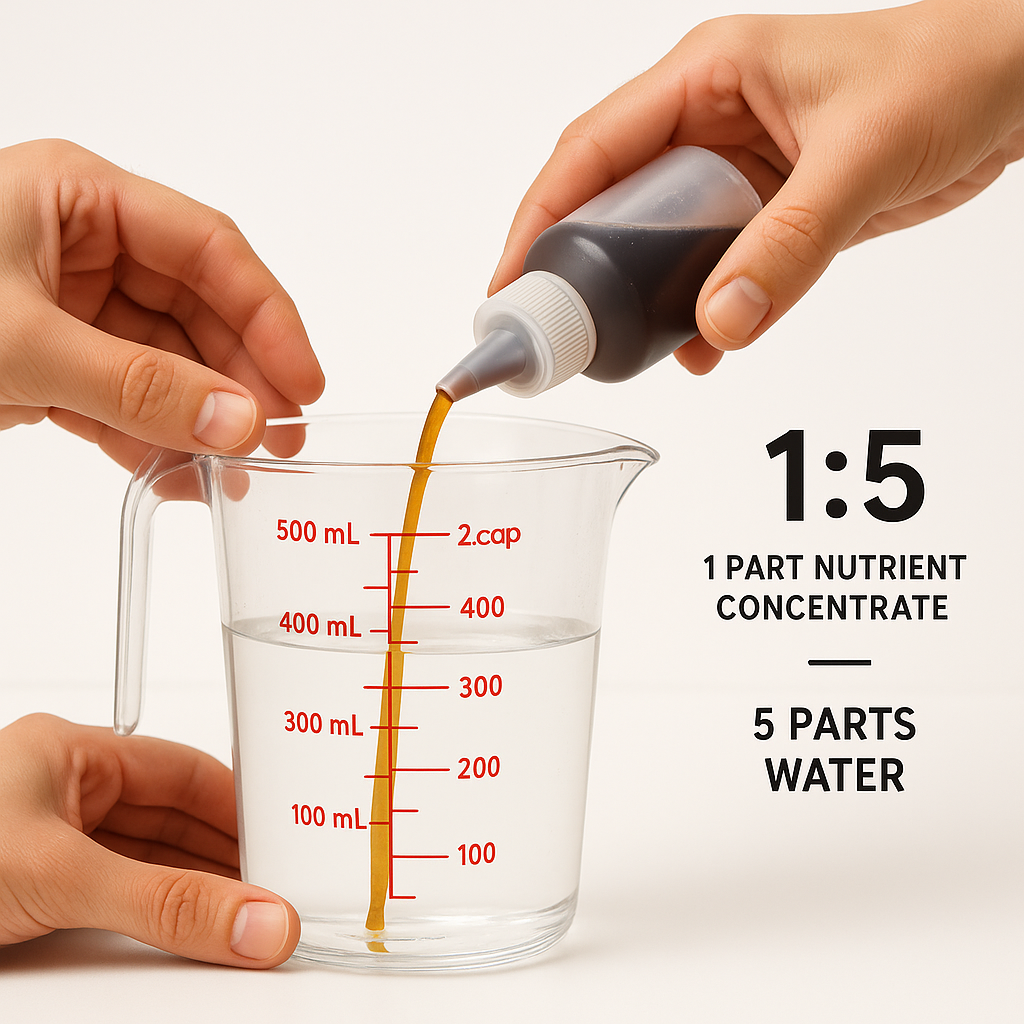
Here's the practical stuff:
1. Start with clean water. If your tap water is weird (very hard, very soft, or chlorinated), let it sit overnight or use filtered water. pH 6.0-6.5 is ideal.
2. Add nutrients at recommended strength. The bottle will say something like "1 tsp per gallon." Start at half-strength for the first few weeks with new plants. You can always add more, but you can't take it out.
3. Check pH after adding nutrients. They'll shift it slightly. Use a digital pH meter to check. If you're outside 5.5-6.5, adjust with pH up or down solution.
4. Change the solution every 1-2 weeks. Don't just top off evaporating water — that's how salt buildup happens. Full reservoir swap, rinse the container, start fresh.
5. Watch your plants. Yellow leaves can mean deficiency. Brown tips can mean burn from overfeeding. The plant will tell you if you're off.
If you're coming from soil-based growing and want to understand how nutrients work differently outside of dirt, our fertilizer guide breaks down the basics — hydroponics is just the same principles but applied directly to water.
Common Hydroponic Nutrient Mistakes to Avoid
Signs of Nutrient Deficiency
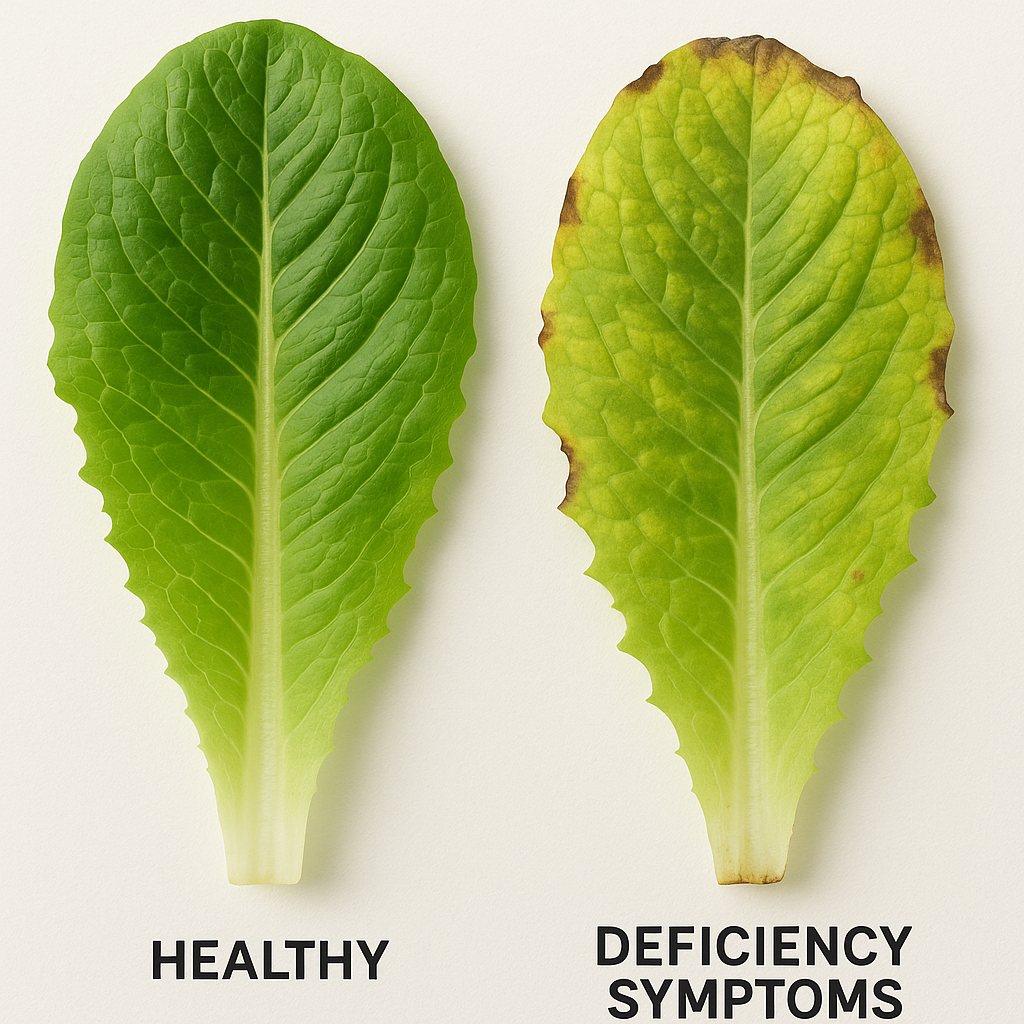
Your plants will signal when something's wrong:
- Nitrogen deficiency — Older leaves turn yellow first, growth slows
- Iron deficiency — New leaves go yellow but veins stay green
- Potassium deficiency — Brown leaf edges, weak stems
- Calcium deficiency — New leaves come in distorted or die back at tips
The fix is usually to check your pH (nutrients can't absorb if pH is off) or bump up your concentration slightly. But go slow.
Signs of Overfeeding
More is NOT better. Hydroponic plants are sitting in concentrated nutrients — going heavy will burn them.
- Leaf burn — Brown, crispy edges on leaves
- Wilting — Even though the roots are wet
- Salt buildup — White crust on the inside of your container or on roots
- Stunted growth — The plant basically shuts down
If you suspect overfeeding, do a full water change with plain pH'd water to flush the system. Then dial back.
Frequently Asked Questions
Can I use regular plant food for hydroponics? No. Standard fertilizers aren't fully water-soluble and can clog systems or burn roots. Get proper hydroponic nutrients.
How often should I add nutrients to my hydroponic system? Change the full solution every 1-2 weeks. Topping off with plain water without changing leads to imbalance.
What's the best NPK ratio for hydroponic houseplants? For mostly foliage plants (pothos, philodendron, monsteras), look for something like 7-8-4 or 10-5-5. You don't need high phosphorus unless they're flowering.
Do I need to test pH every time? At minimum, check weekly when you change the solution. pH drift is the #1 reason hydroponic plants struggle.
Can I grow any houseplant hydroponically? Yes — pothos, philodendron, monsteras, snake plants, and most trailing plants adapt really well. Plants that like consistently moist soil are the best candidates.
Final Thoughts
Hydroponic growing isn't as intimidating as it sounds. You don't need a commercial setup or a chemistry degree. You need clean water, a solid nutrient, and the willingness to pay attention.
Start with Dyna-Gro Foliage-Pro if you want the easy path. Graduate to Flora Series if you want more control. Either way — your plants will thank you.
Want to know which houseplants work best in hydroponic systems? Check out our guide to the easiest houseplants for hydroponics.
Products We Love
We use these products ourselves:
Dyna-Gro Foliage-Pro (Superthrive) → View on Amazon
General Hydroponics Flora Series → View on Amazon