Aphids on Houseplants: How to Spot, Kill & Prevent Them
Finding aphids on your plants feels like a betrayal. Your plant was fine yesterday — and now it's playing host to a small aphid army. But here's the thing: aphids are genuinely manageable. You just need to know what you're dealing with, hit them with the right approach, and stop them from coming back.
How to Identify Aphids on Houseplants
Aphids are really good at hiding until they're not. By the time most people spot them, there's already a decent colony going.
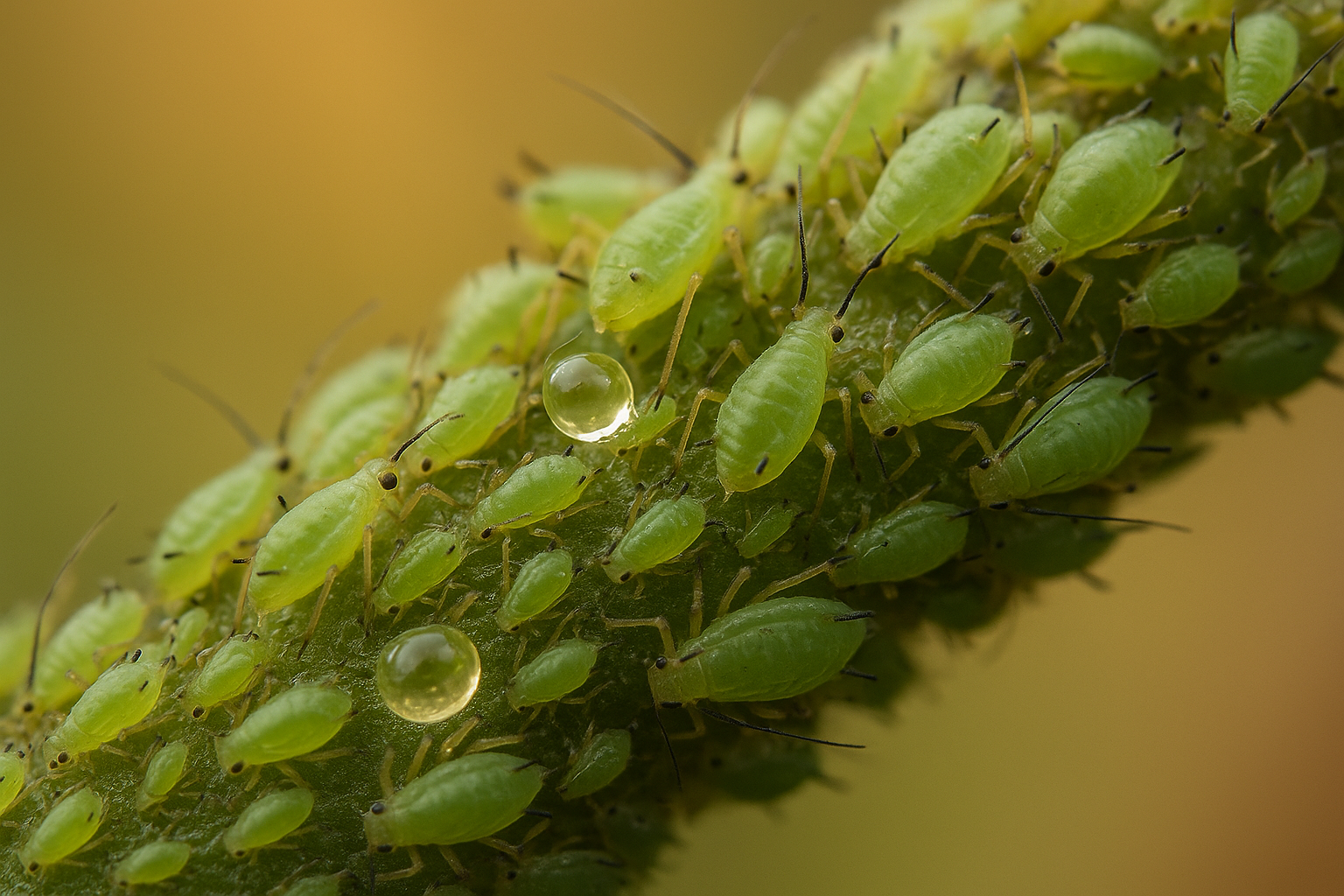
What do aphids look like? They're small — 1–3mm — and soft-bodied, with a pear-shaped silhouette. Think of a tiny teardrop with legs. Their antennae are relatively long compared to their body, and they have those distinctive cornicles (two small tubes) sticking out the back of their abdomen. No other common houseplant pest has those.
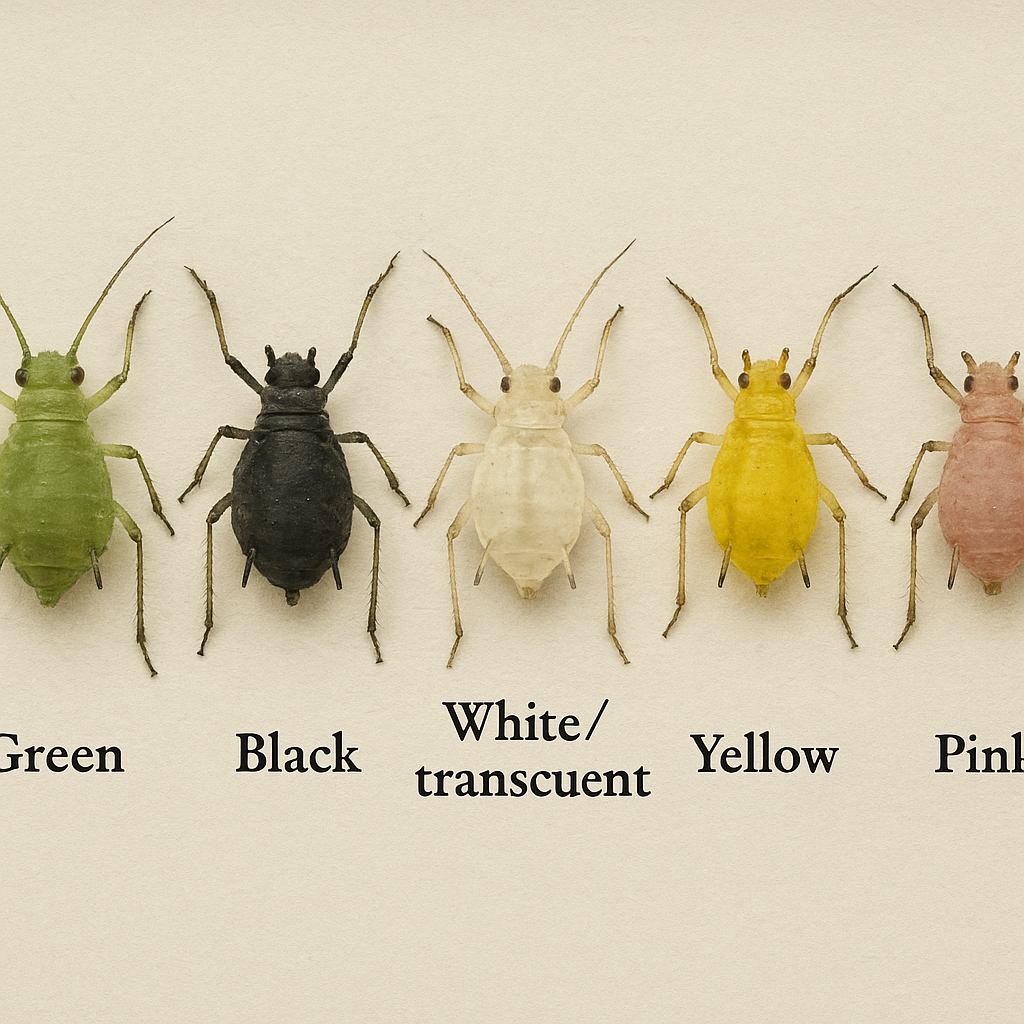
Colors and types Most houseplant aphids are green or black. But you might also encounter white (sometimes called woolly aphids), yellow, or pink varieties. Color alone isn't a reliable ID — some species come in multiple colors — but green and black are the most common indoor offenders. If you're serious about nailing the exact species, a 30x/60x jeweler's loupe lets you see the fine details.
Where to look Check new growth first — that's where aphids preferentially feed. Look at:
- Undersides of young leaves
- Stem tips and bud areas
- Fresh shoots
- Sometimes the base of petioles
They cluster rather than scatter, so if you find one, look for the rest of the colony nearby.
Signs Your Plant Has Aphids
Aphids announce themselves in stages. The sooner you catch them, the easier the treatment.
Early Warning Signs
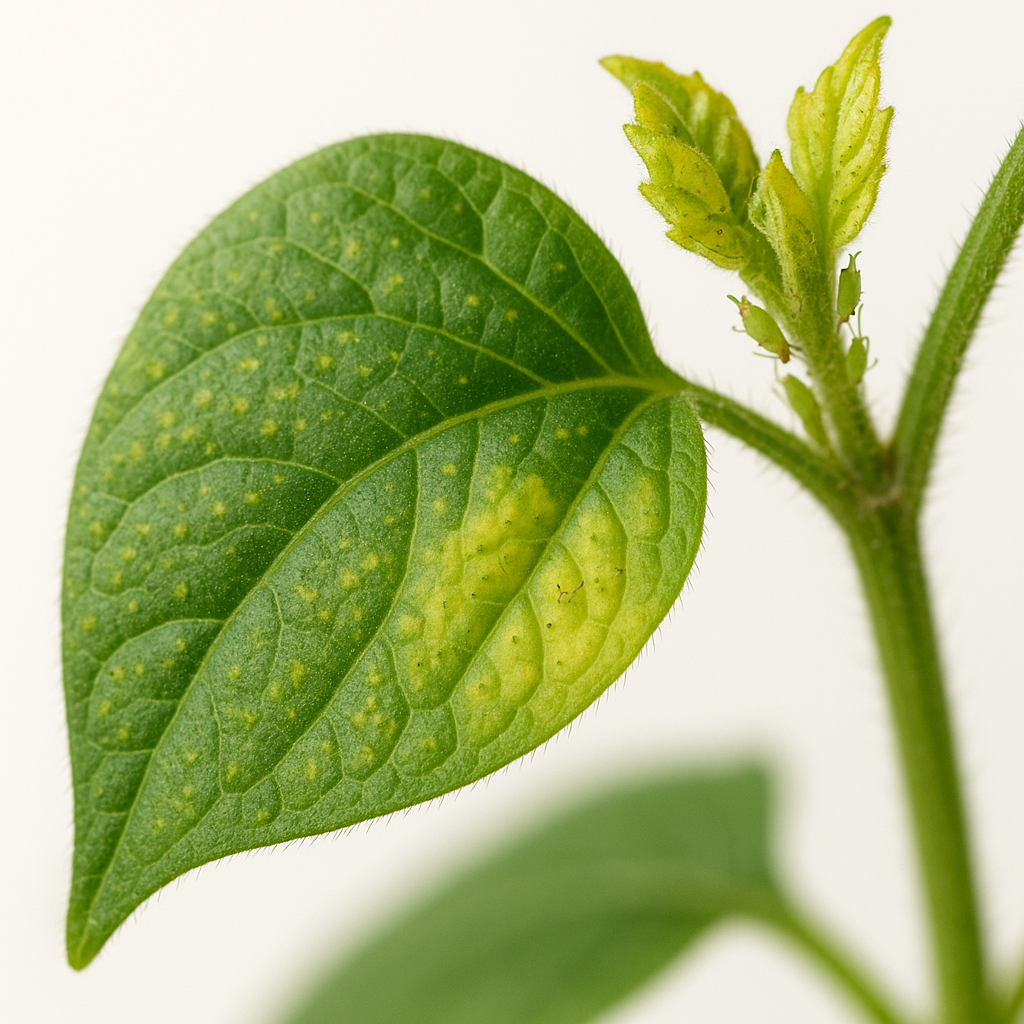
- Stippling on new leaves — tiny pale dots where they've been feeding
- Slight yellowing at leaf tips
- New growth that looks a little distorted or stunted
- Crumpled or curling new leaves
This is the "I could deal with this in 5 minutes" stage. If you're catching your plant at this point, you're winning.
Active Infestation Signs
- Visible aphids — clusters on stems and undersides of leaves
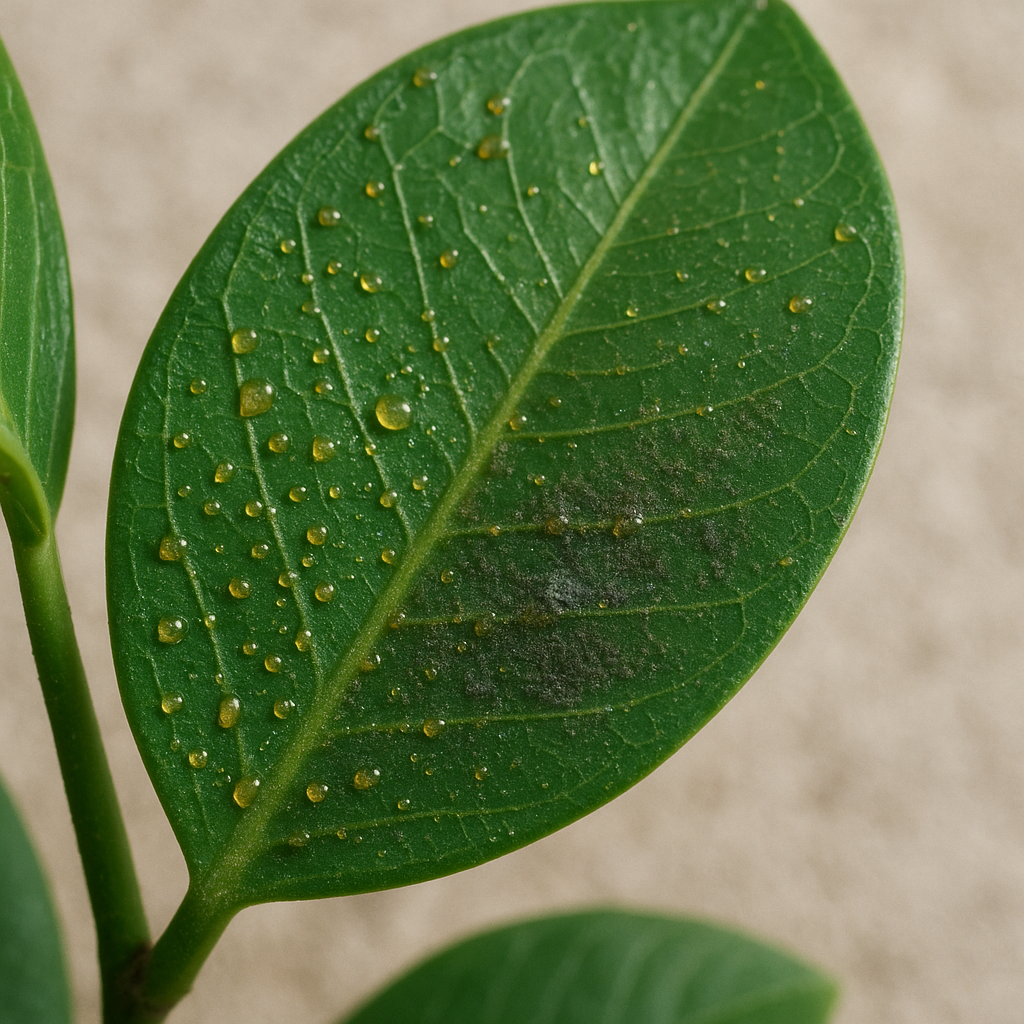
- Honeydew residue — sticky, shiny coating on leaves. Wipe it with a damp finger. If it's still sticky after wiping, you've got aphids (or scale, which is a different problem)
- Sooty mold forming on the honeydew — black fuzzy coating on leaves
- Distorted growth getting worse, not better
- Leaf drop in severe cases
The honeydew test is your best friend here. Wipe a suspicious leaf. Sticky residue that returns within a day or two means aphids are feeding above that spot.
Damage Progression
| Stage | Symptoms |
|---|---|
| Mild | Stippling on new leaves, slight yellowing, aphids barely visible |
| Moderate | Distorted new growth, honeydew visible, leaf curling |
| Severe | Leaf drop, bud damage, heavy sooty mold, plant visibly declining |
Where Aphids Come From
Indoor aphids don't spontaneously generate (despite what it feels like). They come from somewhere.
Common Entry Points
- New plants — the #1 source. Even from reputable nurseries, aphids hitchhike on leaves and soil
- Plants that spent time outside — even a summer on the porch can bring aphids in with the plant
- Cut flowers — especially from garden bouquets, which aphids love
- Open windows — aphids can fly, and they'll drift in on drafts
- Your clothing and hands — you can carry them in without knowing
The Ants Connection
Here's the part most guides skip: ants farm aphids.
Ants feed on honeydew. Some ant species actively protect aphid colonies, moving them between plants and even fighting off predators. If you notice ants crawling on your plants and you find aphids, treat both problems. Kill the aphids and deal with the ant colony — otherwise the ants will just relocate the aphids to a new plant.
How to Kill Aphids on Houseplants — Treatment Ladder
The key word here is ladder. Start at the bottom. Only escalate when necessary. Most infestations respond to steps 1–3.
Step 1: Isolate Immediately
As soon as you spot aphids, move the plant away from every other plant you own. Aphids spread by crawling and can relocate themselves when plants touch. Put it in a different room if possible.
Step 2: Blast with Water
Before reaching for any product, rinse the plant thoroughly with a strong stream of room-temperature water. This physically removes a large portion of the colony and washes off honeydew. Do this in the sink, shower, or outdoors if you can.
Let the plant dry, then inspect closely. Repeat every 2–3 days for a week. Some mild infestations resolve here.
Step 3: Insecticidal Soap Spray
This is where most people stop needing to escalate.
Mix insecticidal soap according to label directions — Safer Brand Insecticidal Soap is a reliable option. Spray the entire plant, paying close attention to the undersides of leaves, stem tips, and bud areas. Insecticidal soap works on contact by dissolving the aphid's soft body, so thorough coverage is non-negotiable.
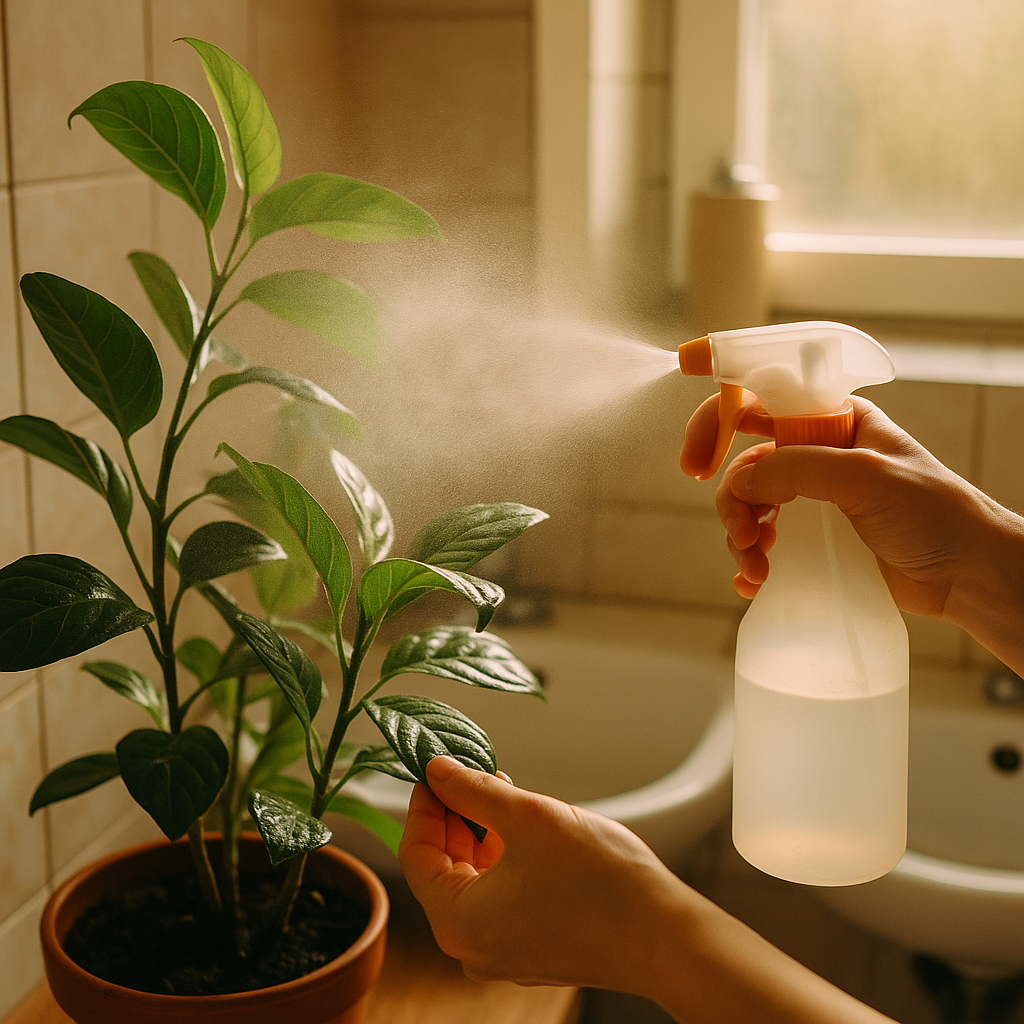
Apply once every 2–3 days for two weeks. The soap only kills aphids it touches, so repeat applications catch newly hatched nymphs before they mature and reproduce.
Frequency: Every 2–3 days for 2–3 weeks Why it works: Dissolves the aphid's body on contact
Step 4: Neem Oil Application
Neem oil is a step up — it has some systemic properties and also disrupts aphid reproduction. Neem oil concentrate mixed per label directions works as both a direct contact spray and a leaf-surface treatment.
Apply in the evening (never in direct sun, or the oil can magnify and burn leaves). Like insecticidal soap, neem oil requires direct contact to be effective.
Frequency: Every 3–4 days for 2–3 weeks Why it works: Disrupts feeding, molting, and reproduction in addition to direct kill
Step 5: Systemic Treatment for Severe Cases
If you've been fighting the infestation for three weeks with no meaningful progress, it's time to escalate.
Bonide Systemic Granules work through the plant's vascular system — the aphid ingests the pesticide when it feeds. This is the nuclear option. Use it only for severe, persistent infestations and follow label instructions exactly.
Do not use systemic granules on edible plants unless the label specifically permits it. Read the label. All of it.
Frequency: As directed on label (typically one application lasts 4–8 weeks) Why it works: Works inside the plant — even hidden aphids get a dose when they feed
Natural vs Chemical Treatments
If you prefer a DIY approach before buying a product, here are the standard natural options.
DIY Soap Spray Mix 1–2 teaspoons of pure castile soap (like Dr. Bronner's) with 1 quart of water. That's it. Spray as you would with insecticidal soap. Keep in mind this is less refined than a purpose-formulated product — it may irritate some plant leaves more than a commercial insecticidal soap.
Neem Oil Dilution Add ½ teaspoon of neem oil concentrate + ½ teaspoon of dish soap (as an emulsifier) to 1 quart of water. Shake well before each use. Apply in the evening. Shake the bottle regularly as the oil and water separate quickly.
Rubbing Alcohol Method For a very localized infestation, dab individual aphids with a cotton swab dipped in 70% isopropyl alcohol. Do not spray alcohol — it can damage plant tissue. Test on a small area first if you're unsure about leaf sensitivity.
When to escalate to chemical If you have small children or pets in the house, don't immediately reach for systemics. Try the soap-and-neem ladder first. Chemical treatment is appropriate when:
- The infestation is severe and spreading
- Natural methods have failed after 3+ weeks
- The plant is valuable enough to warrant the effort
How to Prevent Aphids on Houseplants
Once you've fought an aphid battle, you don't want to fight it again. Here's how to make reinfestation less likely.
The Quarantine Protocol
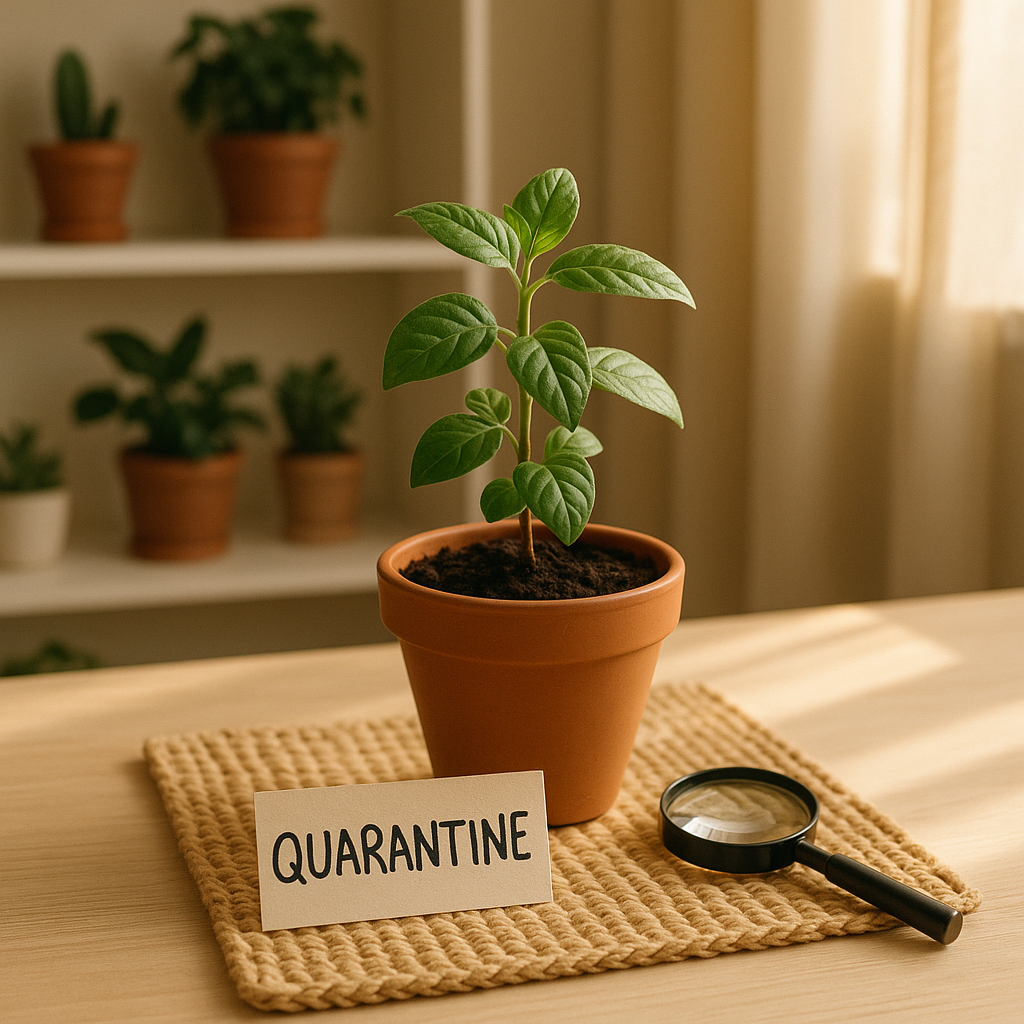
Quarantine every new plant for 2–3 weeks before putting it near your collection. Keep it on a different surface, ideally in a different room. Inspect it closely at least twice during quarantine — look under leaves and at new growth.
For a full protocol, see Full quarantine protocol for new plants.
Regular Inspection
Check your plants routinely — at minimum once a month. Focus on new growth, stem tips, and leaf undersides. Aphids reproduce fast (a single female can produce 80–100 offspring per week without mating), so monthly checks catch problems before they become infestations.
Keep Leaves Clean
Dusty, dirty leaves are harder for you to inspect and provide cover for pests. Wipe down large leaves periodically. This is low-effort and genuinely helpful.
The Nitrogen-Fertilizer Connection
Here's a less-discussed factor: over-fertilizing with nitrogen encourages soft, lush new growth that aphids love. If your plant is pushing a lot of fast, tender new growth and you're seeing aphids, back off on the nitrogen. Slightly less aggressive growth is harder for aphids to colonize.
What to Do When Aphids Keep Coming Back
If you've treated and the aphids return within a few weeks, you have a bigger problem:
- The source plant — there's a plant in your collection that's the reservoir. Find it and treat it aggressively, or remove it.
- The ants — if ants are farming aphids in your collection, you'll never win. Deal with the ant problem first.
- Your treatment frequency — you might be stopping too soon. Continue the treatment ladder for at least one full aphid lifecycle (2–4 weeks of consistent treatment).
Common Mistakes That Spread Aphids
Most people make at least one of these. Don't be most people.
Treating once and stopping. Aphids hatch from eggs every few days. A single treatment won't catch them all. You need to treat repeatedly for 2–4 weeks minimum.
Not isolating. Moving a plant with aphids from one shelf to another spreads the colony. Isolate the plant the moment you spot any aphids.
Moving from infected to healthy plants. Inspect and treat the infected plant before you rearrange your plant shelf, water your collection, or do anything that requires touching multiple plants.
Over-fertilizing. More nitrogen = more aphid-favorite new growth. It's a cycle you don't want.
Ignoring the ants. Ants will actively protect and relocate aphid colonies. If you have both, you need to deal with both.
Not checking the undersides of leaves. Aphids hide underneath. If you're only looking at the tops of leaves, you're missing them.
Quick-Reference: Aphid ID & Treatment at a Glance
Aphid ID checklist:
- [ ] Small (1–3mm), pear-shaped, soft-bodied
- [ ] Clusters on new growth, stems, leaf undersides
- [ ] Leaves sticky? Honeydew test positive
- [ ] Cornicles visible on the back (two small tubes)
- [ ] Ants present? Raise your suspicion level
Treatment ladder:
- Isolate the plant
- Blast with water
- Insecticidal soap spray — every 2–3 days for 2 weeks
- Neem oil — every 3–4 days for 2 weeks
- Systemic granules — severe cases only
Prevention checklist:
- [ ] Quarantine new plants for 2–3 weeks
- [ ] Inspect monthly (undersides of leaves!)
- [ ] Keep leaves clean
- [ ] Don't over-fertilize with nitrogen
- [ ] Watch for ants
For identification of other common houseplant pests, see our Other houseplant pests: full ID guide. And if you're building out your pest-control kit, check out Everything you need in your pest control kit.
Products We Love
We use and recommend these products specifically for aphid control:
- Safer Brand Insecticidal Soap — our go-to for step 3 of the treatment ladder
- Neem Oil Concentrate — organic, multi-use for both treatment and prevention
- Bonide Systemic Granules — for severe infestations only
- 30x/60x Jeweler's Loupe — for close-up aphid ID and checking for other hidden pests