Anthurium Care Guide — How to Keep Flamingo Flowers Thriving
Yes, those heart-shaped "flowers" are actually modified leaves. And yes, they still somehow cost $40. Here's how to keep them alive.
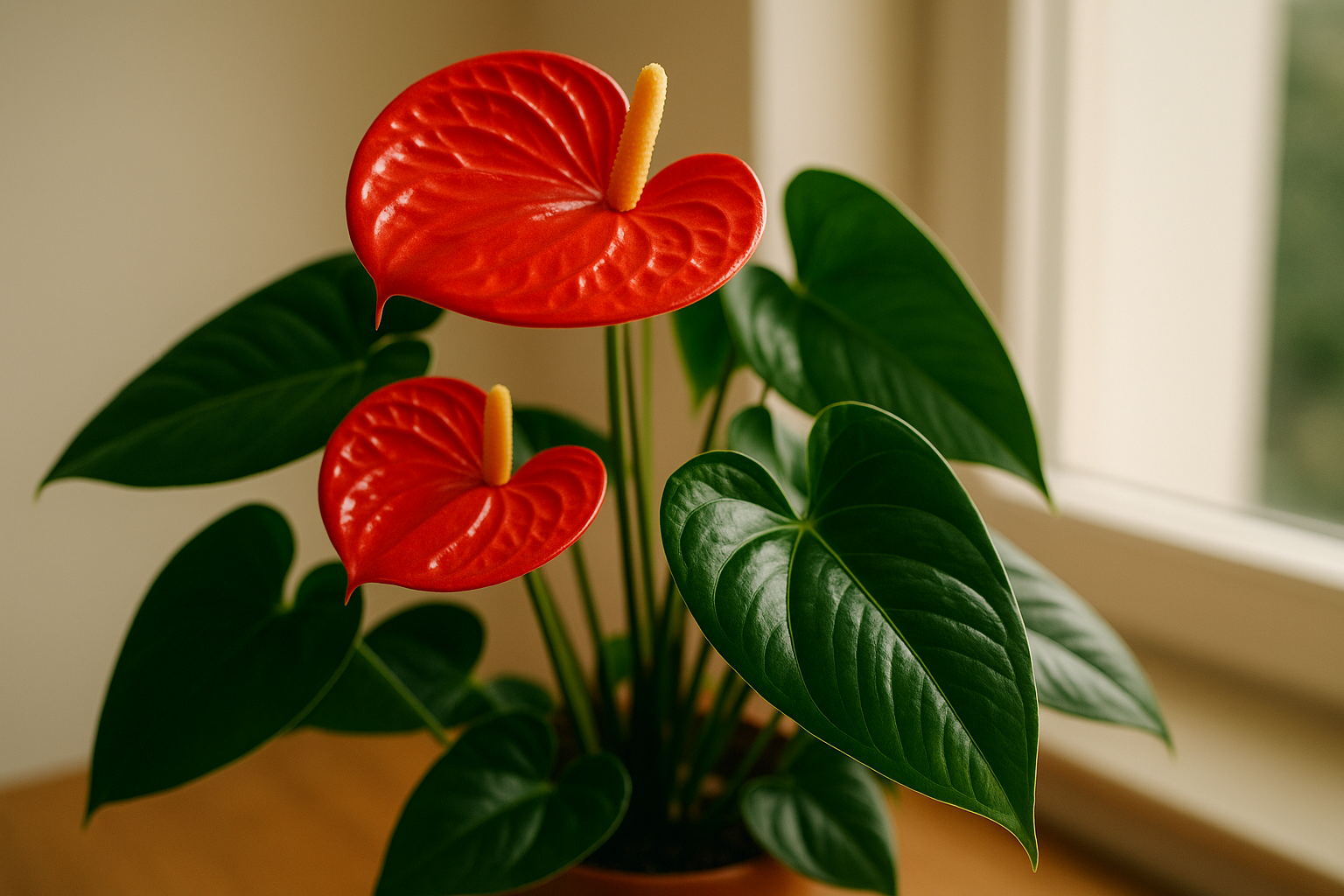
The Flamingo Flower at a Glance
Anthuriums — also called flamingo flowers or painter's palette plants — are the dramatic showoffs of the tropical plant world. Those waxy, heart-shaped blooms in red, pink, white, or coral? Not actually flowers. They're modified leaves called spathes. The actual flower is the spadix — that bumpy column poking up from the spathe. Now you know.
Native to Central and South American rainforests, anthuriums are epiphytes — they grow on other plants (or trees), not in soil. This changes everything about how you care for them, and it's exactly what most guides get wrong. If you treat an anthurium like a regular tropical plant and drown it in dense potting mix, you'll get root rot in about three weeks. Fun.
Toxicity heads-up: Anthuriums are toxic to cats, dogs, and humans if ingested — calcium oxalate crystals cause mouth irritation and GI distress. Keep them on high shelves or skip them entirely if your cat treats every plant like a salad bar. See our pet-safe plant alternatives if you need options that won't send you to the vet.
Use our plant troubleshooting tool if something's already going wrong.
Quick Care Checklist
| Water | Top 2 inches dry — not before, not after |
| Light | Bright indirect — no direct sun |
| Humidity | 60–80% — higher than most homes naturally |
| Temperature | 65–80°F / 18–27°C — keep above 50°F |
| Soil | Chunky, fast-draining epiphytic mix |
| Fertilizer | High-phosphorus, diluted to half strength, spring–summer |
Watering Your Anthurium — Why Epiphyte Logic Matters
This is the section that separates anthuriums from your pothos, and most guides completely miss why.
In the wild, anthuriums grow attached to trees, inches above the rainforest floor. Their roots are exposed to air most of the time — they're not buried in dense, water-retentive soil. They get rained on, then they dry out, then it rains again. That rhythm is what they expect from you.
What this means practically: Water when the top 1–2 inches of your chunky mix feel dry. Not when the surface looks pale. Not when the leaves droop slightly. Use your finger. Push it into the soil (or between bark chunks — yes, the mix will feel different than regular soil, that's fine).
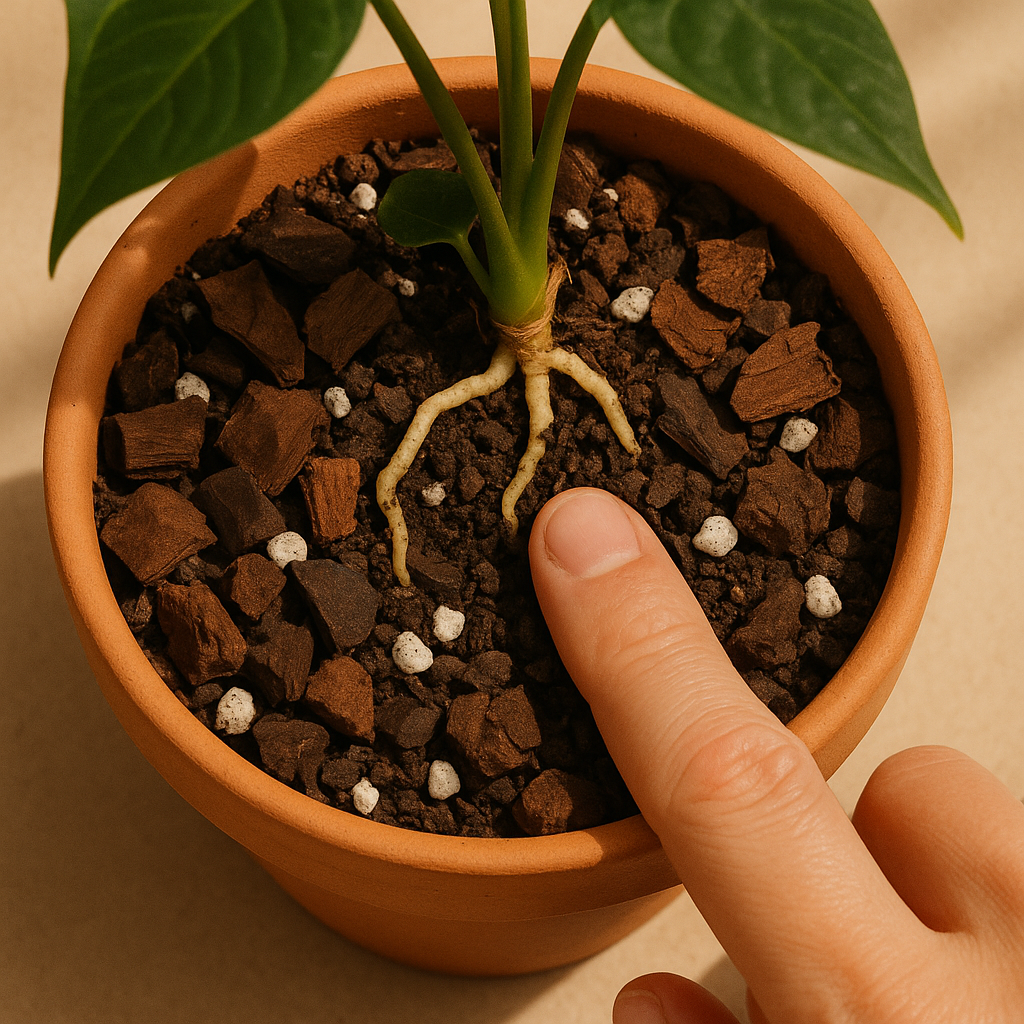
If you're the type who forgets to water for three weeks and then floods everything in a panic, a moisture meter helps. A lot.
Check soil moisture before you water — $15-25
Signs of overwatering (the #1 killer):
- Yellow lower leaves — often the first sign
- Stem mushiness at the base
- Soil that stays wet for more than a week after watering
- Foul smell from the pot (root rot setting in)
Signs of underwatering:
- Crispy leaf edges
- Leaves drooping despite the soil being dry
- Slow or stalled growth during growing season
If you've already got root rot, here's our root rot treatment guide.
Light — Bright Indirect, Not Direct
Anthuriums want bright indirect light — think the natural light in a room a few feet back from a south- or east-facing window. Not on the windowsill, not in a dark corner.
Direct sun scorches those glossy leaves and fades those expensive-looking spathes. You'll see brown, papery patches on the spathe surface and bleached-out spots on the leaves. Not the vibe.
Too little light shows up as:
- No blooms, ever
- Leggy, stretched-out stems reaching toward the light source
- Smaller, duller spathes when blooms do appear
If you're trying to coax an anthurium to bloom and it's sitting in a low-light room, move it closer to a window. Filtered light through a sheer curtain is ideal. East-facing windows are the sweet spot — bright morning light without the harsh afternoon heat.
Humidity — The Non-Negotiable
Here's the part where most apartments fail anthuriums.
Anthuriums want 60–80% relative humidity. Your home is probably 30–50%. That's a significant gap, especially in winter when heating systems dry everything out.
Brown leaf tips are the most common symptom of humidity that's too low. You'll see crispy tan or brown edges on the leaves, sometimes with a yellow halo. If your anthurium's tips look torched but you're watering correctly, the humidity is almost certainly the culprit.
Practical ways to get there:
- Humidifier — the most reliable option. A small ultrasonic humidifier near your plant group (or just your anthurium if it's the diva in the room) can maintain 60%+ consistently. Set it and forget it.
Keep humidity above 60% — compact humidifiers work great for single plants
- Pebble tray — a tray of water and pebbles under the pot adds some localized humidity. Won't cut it alone for anthuriums, but it's a supplement.
- Bathroom placement — if you have a bright bathroom, anthuriums genuinely thrive there. The shower steam keeps humidity naturally elevated.
- Grouping — plants transpire, raising humidity locally. A cluster of tropicals helps each other.
Misting? It helps temporarily but doesn't raise ambient humidity in any meaningful way. You're just making the leaves wet, which can encourage fungal issues. Skip it.
For the full breakdown on why humidity matters for tropicals, see our humidity guide for houseplants.
Soil & Repotting — The Chunky Mix Logic
Remember when I said anthuriums are epiphytes? This is where that matters most.
Standard potting soil is too dense, too water-retentive, and too anaerobic for epiphytic roots. If you pot an anthurium in regular potting mix and water it normally, the roots will sit in moisture and rot. This is not an opinion — it's botany.
The fix: A chunky, fast-draining epiphytic mix.
DIY recipe:
- 40% orchid bark (medium grade)
- 30% perlite
- 20% coco coir or peat moss
- 10% activated charcoal (optional but helps with drainage)
This mix drains fast, dries out between waterings, and lets the roots breathe the way they expect to.
Get the right chunky mix for anthuriums
When to repot:
- Every 2–3 years, or when you see roots coming out of the drainage hole
- Spring is the best time
- Go up only 1–2 inches in pot diameter — too much extra soil holds too much water
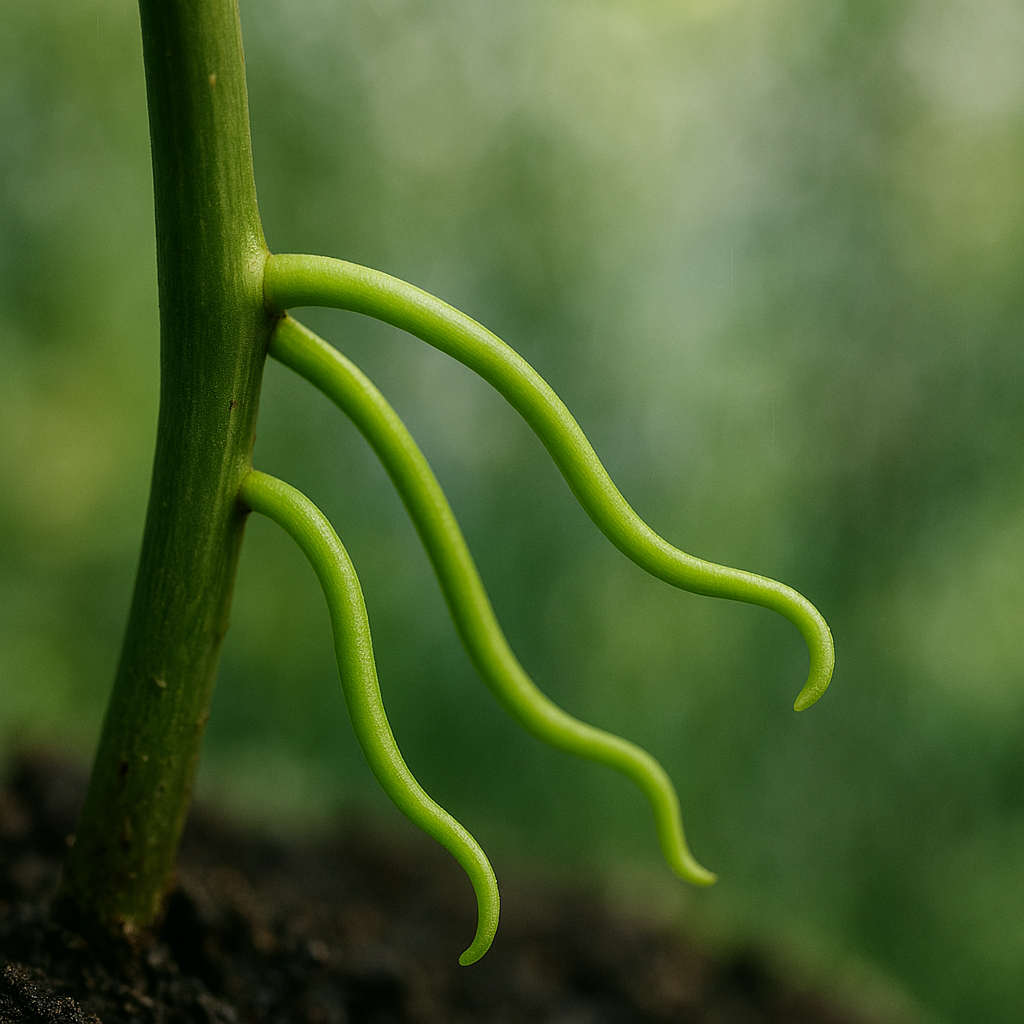
And about those aerial roots — the thick, leathery roots that emerge from the stem above the soil line. Don't cut them. In the wild, these are how the plant clings to bark and absorbs moisture from the air. They're not a sign of distress. They're doing exactly what they should. Leave them alone.
Fertilizing — Bloom Food, Not Leaf Food
Anthuriums aren't heavy feeders, but they do appreciate a boost during the growing season (spring and summer).
The key: Use a fertilizer with a higher phosphorus number (the middle number in N-P-K) to support blooming. Something like a 10-30-20 ratio. High nitrogen feeds leaves — not what you want if you're trying to get those colorful spathes.
Schedule:
- Feed every 4–6 weeks during spring and summer
- Dilute to half the recommended strength — anthuriums are sensitive to fertilizer burn
- Skip feeding entirely in fall and winter — the plant is resting
Signs of over-fertilizing:
- Brown, crispy leaf tips (often with a white salt crust on the soil surface)
- Drooping despite moist soil
- Stunted growth
If this sounds like your plant and you've been feeding heavily, flush the soil with plain water several times to leach out the salts. Then back off.
For more on fertilizer types and dilution, see our fertilizer guide.
Feed for blooms — high-phosphorus formula
Pruning & Maintenance
Anthuriums don't need much pruning, but a little maintenance keeps them looking good.
Spent flower stems: Once a spathe fades (it'll go from glossy to matte, then brown), cut the entire stem down to the base. Don't leave a brown stub — cut it clean. This redirects energy to producing new blooms rather than setting seed.
Lower yellowing leaves: Normal. Lower leaves age and die off over time. Pull or cut them off at the base when they're fully yellow.
Aerial roots: Already covered, but worth repeating — leave them. Do not cut them. Do not try to bury them in the soil (you can if you want, but it won't help and might hurt).
Curly vs. straight spadix: If you've noticed some anthuriums have a curly spadix and others have a straight one, that's a species difference. Anthurium scherzerianum (the true flamingo flower) has a distinctive curled or twisted spadix. Anthurium andreanum (the common anthurium) has a straight spadix. Both are equally valid houseplants — just a fun bit of plant trivia.
Anthurium Problems — Diagnostic Decoder
Here's the thing: "my anthurium is dying" covers a lot of territory. Let's narrow it down.
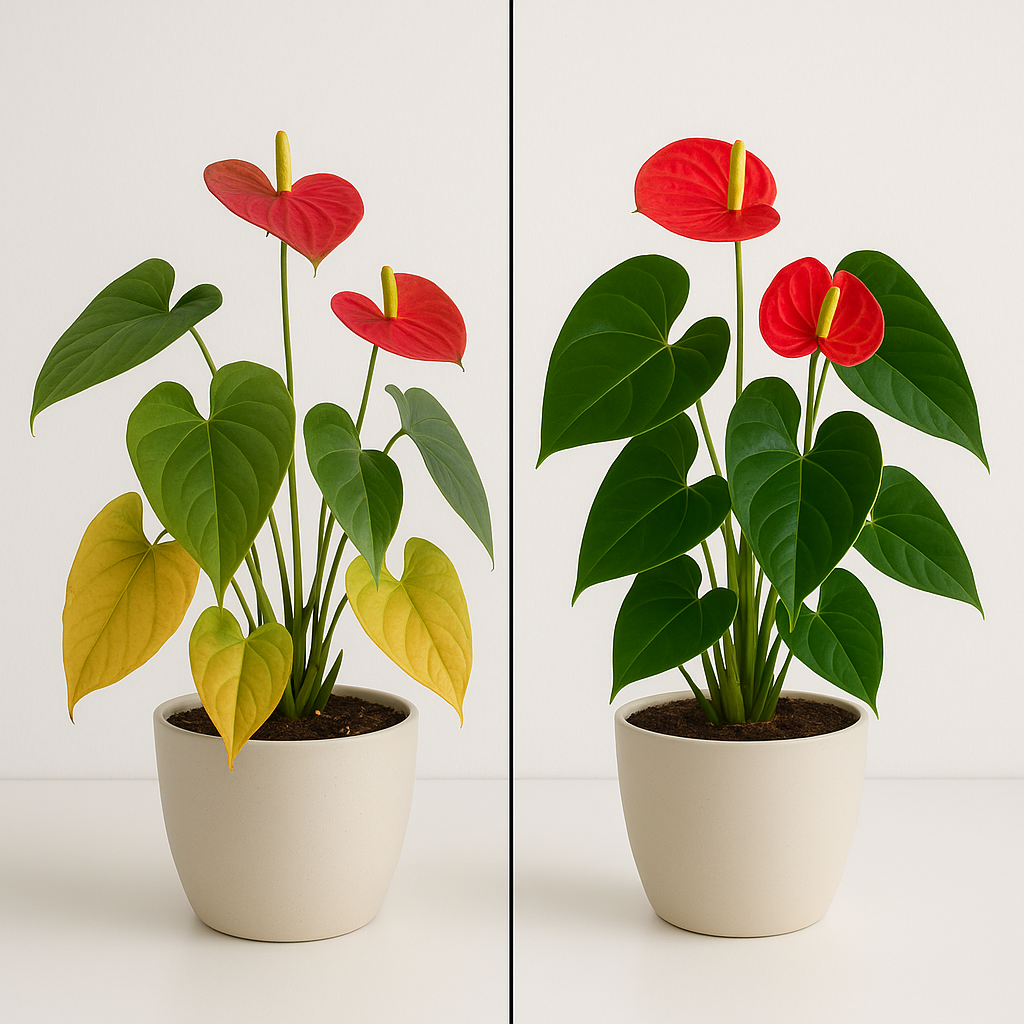
| Symptom | Most Likely Cause | Quick Fix |
|---|---|---|
| Yellow lower leaves | Overwatering | Let soil dry out more; check roots for rot |
| Yellow upper/new leaves | Nutrient deficiency | Feed with balanced or bloom fertilizer |
| Brown leaf tips | Low humidity | Raise ambient humidity; check with hygrometer |
| Brown patches on spathe | Direct sun burn | Move out of direct light immediately |
| Drooping leaves + wet soil | Root rot | Stop watering; treat with root rot guide |
| Drooping leaves + dry soil | Thirst | Water thoroughly; set up better schedule |
| No blooms | Not enough light | Move closer to bright indirect source |
| Leggy/stretched growth | Not enough light | Same fix — more light |
| Spots on leaves | Bacterial or fungal | Remove affected leaves; improve air circulation |
A note on blooms lasting 2–3 months: That's normal. Anthurium spathes are long-lasting by plant standards, but they do eventually fade. If you've had your anthurium for four months and the bloom is finally brown, that's not a failure — that's a successful bloom cycle. Cut the stem, keep caring for the plant, and new blooms will come.
Anthurium Varieties — Beyond the Red
Most people know the classic red anthurium, but there's a whole world of varieties — and they don't all look like each other, nor do they all care the same way.
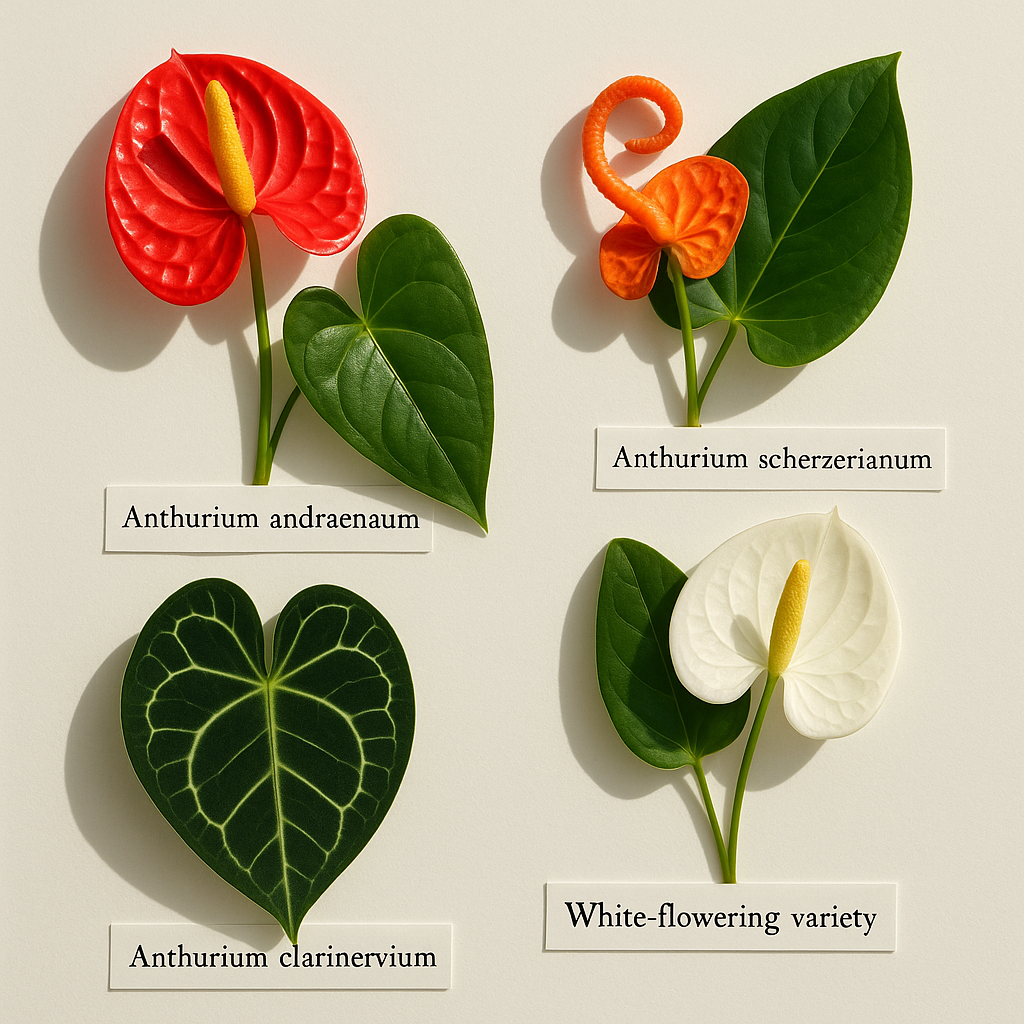
Anthurium andreanum — the workhorse. The classic heart-shaped spathe in red, pink, coral, white, or even chocolate brown. Broad, flat spadix. What you'll find at most nurseries. Reliable bloomer if you meet its needs.
Anthurium scherzerianum — the "true" flamingo flower. Distinguished by a curly or spiraled spadix (it's weird and cool). Generally a bit more compact than andreanum and tolerant of slightly lower temperatures. Great for tabletops.
Anthurium clarinervium — the velvet queen. Deep green, heart-shaped leaves with pale veining — no showy blooms to speak of, but the foliage is stunning. A collector's plant. Needs slightly higher humidity than the flowering types and definitely doesn't want direct sun.
Anthurium luxurians — ruffled, textured leaves that look almost quilted. Another foliage-first variety. Slower growing, more particular about humidity. Not for beginners, but satisfying if you get it right.
Care differs by type: The flowering types (andreanum, scherzerianum) want more light to sustain blooms. The foliage types (clarinervium, luxurians) prefer slightly lower light and higher humidity. Know what you've got.
Pet Safety — Toxicity You Need to Know
Let's be direct: anthuriums are toxic to cats, dogs, and humans.
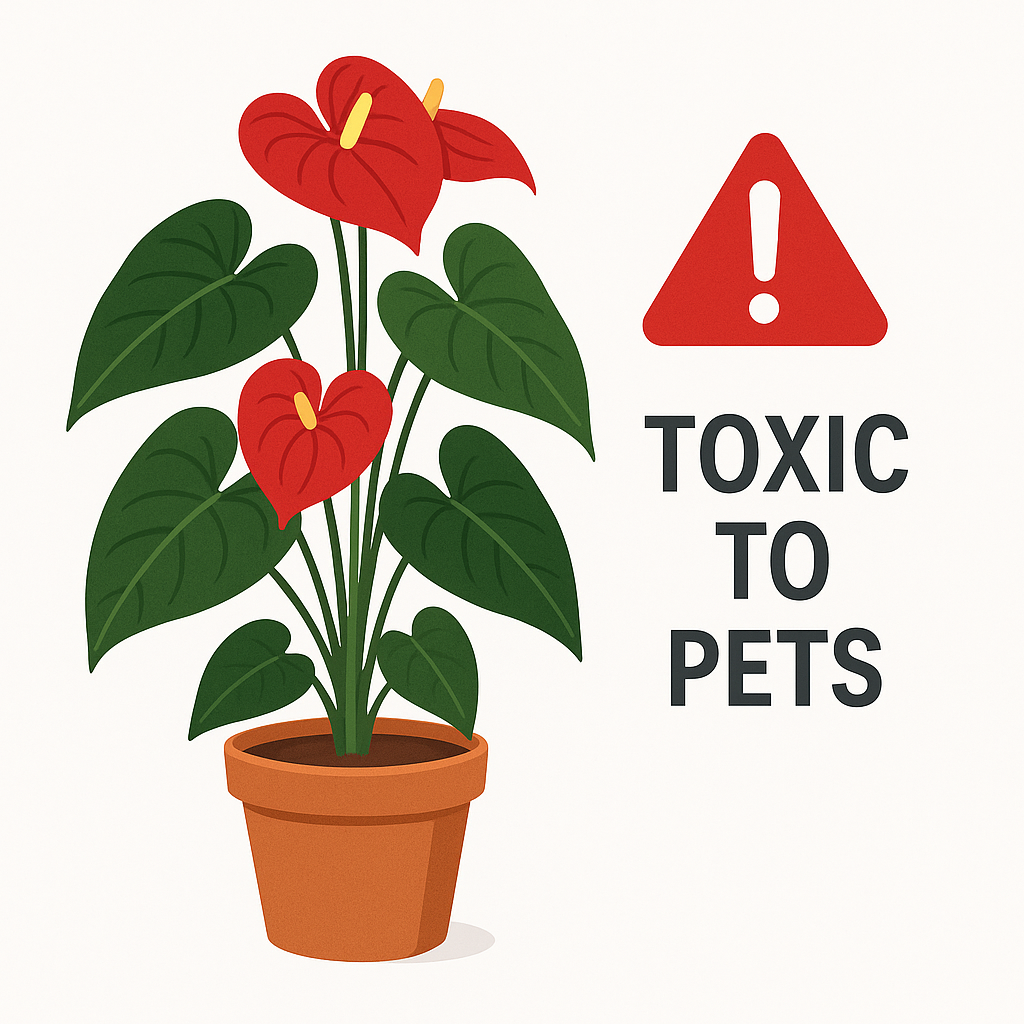
The culprit is calcium oxalate crystals — microscopic needle-shaped structures that cause immediate irritation when chewed or swallowed. Symptoms include:
- Drooling
- Oral irritation and pawing at the mouth
- Difficulty swallowing
- Vomiting
If your pet has chewed an anthurium, call your vet or a pet poison hotline. It's not typically fatal in healthy adult animals, but it's genuinely unpleasant and the irritation can be serious.
The solution: Keep anthuriums on high shelves, in rooms pets don't access, or accept that they might not be the right plant for a pet household. If you want the tropical look without the toxicity, check out our pet-safe plant alternatives.
FAQ — Frequently Asked Anthurium Questions
Why are my anthurium leaves turning yellow? Usually overwatering. Check the soil — if it's wet and the lower leaves are yellow, back off on watering and check for root rot. Upper/new leaf yellowing can also indicate a nutrient deficiency.
Why are my anthurium's leaf tips turning brown? Almost always low humidity. Anthuriums want 60–80% humidity, and most homes are much drier. Raise the humidity around the plant and the browning should slow down or stop.
How often should I water my anthurium? When the top 1–2 inches of soil are dry. In most homes, that's every 7–10 days in summer and every 10–14 days in winter. Use the finger test — don't water on a rigid schedule.
Why is my anthurium not flowering? Likely not enough light. Anthuriums need bright indirect light to bloom. If yours is in a low-light corner, move it closer to a window. Also check that you're using a high-phosphorus fertilizer in spring and summer.
Are anthuriums toxic to pets? Yes — toxic to cats, dogs, and humans. Keep them out of reach or choose pet-safe alternatives.
Can I put my anthurium outside in summer? Yes, but keep it in shade. Anthuriums are not outdoor plants in most climates, but a shaded patio in summer gives them a humidity boost. Bring them back inside when temperatures drop below 50°F / 10°C.
Anthuriums reward the plant parent who pays attention. They're not the easiest tropical, but they're far from the hardest — and when those blooms last two or three months, you'll understand why people get addicted.
For broader plant troubleshooting, check out the plant troubleshooting tool.
Our Favorite Anthurium Care Tools
We use these products ourselves:
Moisture Meter — Check soil moisture before you water
Compact Humidifier — Keep humidity above 60%