Alocasia Black Velvet Pink Variegated Care Guide
Everything you need to keep this rare collector's plant thriving — including how to actually keep those pink spots from fading.
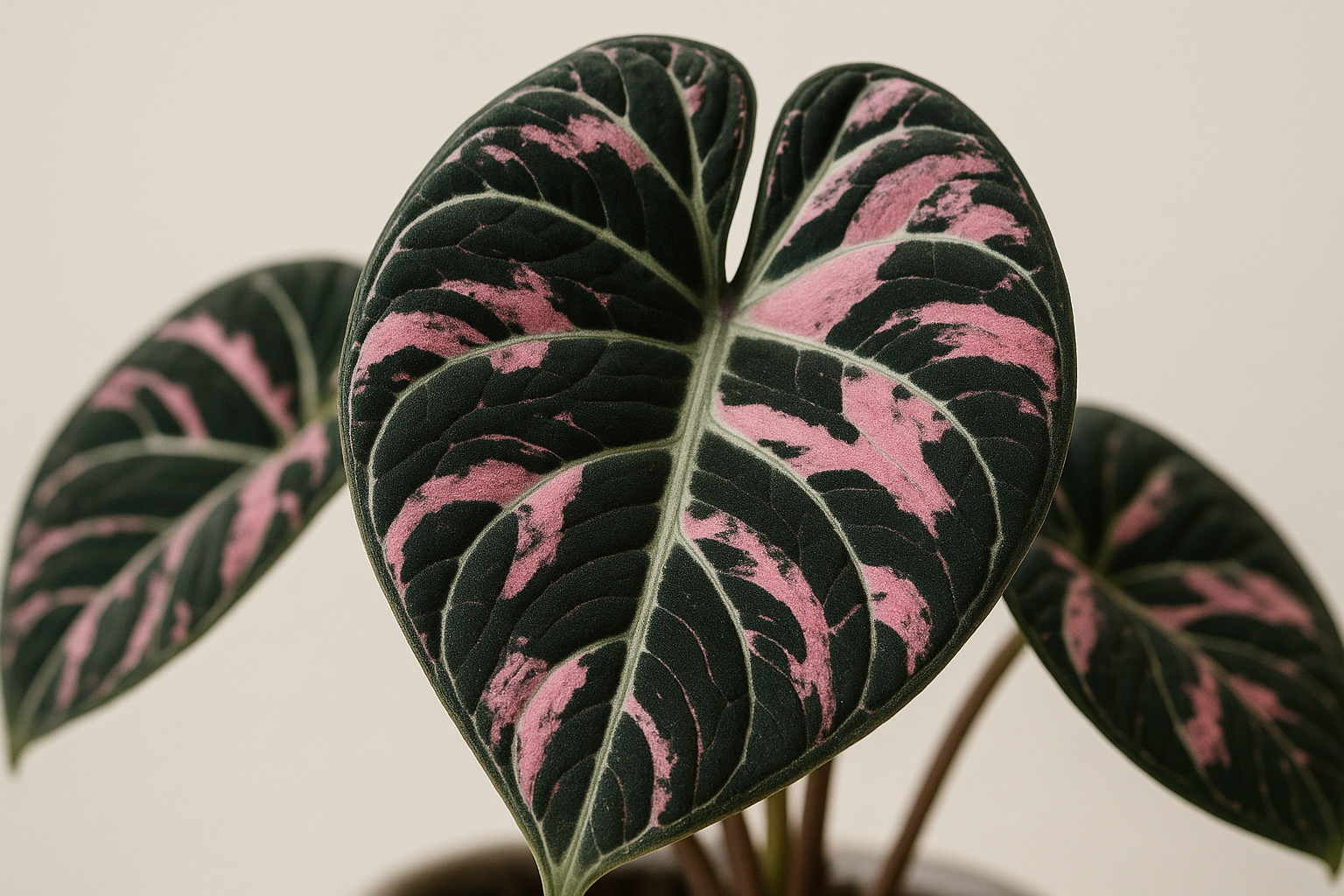
What Makes Black Velvet Pink Variegated Special
The Alocasia Black Velvet Pink Variegated (Alocasia reginula) is what happens when nature decides to show off. You've got the signature velvety, near-black leaves that give "Black Velvet" its name — but instead of plain dark foliage, you've got striking pink variegation splashed across the leaves like watercolors.
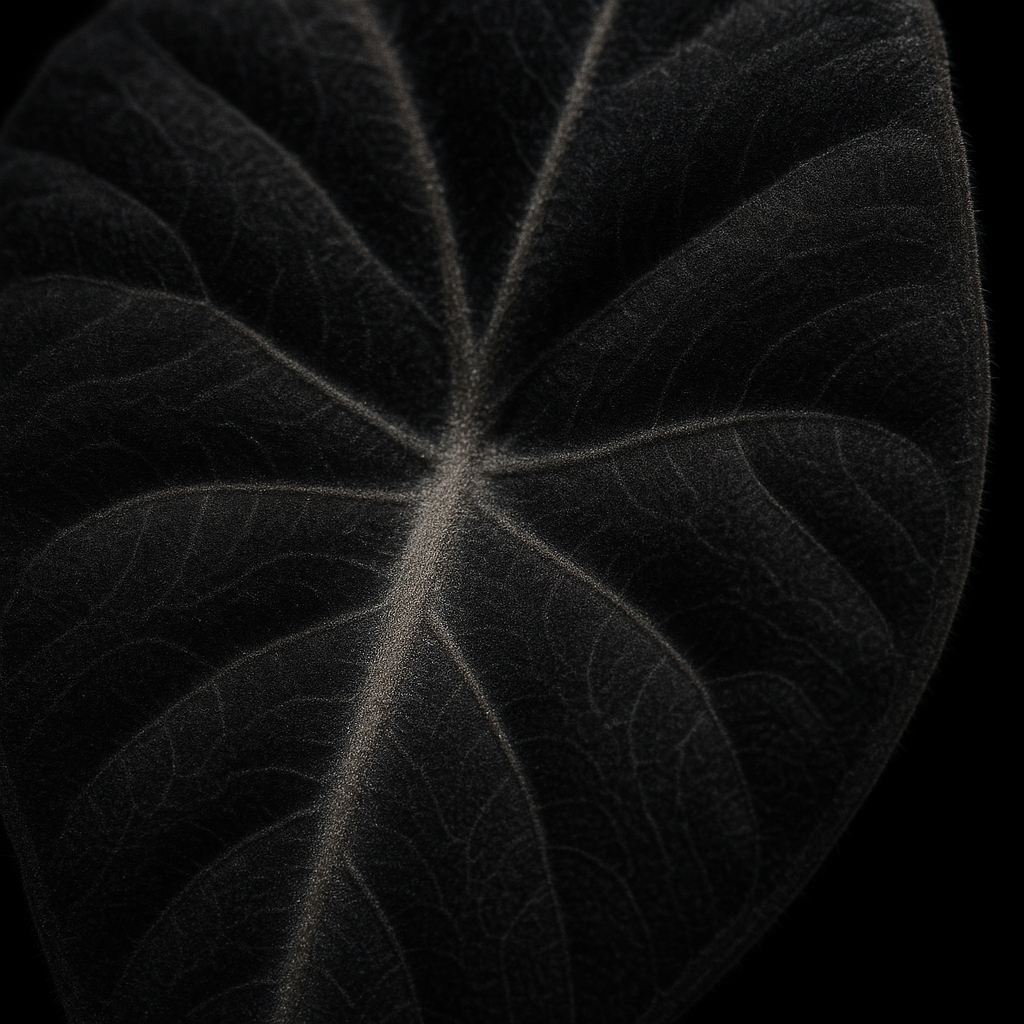
This isn't a plant you grab at the local nursery. It's a tissue-cultured rare variety that can run you anywhere from $150 for a small plant to $600+ for a mature, heavily variegated specimen. The price depends on variegation quality, leaf count, and whether you're buying from a specialty nursery or an eBay seller hoping to cash in.
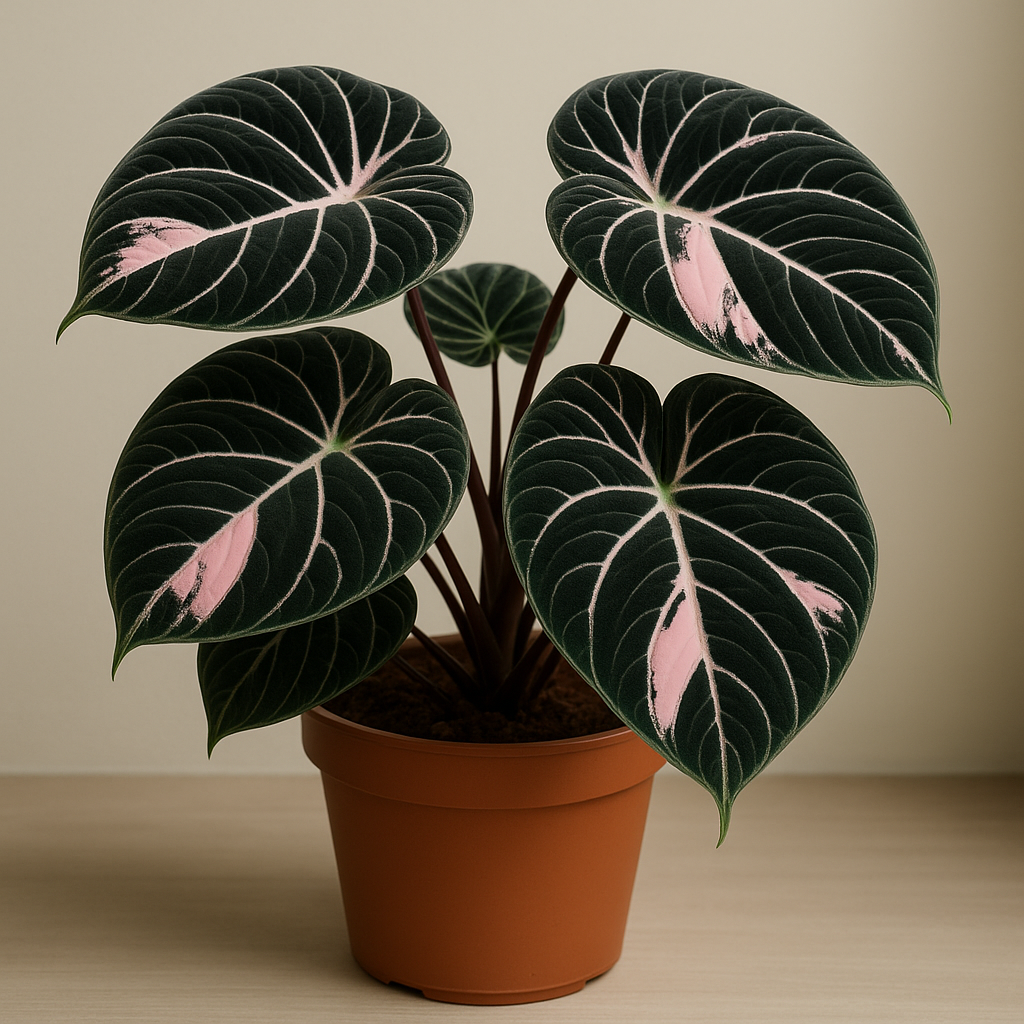
If you're dropping this kind of cash, you need to know how to keep it alive. And frankly, these are divas. But we'll get to that.
Light Requirements
Here's the thing about variegated alocasia: they need more light than their non-variegated siblings. That pink color comes from cells that lack chlorophyll, which means the plant has to work harder to photosynthesize through the remaining green tissue.
What this plant needs:
- Bright indirect light
- Some morning or late afternoon direct sun is fine (but not midday harsh sun)
- East-facing windows are ideal
- South or west windows work if you have a sheer curtain
How Light Affects Variegation
This is the part most people get wrong. You might think keeping your variegated plant in lower light would help "protect" it. Wrong. Low light causes variegation to fade. The plant prioritizes producing green chlorophyll to survive, and those pink sections? They get shoved to the background.
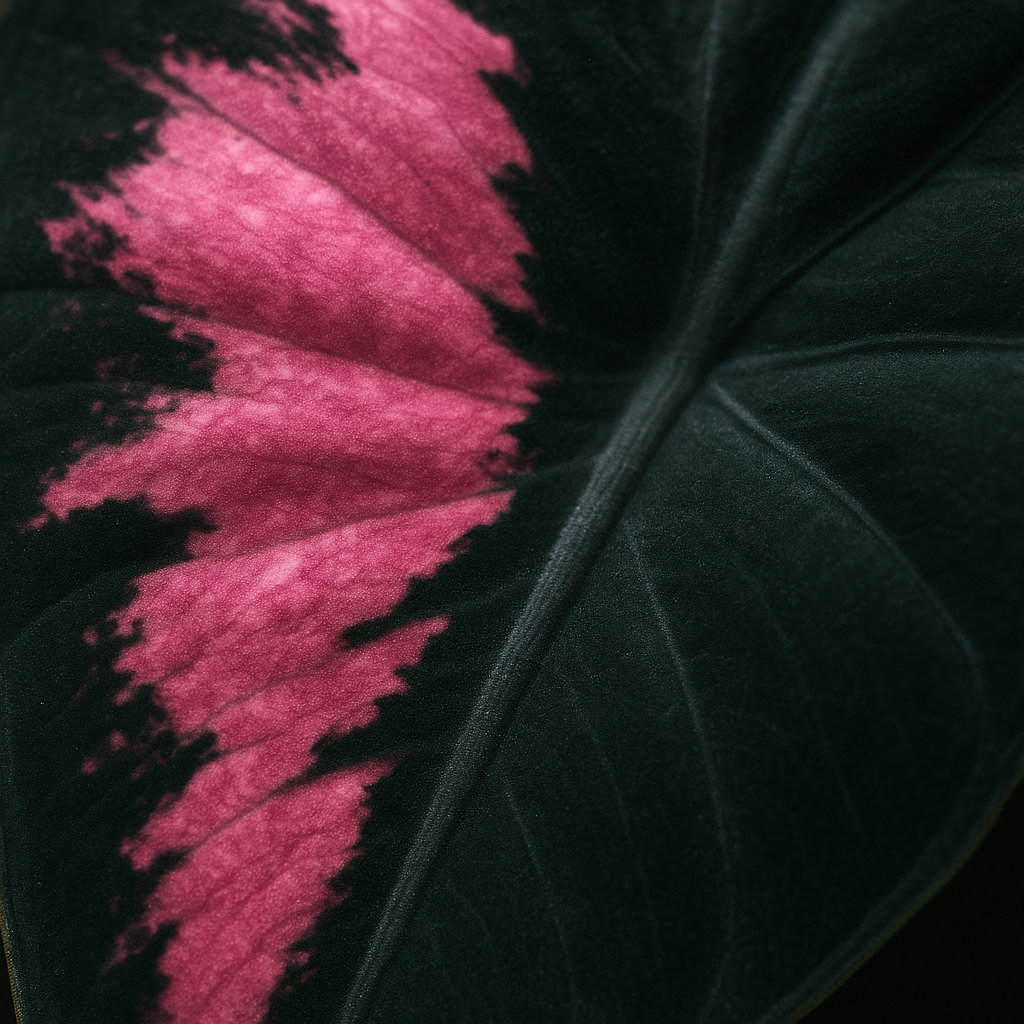
If your pink is fading to pale yellow or white, move it closer to a light source. Variegated alocasia are basically solar panels with extra steps — they need maximum light to maintain that gorgeous coloring.
Grow Light Recommendations
If your space doesn't get enough natural light, a grow light is non-negotiable. We're fans of Mars Hydro Grow Light for serious plant parents, or if you just want something simple, Sansi LED Grow Bulb screws into any regular lamp.
Watering Guidelines
Alocasia are notorious for two things: going dormant when they feel like it, and rotting from overwatering. Black Velvet Pink is no exception — if anything, it's more sensitive because those velvety leaves trap moisture and the root system is relatively compact.
How to Know When to Water
The rule: Water when the top 1-2 inches of soil are completely dry. Stick your finger in. If it feels dry down to your second knuckle, water it. If it's still damp, wait.
Don't trust a schedule. Your plant doesn't care that it's "supposed" to be watered every five days. In winter, it might be every 10-14 days. In summer growing season, it might be every 4-5 days.
Pro tip: Grab a Check Soil Moisture on Amazon. These cheap little meters take the guesswork out of watering and might save you from killing a $300 plant.
Signs of Overwatering
- Yellow leaves (especially lower/older leaves first)
- Mushy stems at the base
- Soil staying wet for more than a week
- General mushiness or wilting despite wet soil
Root Rot Prevention
If you're already nervous about watering, here's what kills alocasia fastest: root rot. It happens when soil stays saturated and the roots can't breathe. By the time you see symptoms, it's usually too late.
Prevention:
- Use a pot with drainage holes (no例外)
- Never let the plant sit in water
- Use the chunky soil mix we cover below
- When in doubt, wait another day
Need more details? We have a whole guide on preventing and treating root rot.
Ideal Soil Mix
Regular potting soil is a death sentence for alocasia. It holds too much moisture, compacts around the roots, and creates exactly the conditions root rot loves.
What you need is a chunky, well-draining mix that dries out relatively quickly but holds enough moisture to keep the plant happy between waterings.
Best Potting Mix Components
- Aroid mix ( Orchid bark, perlite, charcoal)
- Perlite — Get Perlite on Amazon for drainage
- Orchid bark — View Orchid Bark on Amazon for chunky structure
- Coco coir or peat moss for moisture retention
- Horticultural charcoal to prevent fungal issues
DIY Soil Recipe
Here's a solid mix ratio:
- 40% orchid bark
- 30% perlite
- 20% coco coir
- 10% worm castings (optional, adds nutrients)
This drains fast, dries out within a few days, and gives those roots the oxygen they need.
Humidity & Temperature Needs
If there's one thing that will make or break your Black Velvet Pink, it's humidity. These plants come from tropical environments where humidity regularly hits 70-80%. Your average apartment? Maybe 40-50% if you're lucky.
Optimal Humidity Levels
Target: 60-80% humidity
Below 60% and you'll start seeing:
- Brown leaf edges
- Crispy, dry-looking leaves
- Slower growth
- General unhappy plant behavior
Creating a Humid Environment
The options, ranked:
-
Humidifier — View on Amazon is the most reliable solution. A 6L Levoit runs for about 20 hours and will keep your plant room in the sweet spot.
-
Pebble tray — Set the pot on a tray filled with pebbles and water. The water evaporates and increases humidity right around the plant. Cheap and easy.
-
Grouping plants — Plants release moisture through transpiration. Grouping several plants together creates a microclimate with higher humidity.
-
Bathroom or kitchen — These rooms naturally have higher humidity. Just make sure there's enough light.
Temperature Tolerances
Keep your alocasia in 65-80°F (18-27°C). They don't tolerate cold drafts, so keep them away from windows in winter if it's 50 below°F outside. Below 60°F and they'll start slowing down. Below 50°F and you might trigger dormancy (or kill them, depending on how long).
Fertilization Schedule
Feed your Black Velvet Pink during the growing season (spring through early fall) and stop completely in winter.
When to Fertilize
- Every 2-3 weeks during active growth
- Use a balanced liquid fertilizer diluted to half strength
- Stop fertilizing in late fall/winter when growth naturally slows
Best Fertilizer Types
A balanced NPK (like 10-10-10) or slightly higher in nitrogen works well. We have a whole fertilizer guide if you want the deep dive, but honestly, half-strength generic liquid fertilizer works fine. Don't overdo it — more fertilizer isn't better. It burns roots and causes salt buildup.
Propagation Methods
Here's the tricky part: Black Velvet Pink is typically propagated through division or offsets. You can't really propagate this from a leaf cutting — it just rots.
Division vs Offsets
Division: When you repot, you can physically separate the tuber/root ball into two plants. Both sections need their own roots and at least one "eye" (growth point).
Offsets: Sometimes the mother plant produces baby plants (offsets) at the base. These can be carefully separated once they have their own roots.
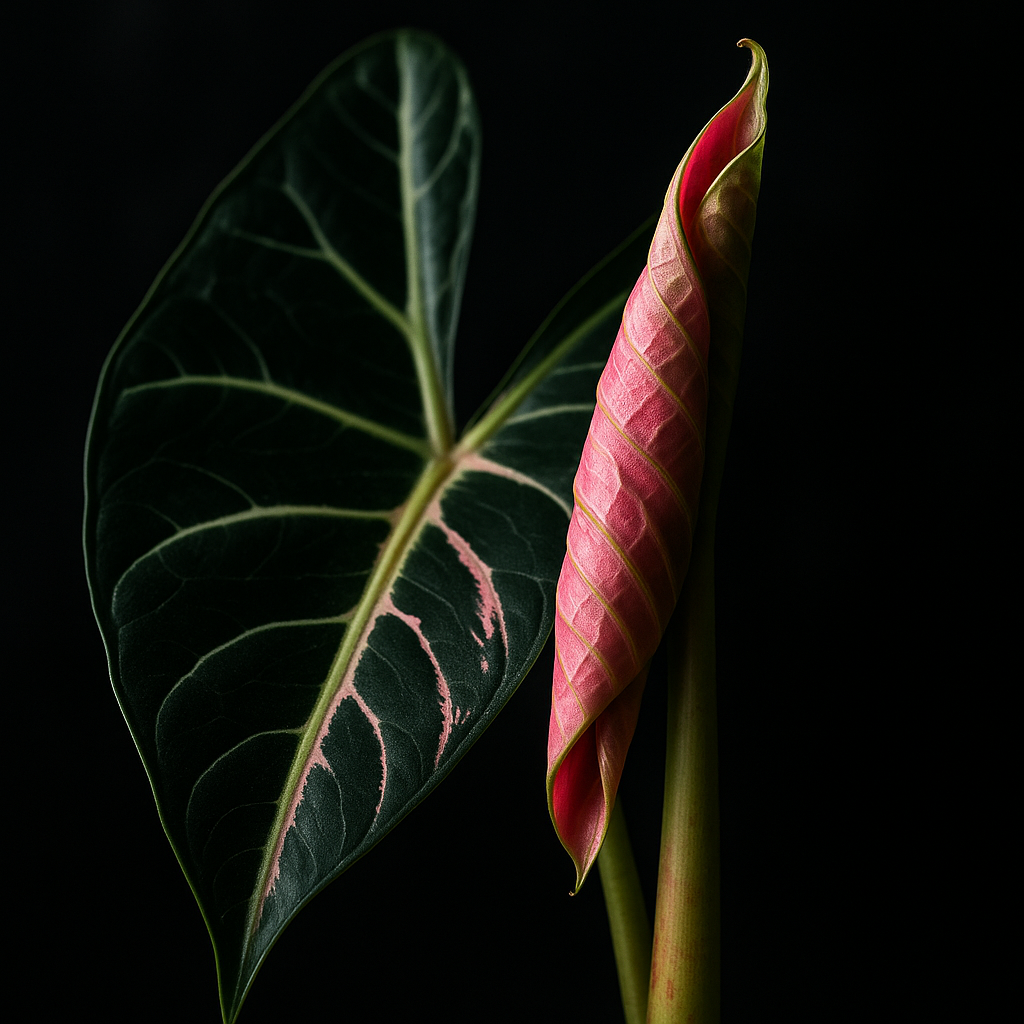
Step-by-Step Propagation Guide
- Wait until spring — Propagation works best during active growth
- Remove the plant from its pot
- Gently shake off excess soil to expose the roots
- Locate offsets or natural divisions in the root ball
- Cut with a clean, sharp knife — Sterilize with rubbing alcohol first
- Pot separately in fresh, well-draining soil
- Keep humid and wait 2-4 weeks for new growth
Patience is key. Alocasia propagation is not fast.
Common Problems & Solutions
Yellow Leaves
Almost always overwatering. Check the soil — if it's wet and the leaves are yellow (especially lower/older ones first), you've got root rot brewing. Here's our root rot guide.
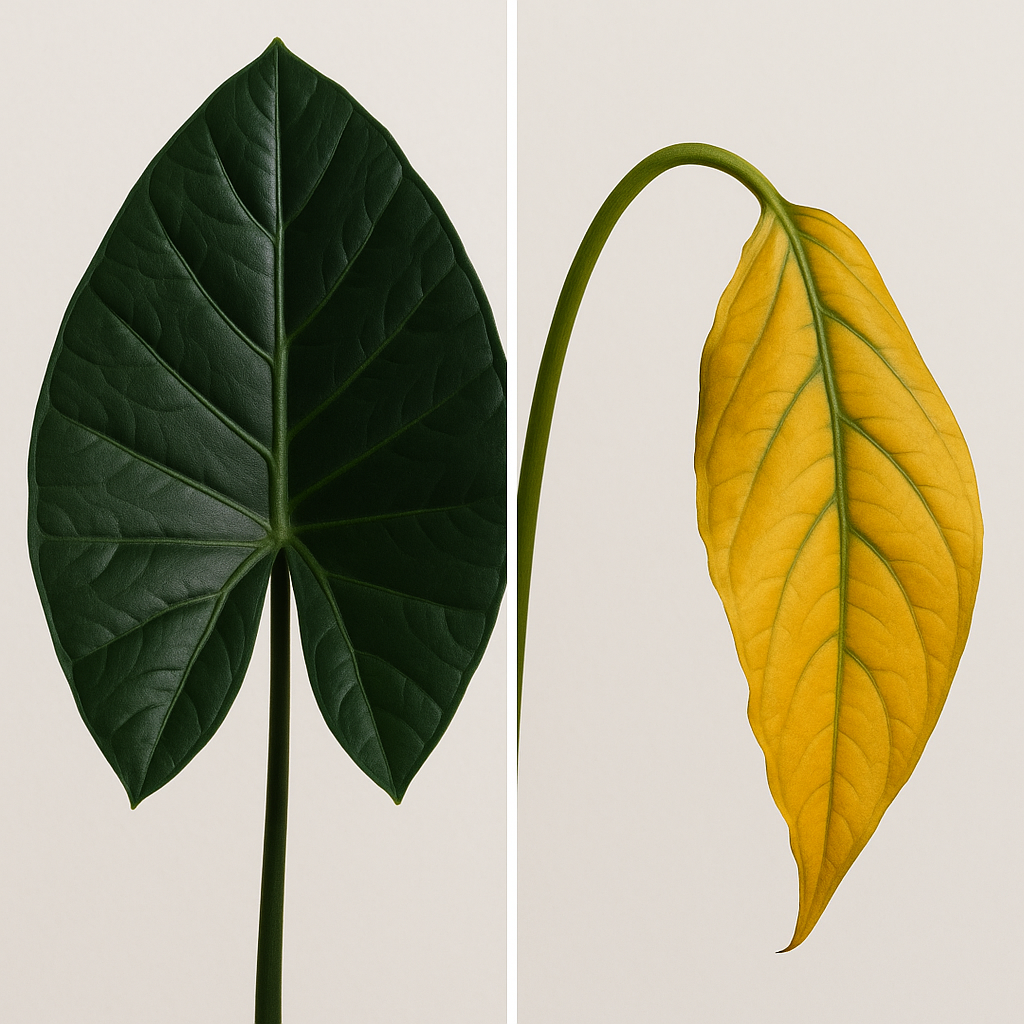
Drooping Leaves
Can be either:
- Underwatering — soil is bone dry
- Overwatering — roots are drowning
- Low humidity — air is too dry
Check soil moisture first, then humidity. Usually it's one of those two.
Pest Infestations
Alocasia attract the usual suspects: spider mites, mealybugs, and fungus gnats. Check under those velvety leaves regularly.
- Spider mites — tiny dots, webbing between leaves. Spray with neem oil or insecticidal soap
- Mealybugs — white, cottony stuff in leaf joints. Dab with rubbing alcohol
- Fungus gnats — tiny flies around soil. Let soil dry out more, use sticky traps
Dormancy Handling
Here's the fun part: alocasia go dormant. Usually in fall/winter when temperatures drop or daylight decreases. Your plant might suddenly drop all its leaves and look dead.
It's probably not dead. The tuber is still alive underground.
What to do:
- Stop watering completely
- Let the soil dry out
- Store the pot in a cool, dry place (50-60°F)
- Wait 2-3 months
- In spring, resume watering and move to a warm spot
New leaves should emerge from the tuber. We have more details in our alocasia dormancy and recovery guide.
How to Maintain Pink Variegation
This is the question everyone with a variegated alocasia asks: how do I keep it pink?
Variegation Stability Tips
-
More light = more pink. Seriously. Bright indirect light keeps those variegated cells active.
-
Don't stress the plant. Variegation can revert under stress. Consistent care > dramatic changes.
-
Watch for reversion. If you see an all-green leaf emerge, it might be the plant "giving up" on variegation. More light usually helps.
-
Variegation can change. A leaf that emerges hot pink might fade to pale pink or white as it matures. That's normal.
Why Variegation May Fade
- Not enough light — the #1 cause
- Too much direct sun — can bleach variegation
- Nutrient deficiency — feed during growing season
- Stress — inconsistent watering, temperature swings
Where to Buy & Price Guide
Average Price Range
- Small (2-3 leaves): $100-200
- Medium (4-5 leaves): $200-400
- Large/Mature (6+ leaves, heavy variegation): $400-600+
- Collector specimens (show-quality variegation): $600-1000+
Reputable Sellers
Skip the random eBay listings and Amazon third-party sellers. Look for:
- Specialty aroid nurseries
- Tissue culture labs with good reputations
- Etsy shops with reviews specifically for rare alocasias
Local Facebook plant groups can be good for finding folks locally who are dividing their own plants.
Seasonal Care Guide
Spring & Summer Care
- Water more frequently as temps rise
- Resume fertilizing every 2-3 weeks
- Monitor for pests as growth accelerates
- This is the best time to repot if needed
Fall & Winter Care
- Reduce watering as growth slows
- Stop fertilizing completely by late fall
- Watch for drafts near windows/doors
- Consider a humidifier if indoor heating dries the air
Dormancy Preparation
If your plant starts dropping leaves in fall/winter:
- Don't panic
- Stop watering
- Store the pot
- Wait for spring
This is normal alocasia behavior. The plant isn't dying — it's taking a nap.
Final Thoughts
The Alocasia Black Velvet Pink Variegated isn't a beginner plant. It's a commitment — to humidity, to proper watering, to giving it enough light to maintain that gorgeous variegation. And yes, it's expensive.
But if you've got the conditions (or are willing to create them), this plant is absolutely stunning. Those dark velvety leaves with hot pink splashes? Worth every penny.
Just don't say we didn't warn you about the dormancy thing. Nothing gives new plant parents a heart attack quite like watching all their leaves drop off overnight.
Want to learn more about alocasia? Check out our alocasia varieties guide or why your alocasia might be dying.
Products We Love
We use these products ourselves and recommend them for Alocasia Black Velvet Pink Variegated care:
- XLUX Soil Moisture Meter — Essential for getting watering right
- Levoit Humidifier (6L) — Keeps humidity in the sweet spot
- Espoma Organic Perlite — Key soil component for drainage
- Orchid Bark Mix — Creates the chunky mix alocasias need
- Mars Hydro Grow Light — For maintaining variegation
- Sansi LED Grow Bulb — Simple grow light solution