Air Plants (Tillandsia) Complete Care Guide — No Soil Required
Meet the plant that rewrote the rulebook — and somehow still survives your neglect better than your fiddle leaf fig.
Meet the Tillandsia — The Plant That Broke the Rules
Air plants — botanically, Tillandsia — are the renegades of the plant world. While the rest of your collection is out here demanding root room and proper drainage, Tillandsia said "actually, I get my water from the air" and built a whole lifestyle around it.
They're epiphytes, which means in the wild they grow attached to trees, rocks, and driftwood — not in soil. Their roots exist purely to anchor them in place. Water and nutrients? That all happens through tiny scales on their leaves called trichomes, which is just a fancy word for "little water-catching hairs."
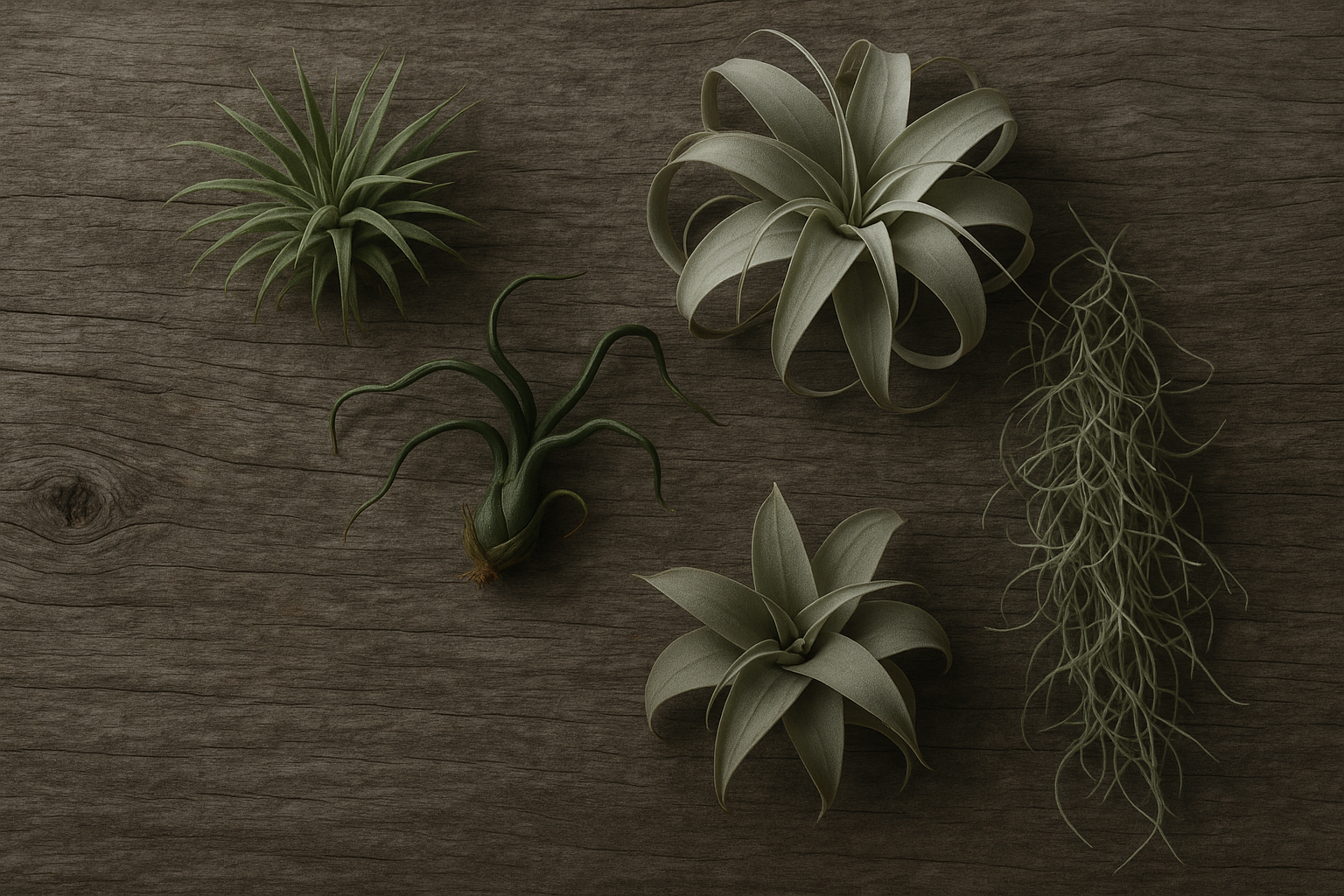
There are over 650 species in the Tillandsia genus, ranging from thumb-sized miniatures to the dramatic, silver-curled xerographica that looks like a sea creature decided to become a houseplant. Some are green and smooth. Others are covered in fuzzy silver scales. That texture difference? It's the single most useful thing to know about caring for them.
And unlike most houseplants, air plants genuinely don't need soil — which makes them one of the easiest plants to display just about anywhere. (If you want more low-fuss options, check out our picks for easiest houseplants.)
Mesic vs. Xeric Tillandsia — Why It Matters for Care
Before you do anything else, learn this divide:
- Mesic varieties have greener, smoother, softer leaves. They're from rainforests and shady tree canopies. They want more water, more humidity, and less direct sun. Think T. ionantha, T. bulbosa, T. stricta.
- Xeric varieties have silver, fuzzy, more armored leaves. They're from drier, sunnier habitats where water is scarce, so they've evolved to capture and hold onto every drop efficiently. They tolerate more sun and less frequent watering. Think T. xerographica, T. argentea, Spanish moss.
If you know which type you have, you already know half of everything else in this guide.
Light: Bright Indirect Is the Sweet Spot
Tillandsia want bright, indirect light — the kind that sits a few feet back from a sunny window, not pressed against the glass. Think east or west-facing windows for most homes. A north-facing window in a northern hemisphere home is usually too dim for healthy growth.
The direct sun warning: Mesic types (softer, greener) will scorch in hot direct afternoon sun. Xeric types are more forgiving, but even xerographica can get crispy edges if it's baking in a south-facing window all summer.
Growing under artificial light? Full-spectrum LEDs work fine. Keep them 6–8 inches away, run 12–14 hours a day, and your air plants won't know the difference. This is a genuine option for apartments without good windows.
Signs of too little light: Leaves go pale, soft, or floppy. The plant stops growing. It looks generally sorry for itself.
Signs of too much light: Leaves bleach out to pale yellow or white, tips go brown and crispy. Move it back from the window.
Watering: Soak, Mist, or Dunk? (And When to Use Each)
Here's where air plant care gets interesting — and where most people mess up.
The number one mistake beginners make with air plants is treating them like regular houseplants: giving them a splash of water and walking away. That doesn't work. But the second-biggest mistake? Soaking them and then putting them back in display position without drying, which leads to rot in the cup.
Let me be clear: these plants are harder to kill by underwatering than by overwatering.
The Soak Method (Weekly, Most Tillandsia)
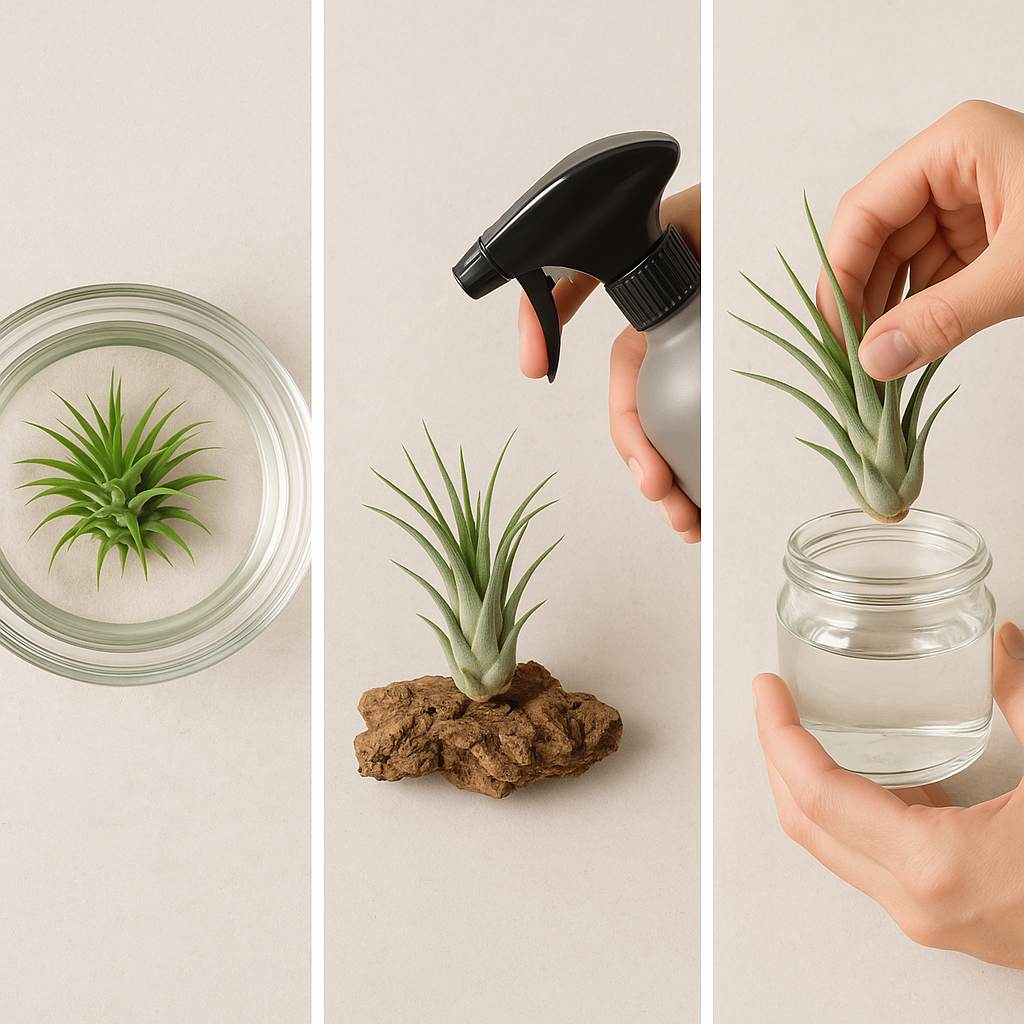
Fill a bowl with room-temperature water. Submerge the plant completely — leaves and all. Let it sit 20–30 minutes. Remove, gently shake off excess water, and place the plant upside down on a towel to dry fully. Do not return it to its display for at least 4 hours.
This is the main watering method for most mesic and xeric types alike. Weekly is the baseline; adjust up in hot/dry conditions, down in winter or humid conditions.
The Misting Method (Supplemental, Between Soaks)
Misting alone is rarely enough for most Tillandsia, but it's a useful supplement. Use a fine mist spray bottle to lightly mist the leaves 2–3 times per week between soaks. In dry climates or air-conditioned rooms, mist more.
Think of misting as a humidity top-up, not a primary watering strategy.
The Dunk Method (Quick Refresh)
For xeric varieties, mounted displays, or when you're in a hurry: a quick 10–15 second full dunk in water. Shake off, dry upside down. That's it.
Xerics like xerographica and ionantha actually do well with this method — they're built for drought and appreciate a quick drink more than a long bath.
The Golden Rule: Always Dry Upside Down
I will die on this hill: air plants must dry upside down.
Water left sitting in the cup or crown of the plant is the primary cause of rot — the slow, mushy, unrecoverable kind that turns your tillandsia into a smelly brown puddle over days. This is especially true for mesic varieties with tighter leaf rosettes.
After every soak, every misting session, every dunk — turn the plant upside down on a towel for at least 4 hours before returning it to display.
Seasonal Adjustments
- Summer / hot weather: Soak every 4–5 days instead of weekly. Plants are actively growing and thirsty.
- Winter / heating season: Stretch to every 10–14 days. Growth slows, water needs drop, and indoor heating dries them out.
- Humid bathroom? You might get away with less frequent soaking. Watch the plant.
Temperature & Humidity: They're Tougher Than They Look
Air plants handle a wide indoor temperature range — roughly 50–90°F (10–32°C). They don't want frost, and they don't want to live directly beside a heating or AC vent that blasts hot or cold air at them constantly.
Humidity is their jam. These are tropical and subtropical plants at heart. Bathrooms with natural light are basically air plant paradise — the humidity from showers means less work for you.
If your home runs dry (common in winter with heating, or in arid climates), a small humidifier nearby helps enormously. Pebble trays with water beneath the plants provide a small localized humidity boost, though they're less effective than a real humidifier.
Fertilizer: Low-Nitrogen, Once a Month
Air plants don't need fertilizer, but they benefit from it — especially if you want to encourage blooming, which is a Tillandsia reward for good care.
The key word is low-nitrogen. Regular houseplant fertilizers are nitrogen-heavy because nitrogen drives leaf growth in soil-based plants. Tillandsia don't work that way. You want something closer to a bromeliad or orchid formula, with nitrogen dialed back.
A low-nitrogen bromeliad fertilizer mixed at quarter-strength into your soak water once a month during spring and summer is the standard recommendation. Skip it in winter unless your plants are actively growing in a warm, lit environment.
Over-fertilizing burns the leaves. If you see brown or crispy leaf tips after fertilizing, dilute more. Less is always more with these plants.
Display: Driftwood, Terrariums, and Everything In Between
This is the part where air plants get fun. No pots means no constraints. Air plants go anywhere with good airflow and decent light.
Mounting Air Plants on Driftwood or Cork
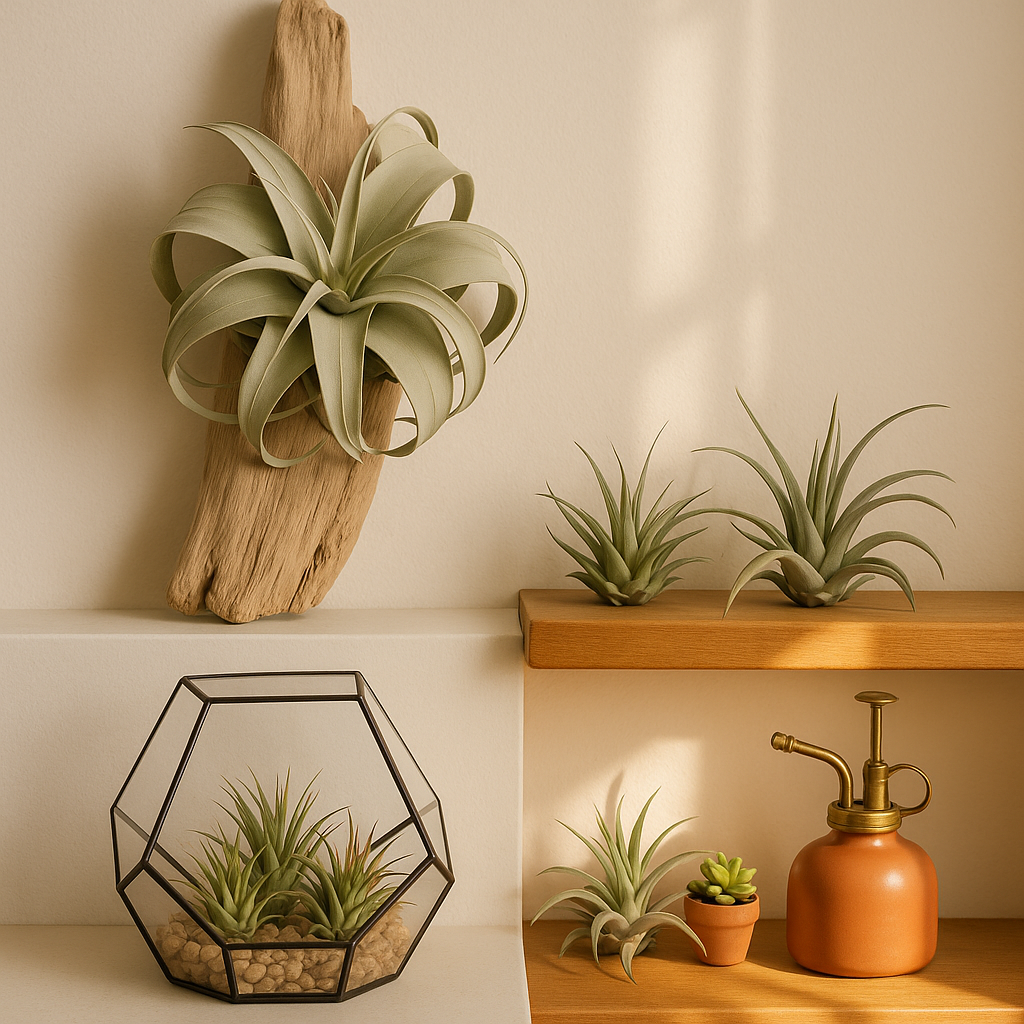
In the wild, Tillandsia anchor to bark, branches, and rock surfaces. You can recreate this at home with cork bark, driftwood, cholla wood, or even moss-covered branches. Find natural driftwood air plant displays on Etsy for pieces with good character — the irregular shapes and textures suit these plants perfectly.
To mount: use a non-toxic craft glue (Liquid Nails or similar) applied to the base of the plant — keep glue well away from the leaves. Let dry before hanging. Alternatively, wrap with fishing line or thin wire for a more reversible option.
Glass Terrariums and Orbs
Air plants look stunning in open geometric glass terrariums — those angular, open-top designs you see everywhere. Open geometric glass terrarium setups are popular for good reason: they frame the plant beautifully while keeping it visible and accessible.
Critical: open-top only. Closed terrariums trap moisture and will cause your air plant to rot. If the container seals, it's wrong for Tillandsia. No exceptions.
Creative Display Ideas
Beyond wood and glass, air plants work on magnetic displays, seashells (for smaller species), floating wall frames, and woven wreaths. A bathroom shelf with mixed species in morning window light is one of the most achievable and beautiful setups you can build.
Air plants make excellent low-maintenance gifts — no soil, no pot, no mess. See more ideas in our best gifts for plant lovers guide.
Blooming: The Beautiful End (And What Comes After)
Air plants bloom once. Then the mother plant dies.
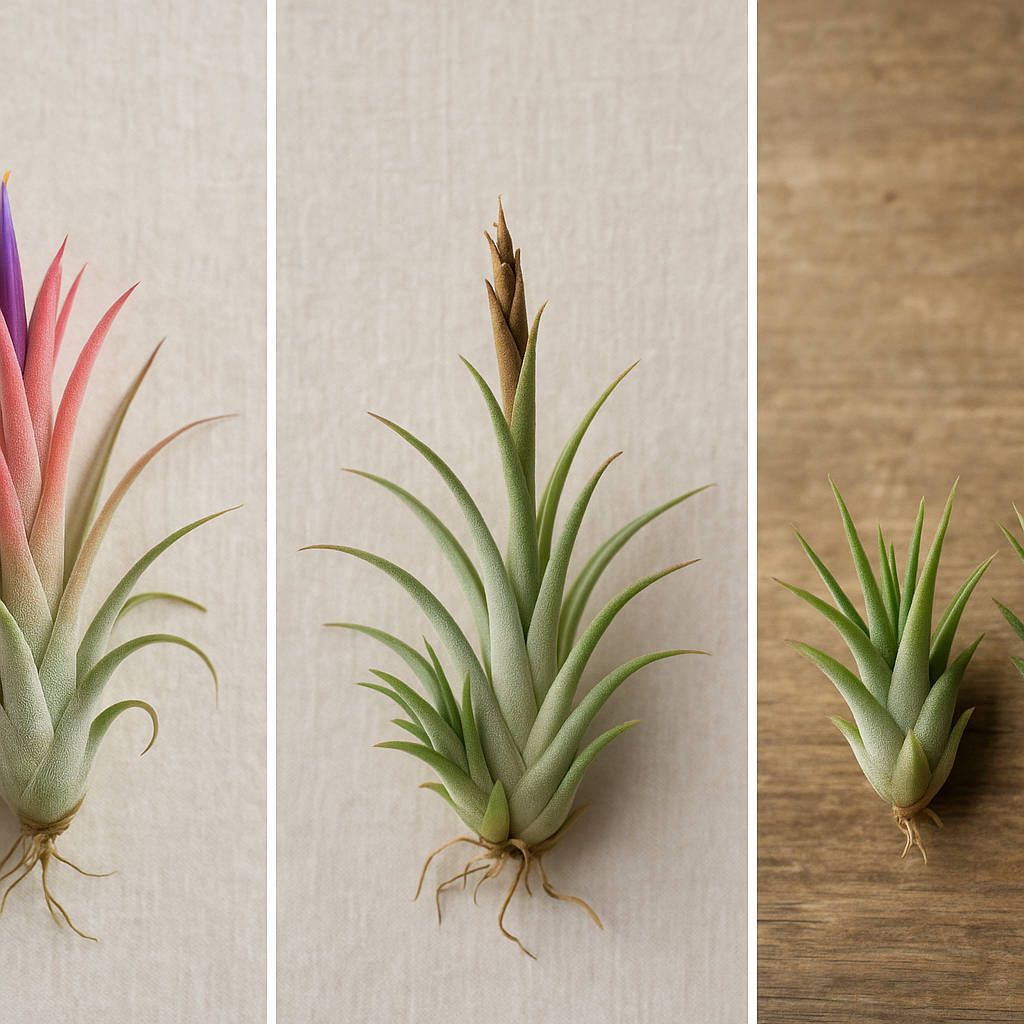
I'm telling you this upfront because it's genuinely sad if you don't expect it, and I've seen too many people think they killed their plant when they didn't. The bloom is gorgeous — Ionantha varieties blush hot pink and red, xerographica sends up a dramatic curved spike, capitata turns shades of purple. But after the show, the mother plant slowly declines over months.
This is not your fault. This is just how Tillandsia work.
What you're waiting for is the pups — small offsets that emerge from the base of the mother plant as she fades. Those are her legacy. Those are your new plants.
How Long Does the Bloom Last?
Depends on the species. Some ionantha blooms last just days. Others — xerographica included — can hold their spike for months. The bloom period is one of the most rewarding phases of Tillandsia ownership, so enjoy it while it lasts.
Encouraging bloom is less about tricks and more about consistent good care: adequate light, regular watering, and monthly fertilizer during growing season. Some growers use diluted apple cider vinegar in water to simulate the organic acids that trigger blooming in the wild, but the evidence is anecdotal at best.
Propagating Pups: Building Your Collection for Free
After the bloom fades and the mother plant declines, the pups take over. They'll grow at the base, sometimes appearing while the mother is still alive and healthy.
When to separate them: At least one-third the size of the mother plant. Separating too early leaves pups that can't survive on their roots yet. Patience here pays off.
How to remove them: Gently twist off at the base, or use a clean, sharp knife or scissors to cut. If the mother is still alive, take care not to damage her in the process.
Post-separation care: No special treatment needed. Same soak schedule, same light. Pups grow independently and will eventually bloom and produce pups of their own. This is how you end up with a whole collection from one plant — for free.
What's Wrong? Quick Diagnosis
Air plant problems cluster into a few recognizable patterns. Here's the short version:
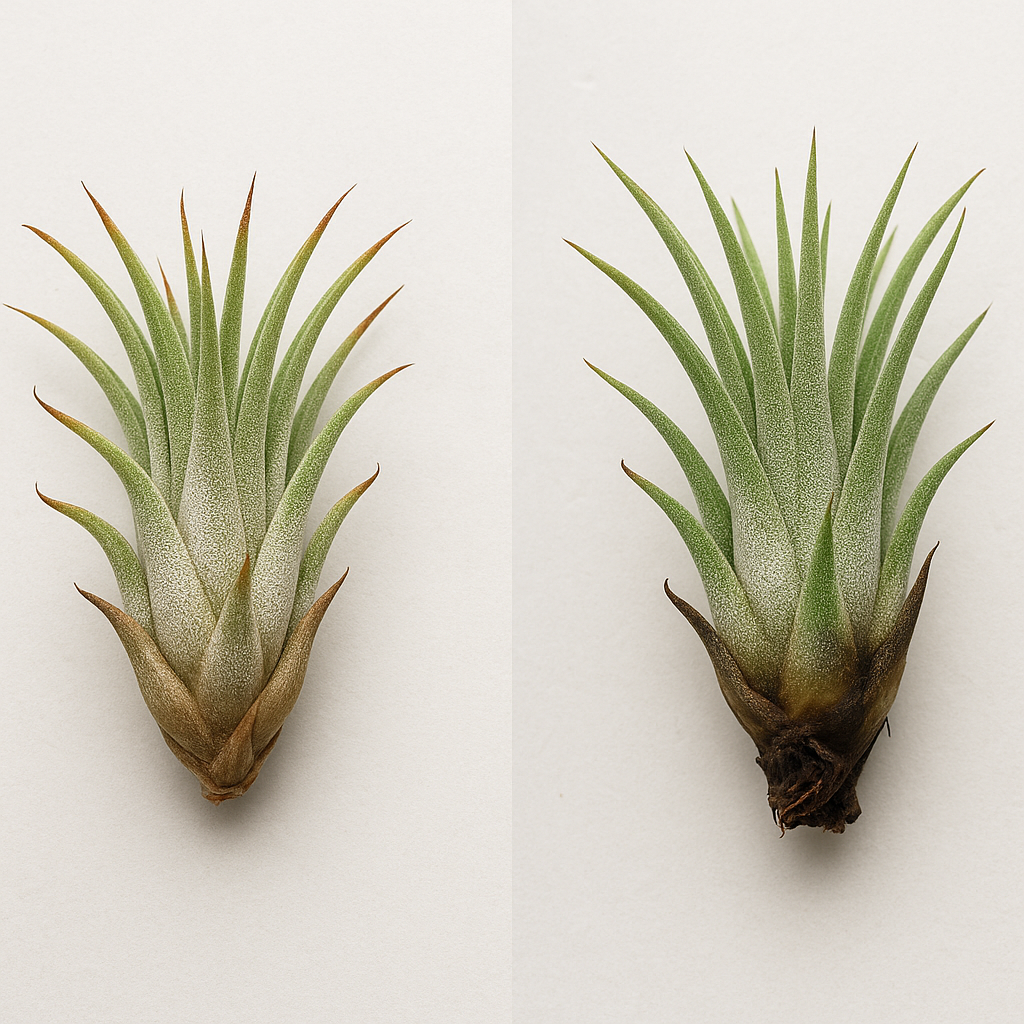
Brown tips (most common): Underwatering or low humidity. Trim tips at an angle with clean scissors. Increase watering frequency. Recoverable.
Mushy brown base (most fatal): Rot from overwatering or water trapped in the cup. Leaves pull out easily and the center feels like wet mulch. Unfortunately, this is usually the end. Remove dead leaves, let remaining parts dry, hope for the best.
Pale, bleached, or crispy leaves: Too much direct sun or heat exposure. Move away from the window. Check for AC or heating vents pointing at the plant.
Soft, curling, limp leaves: Dehydration. Give a longer-than-normal soak (30–60 minutes) and repeat after a few days. Usually recoverable.
Brown tips mean thirst. Mushy base means rot. They look vaguely similar but have opposite causes and opposite solutions.
If you need more help diagnosing a specific issue, our Plant ER guide has deeper troubleshooting for a range of houseplant symptoms.
Popular Tillandsia Varieties & Which One Is Right for You
The genus is enormous, but a handful of species show up everywhere for good reason:
Tillandsia ionantha — The classic beginner air plant. Small, compact, hardy, dramatic red-and-purple bloom when it decides to flower. Widely available and forgiving of inconsistent care. This is where most air plant journeys begin.
Tillandsia xerographica — The showstopper. Large, silvery, with dramatically curled leaves that look like a sea creature wearing a tutu. Xeric (drought-tolerant), slow-growing, and expensive — but worth it if you want a statement plant. Less watering than ionantha. More light tolerance.
Tillandsia bulbosa — Mesic, humidity-loving, with tentacle-like leaves that emerge from a bulbous base. Red flower spikes are stunning. Particularly at home in a bright bathroom.
Spanish moss (Tillandsia usneoides) — Technically a Tillandsia, though it looks nothing like the rosette types. It drapes, it trails, it looks incredible hanging from branches. But it dries out fast and needs misting several times a week. Not a beginner plant.
Choosing your first air plant: If you're just starting out and want something forgiving, go with T. ionantha. If you forget to water, xerographica forgives you more than ionantha does. If you have a bright bathroom, try bulbosa. And if you want to see what the fuss is about without committing, an air plant assortment pack gets you a few varieties to learn with.
Products We Love
We use these products ourselves:
- Live Air Plants Assortment Pack (ionantha varieties) — Start here if you're new. An assortment gets you a few varieties to learn with and figure out which species suits your care style and home environment.